Doina Kraal
File under: news

Current

Makersgeheimen
Textielmuseum Tilburg, NL
8 June 2024 to 31 May 2026

Missen als een ronde vorm – De kunst van het doorleven
Stedelijk Museum Schiedam, NL
27 September 2025 to 1 March 2026

Tarot des Forains et du Cirque
In collaboration with Roger Cremers & Kurt Vanhoutte
UMC kunstzaken locatie AMC
Meibergdreef 9, Amsterdam
 

Upcoming

Le Sacre du Printemps
Peter Vos and Doina Kraal & Roger Cremers
Heejsteck#, Blauwe-Vogelweg 23, Utrecht
Opening November 21, 2025 from 17:00-21:00


Of Gaia and Ouranos

2022 - 2023
A collaboration with Roger Cremers
Looiersgracht 60 - Amsterdam

3.13 Perpetual Light
documentation
Blickfänger, TextielMuseum
Amsterdam
Fig. 3.13 Perpetual Light
File under: documentation
Blickfänger, TextielMuseum
Amsterdam
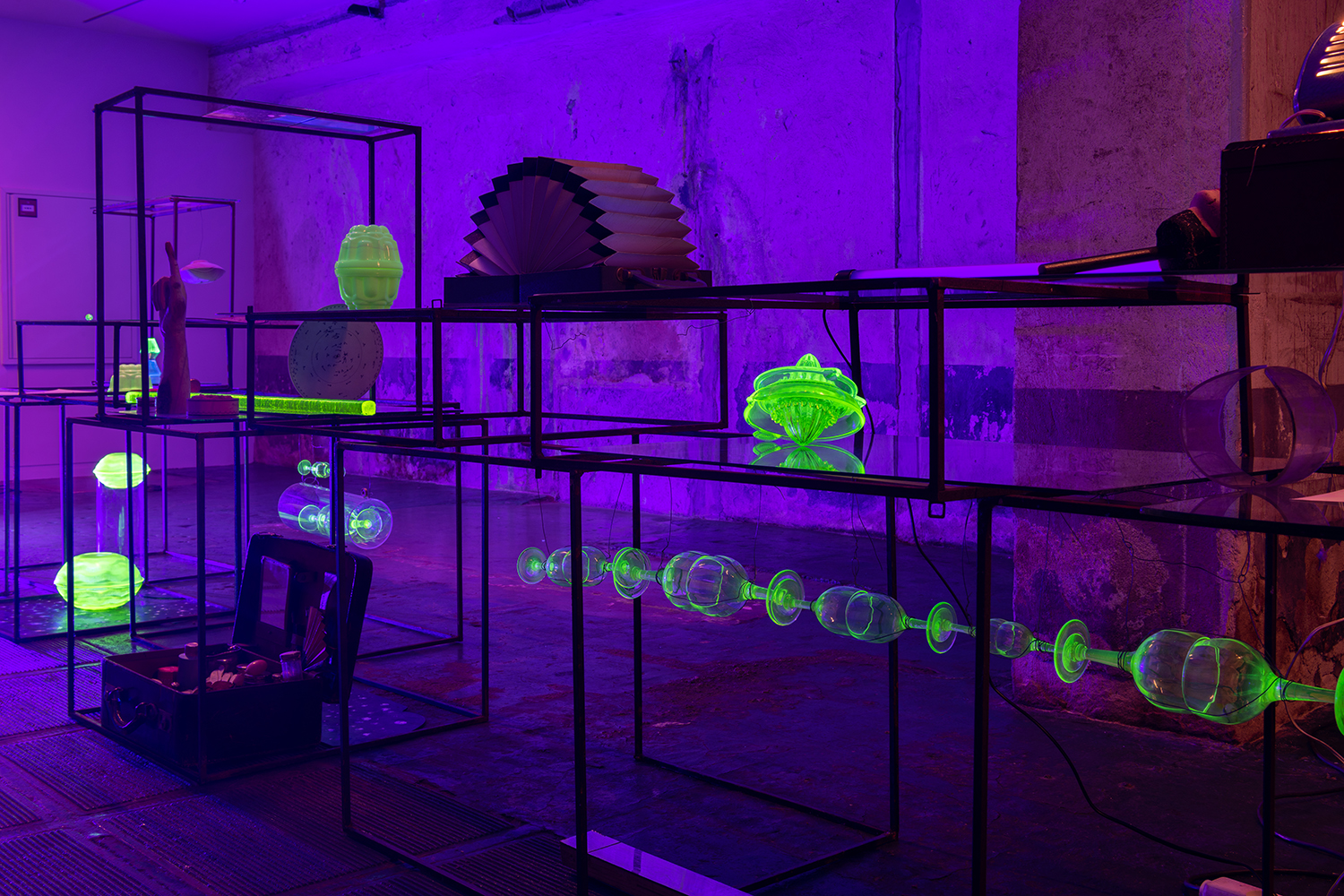
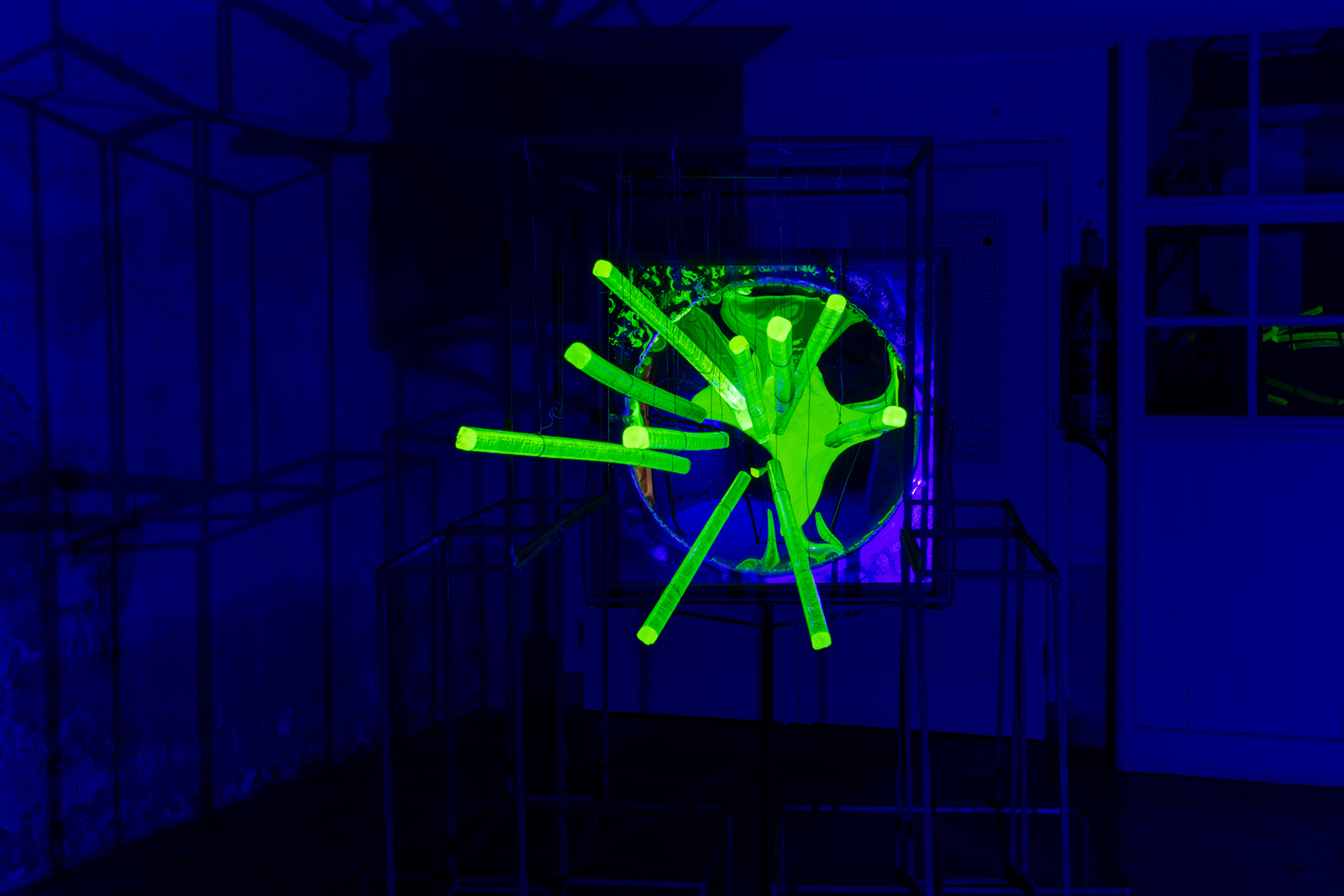
installation lit up by uv light
Fig. 7.5 study for Of Ouranos and Kronos
File under: work in progress
Roger Cremers, Doina Kraal, LNDW Studio
Looiersgracht 60, Amsterdam
Doina Kraal, Roger Cremers, Taco Hidde Bakker & Mariel Williams
File under: text
Work descriptions

Of Gaia and Ouranos

Roger Cremers and Doina Kraal 
26 November – 22 December, 2023
Looiersgracht 60, Amsterdam

The transhistorical exhibition Of Gaia and Ouranos continues an existing conversation and body of research in which Cremers and Kraal imagine a universe where all matter is spirited and kindred. According to the artists, Gaia represents the material, a celebration of nature, as well as the experience and appreciation of beauty. Ouranos, Gaia’s son and father of her children, represents the spiritual, the universe, the imagination, and the futuristic. This exhibition intends to have the spiritual (Ouranos) engage with the material (Gaia). Different modes of unifying, materializing and activating Gaia and Ouranos are explored through a range of installations and art works, presented in this particular constellation for the first time. 

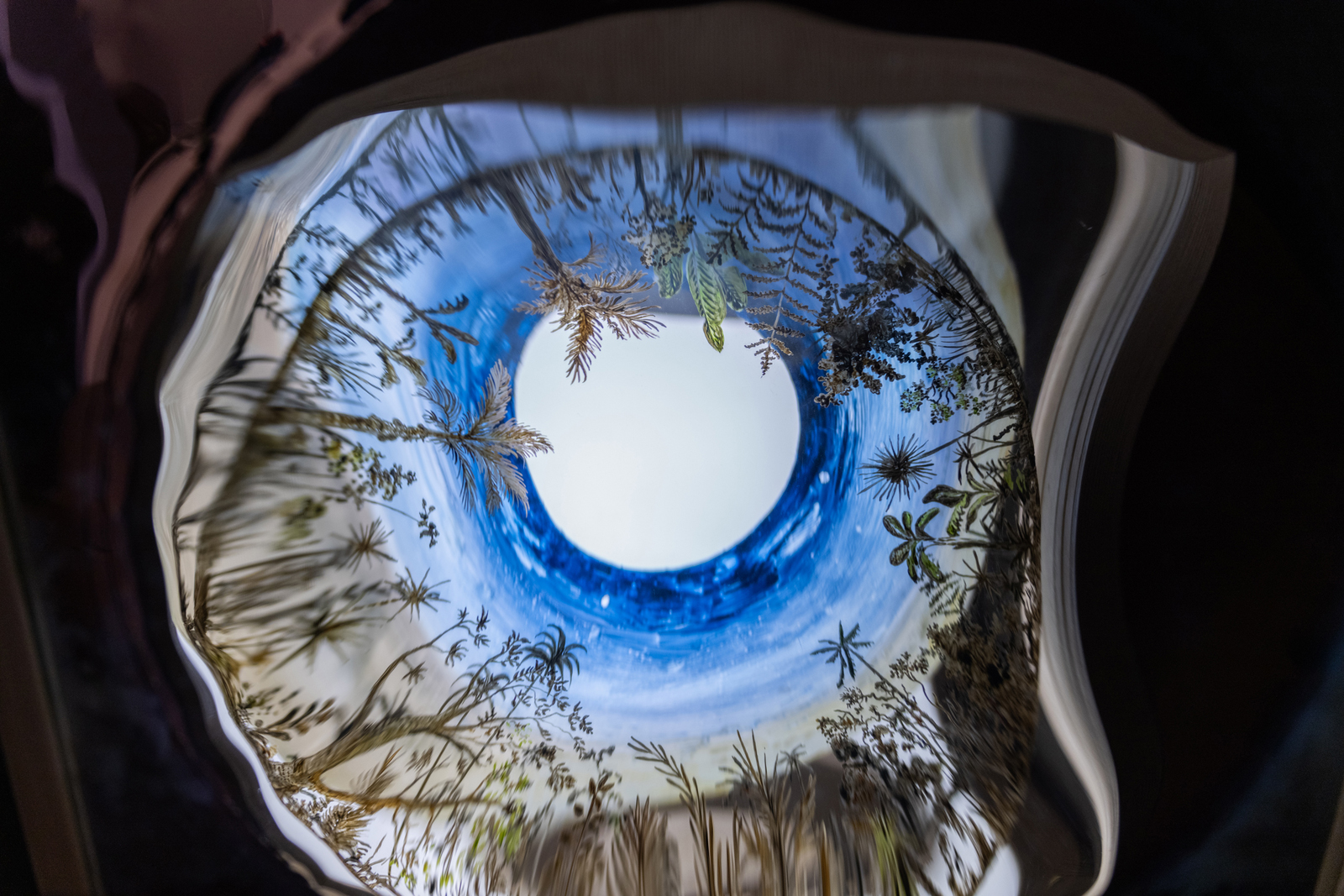
FIG 1. Through Gaia’s Eye (2023) (diafanorama)

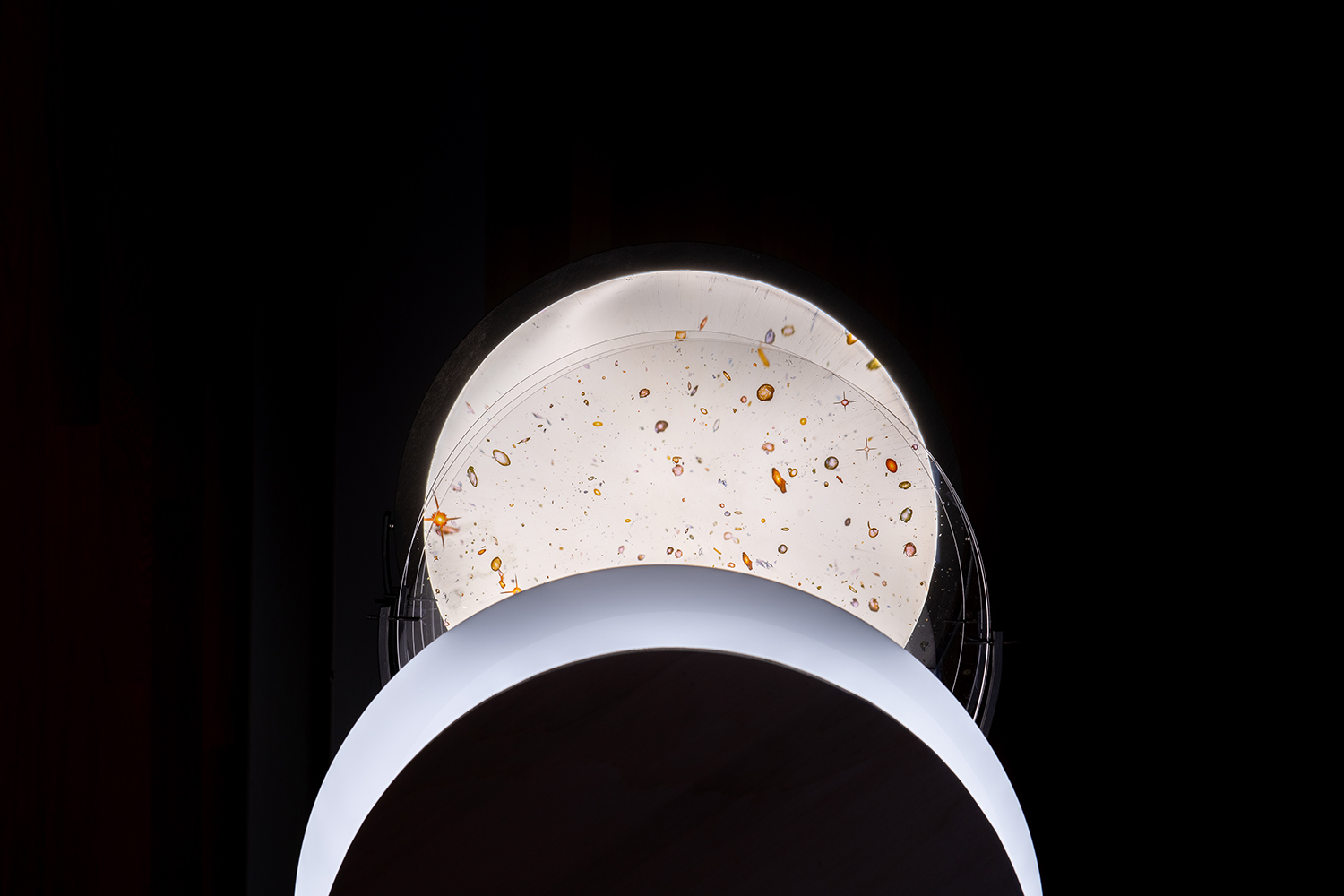
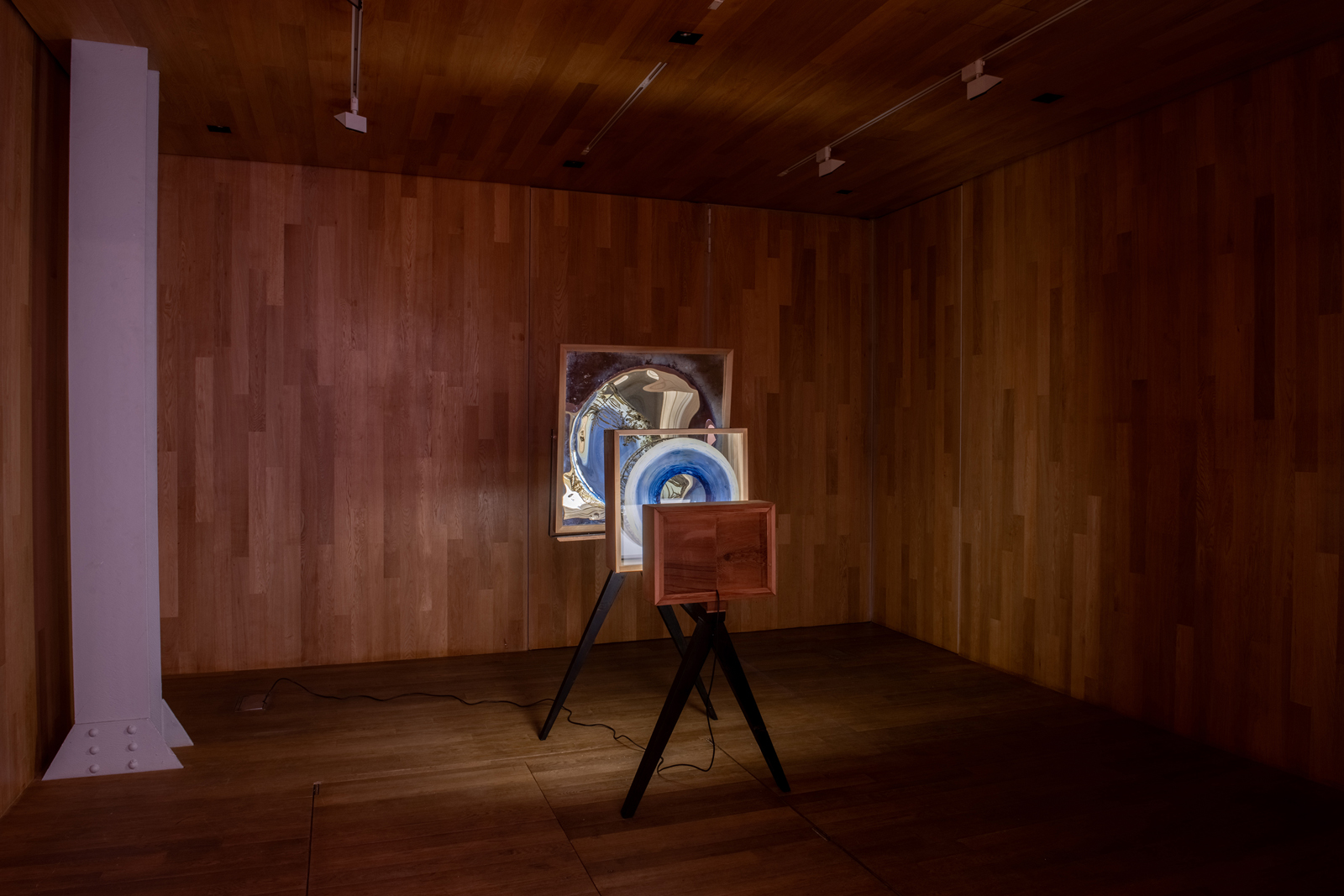
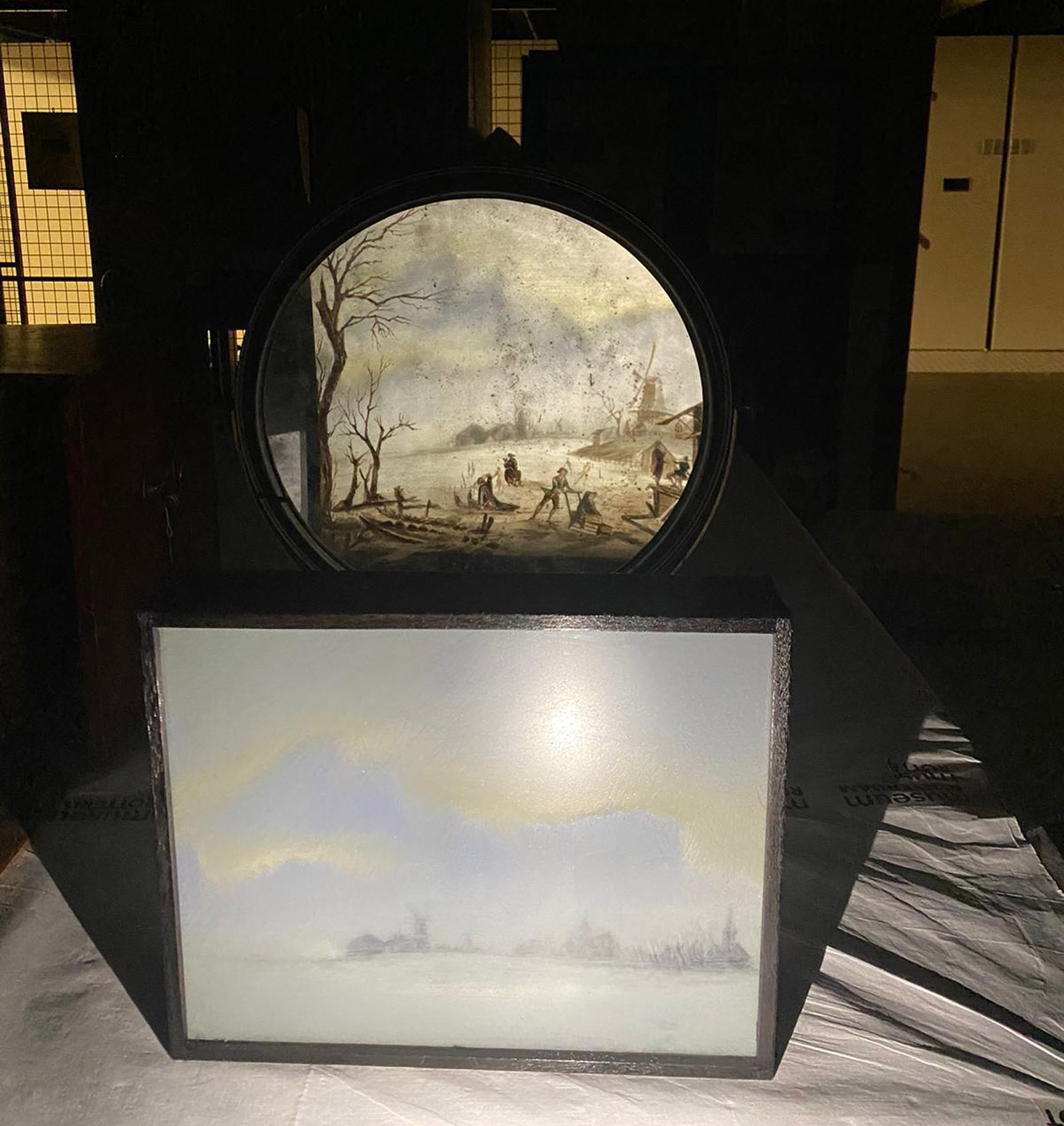
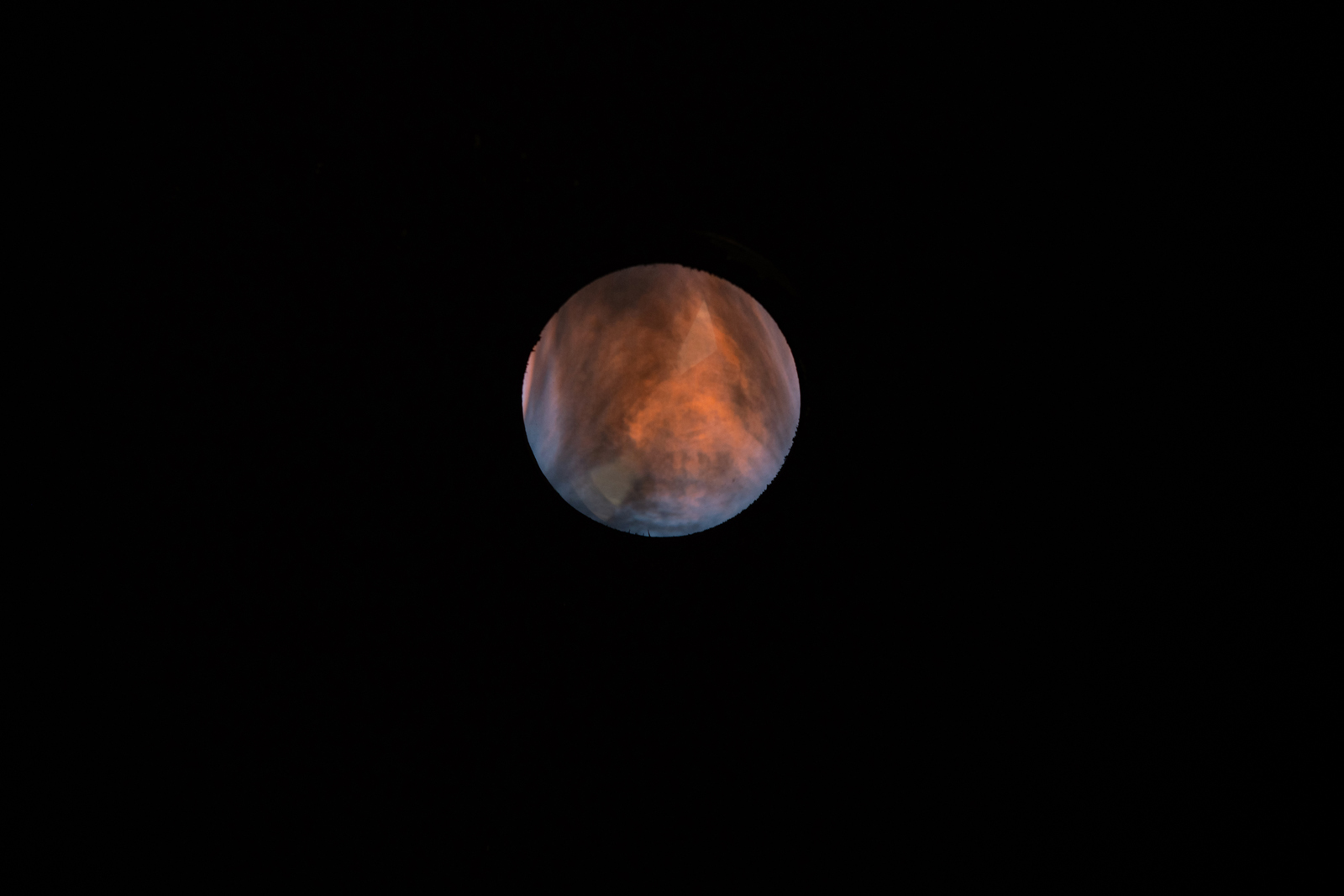
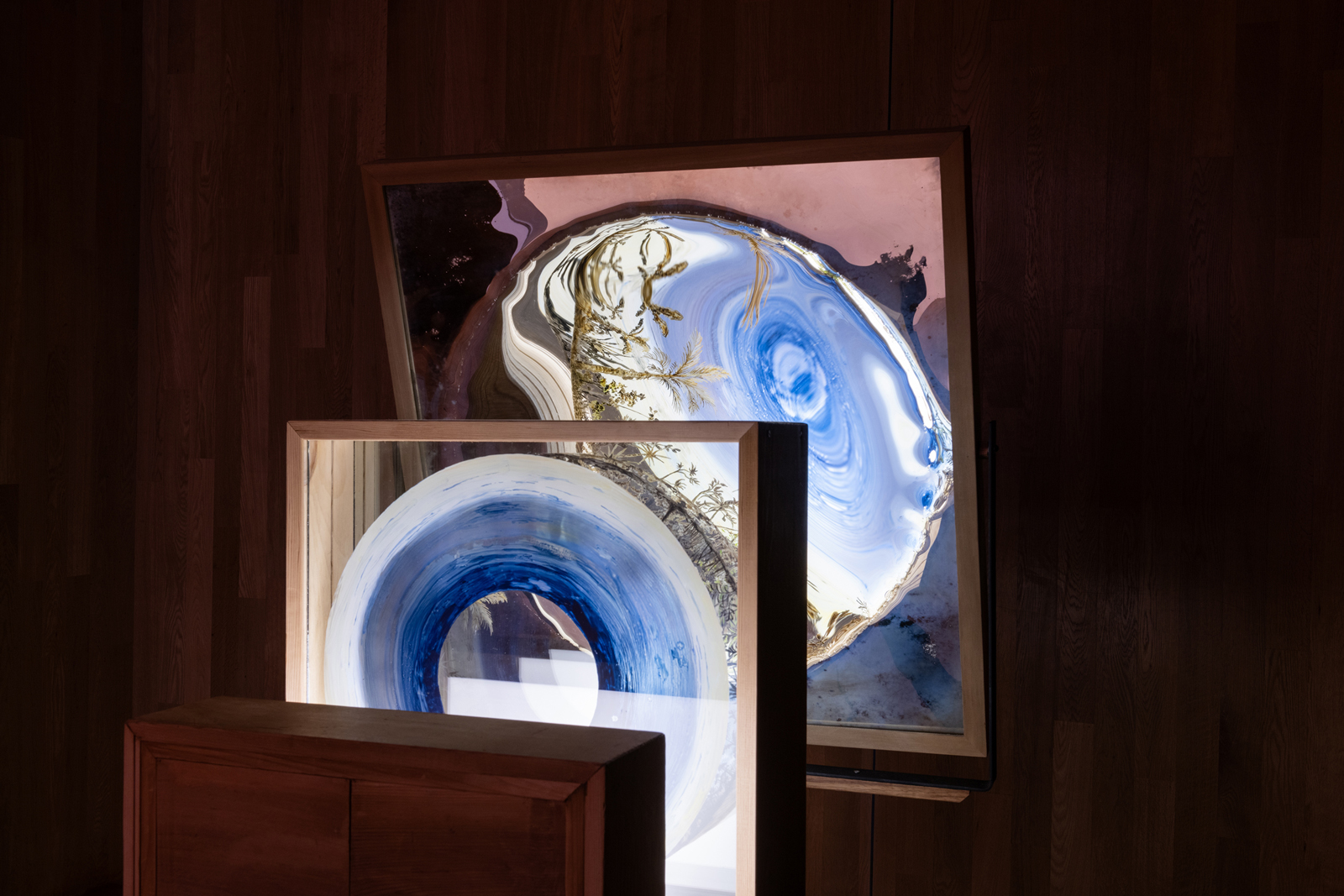
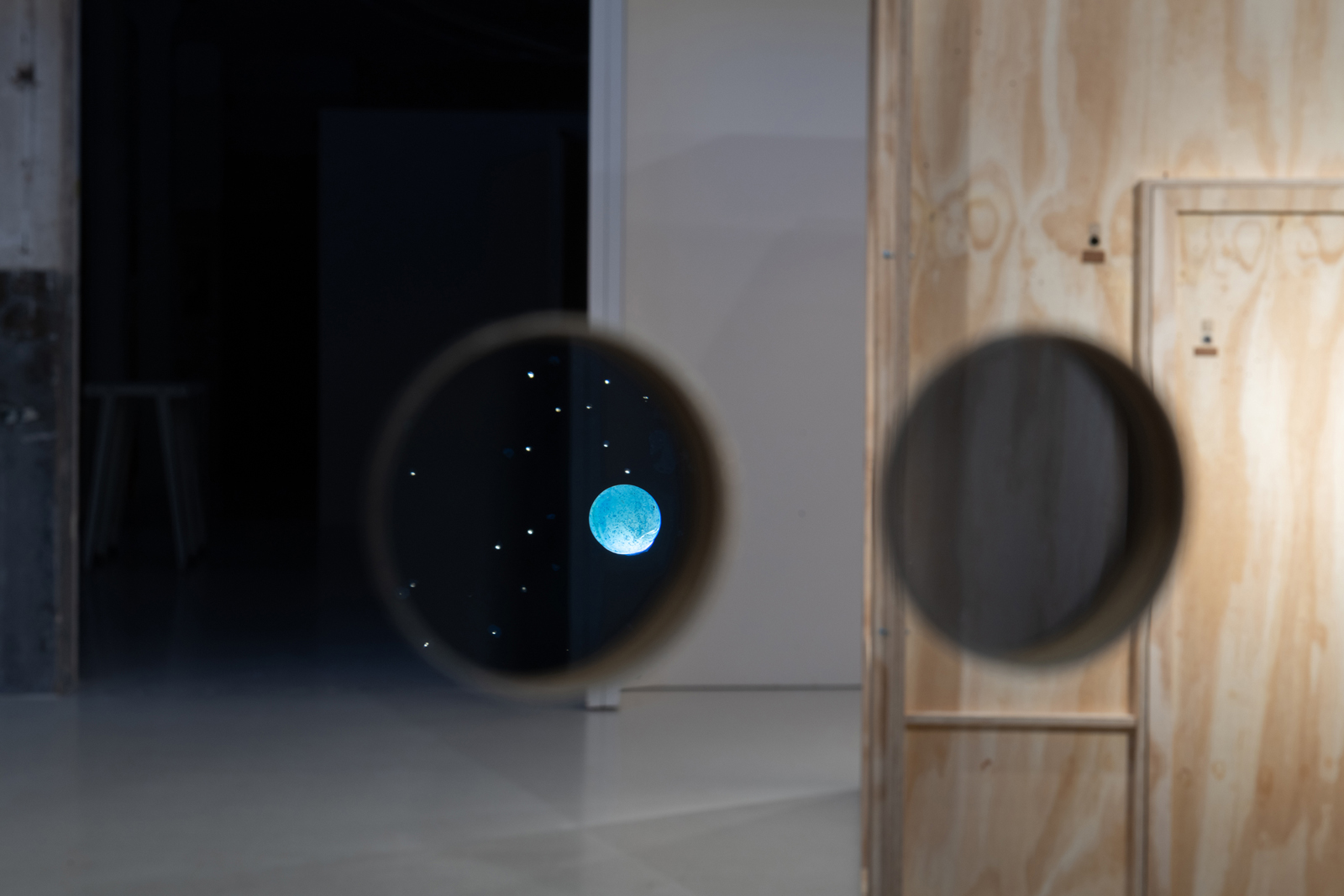
This contemporary version of the diafanorama* is built up by three layers of oil paint on glass panes placed behind one another. It depicts the perspective of Gaia looking up to the sky (as a void or the unknown). She’s looking at Ouranos. The observer automatically walks around the image in search of the best viewpoint and different perspectives, the mirror acts as a kind of lens that distorts the image and makes it move.

*The historical diafanorama is an imagination technique closely related to the rarekiek. Diafanoramas were also instruments for visual entertainment. They were popular in The Netherlands between the second half of the 18th and the beginning of the 19th centuries. Diafanorama plates are painted glass plates usually arriving in sets of three, depicting the fore, middle, and backgrounds of an image. By viewing these as a complete image, the illusion of depth is produced. Plates are designed to be viewed with a light source and a concave mirror (the ‘burning mirror’), which enlarges the image and enhances the effect of depth. Very few historical diafanoramas have been preserved. The burning mirrors were made together with glass artists Norbert van den Broek and Ifigenia Moraki and with the assistance of Dr. Mayke Groffen (curator at the Rotterdam Museum).

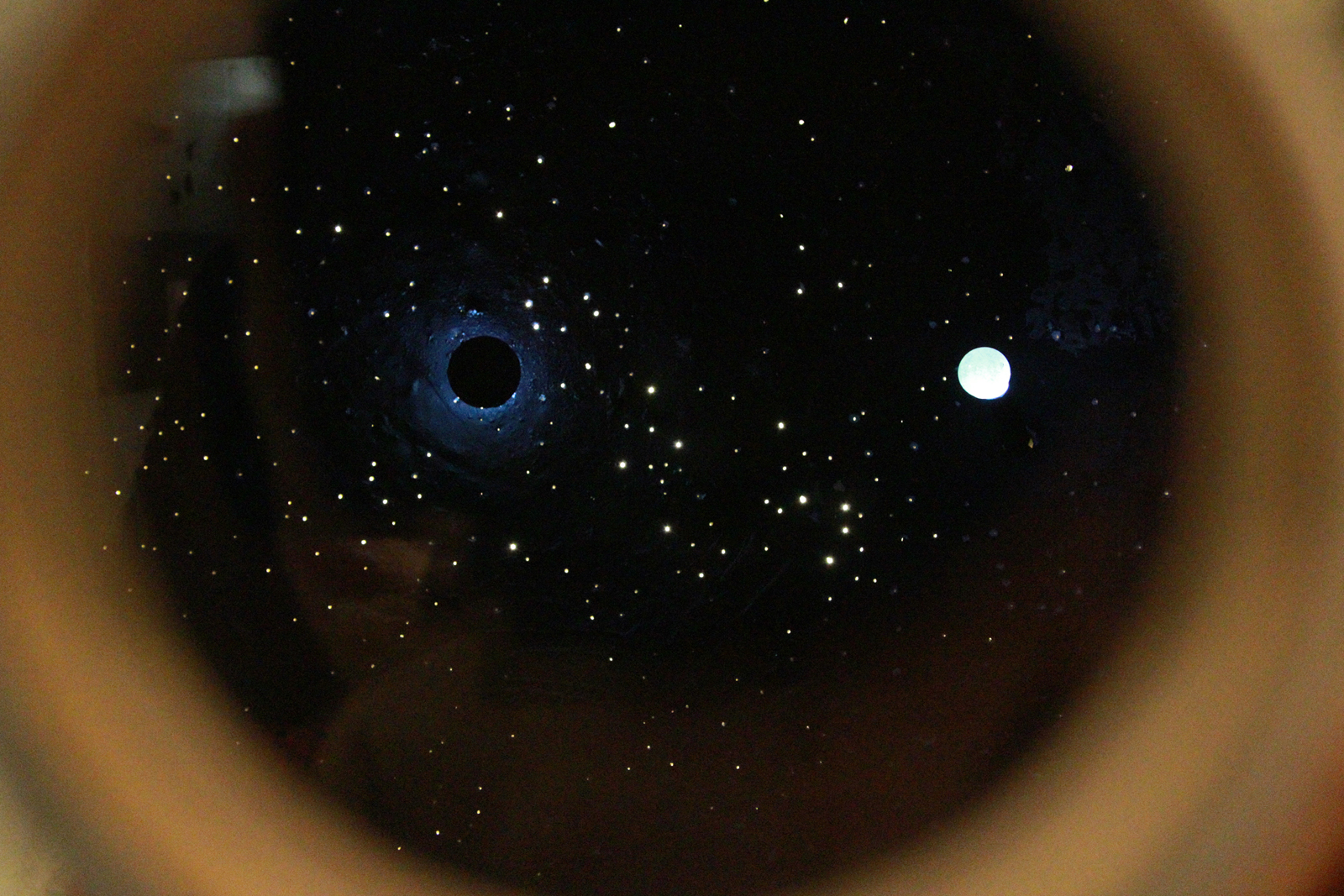
FIG 2. Through Ouranos’ Eye (2023) (diafanorama)

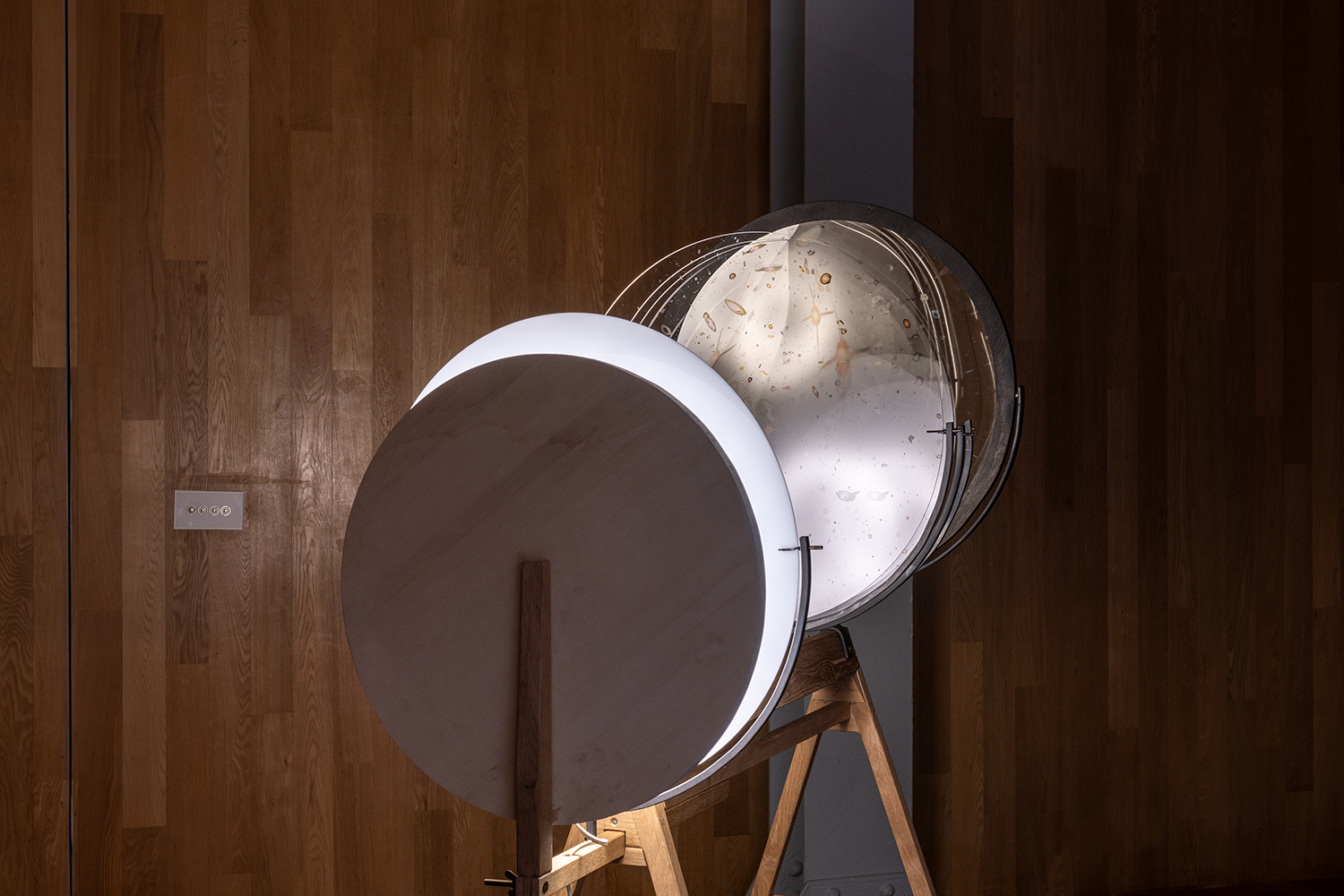
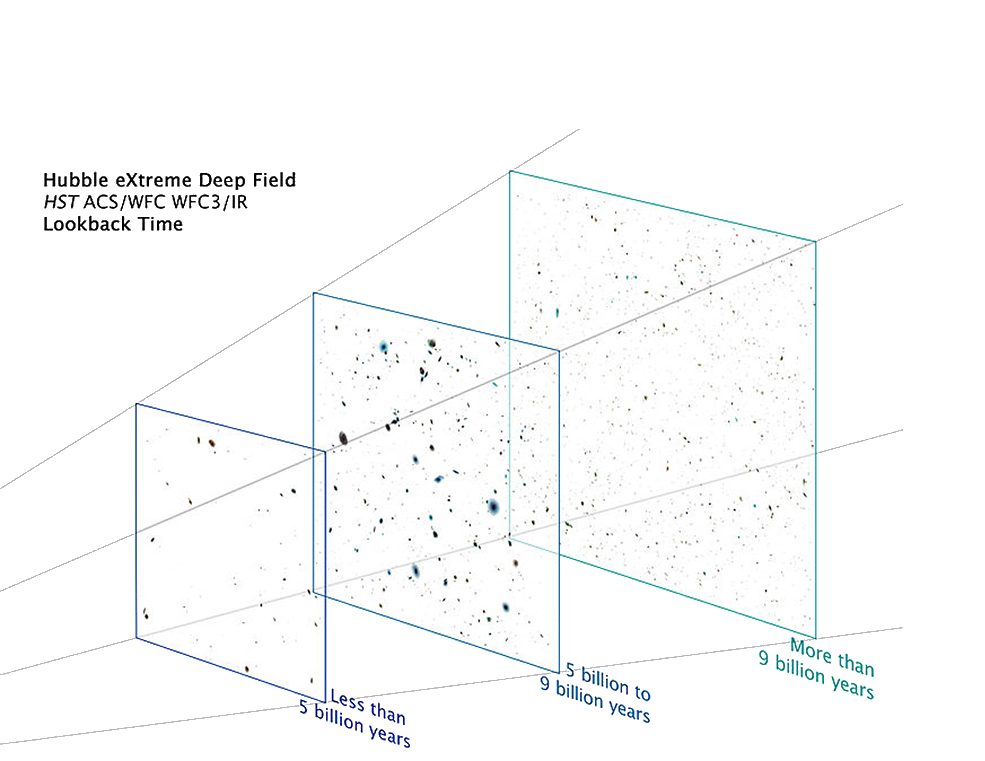
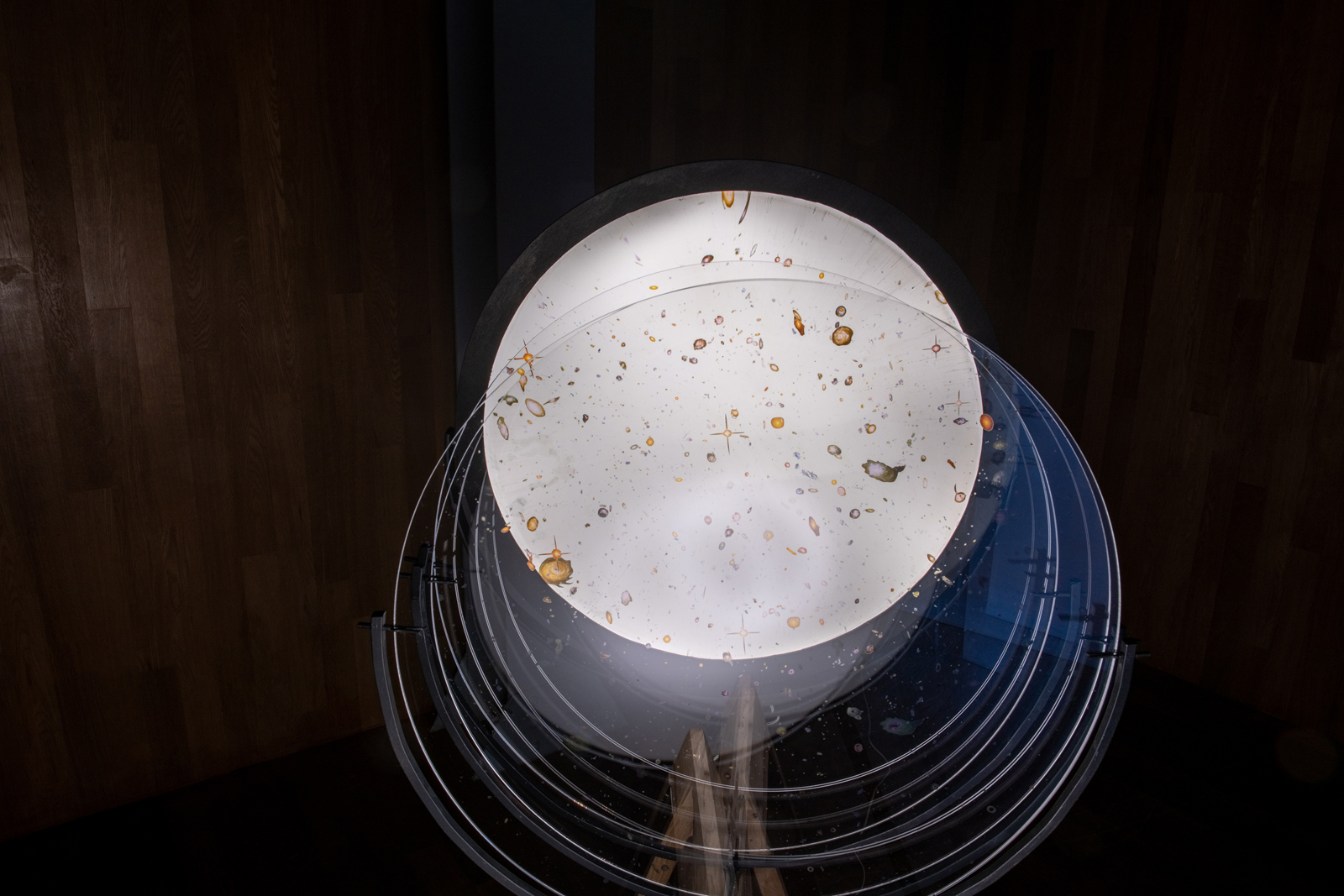
The images in this diafanorama are based on the ‘deep field’ observations from the NASA/ESA Hubble Space Telescope.* With this work we pull time apart into slices, and create a three-dimensional visualisation of looking deeper and deeper into the past. This work forms an attempt to disseminate time through the obsolete technique of the diafanorama. Through the perspective of Ouranos, looking from the sky into the universe, we can look back into time. The final plexiglass panel shows the most distant galaxies, some of which are over 13 billion years old.

*Obtained from the Hubble Legacy Archive, which is a collaboration between the Space Telescope Science Institute (STScI/NASA), the Space Telescope European Coordinating Facility (ST-ECF/ESA) and the Canadian Astronomy Data Centre (CADC/NRC/CSA).

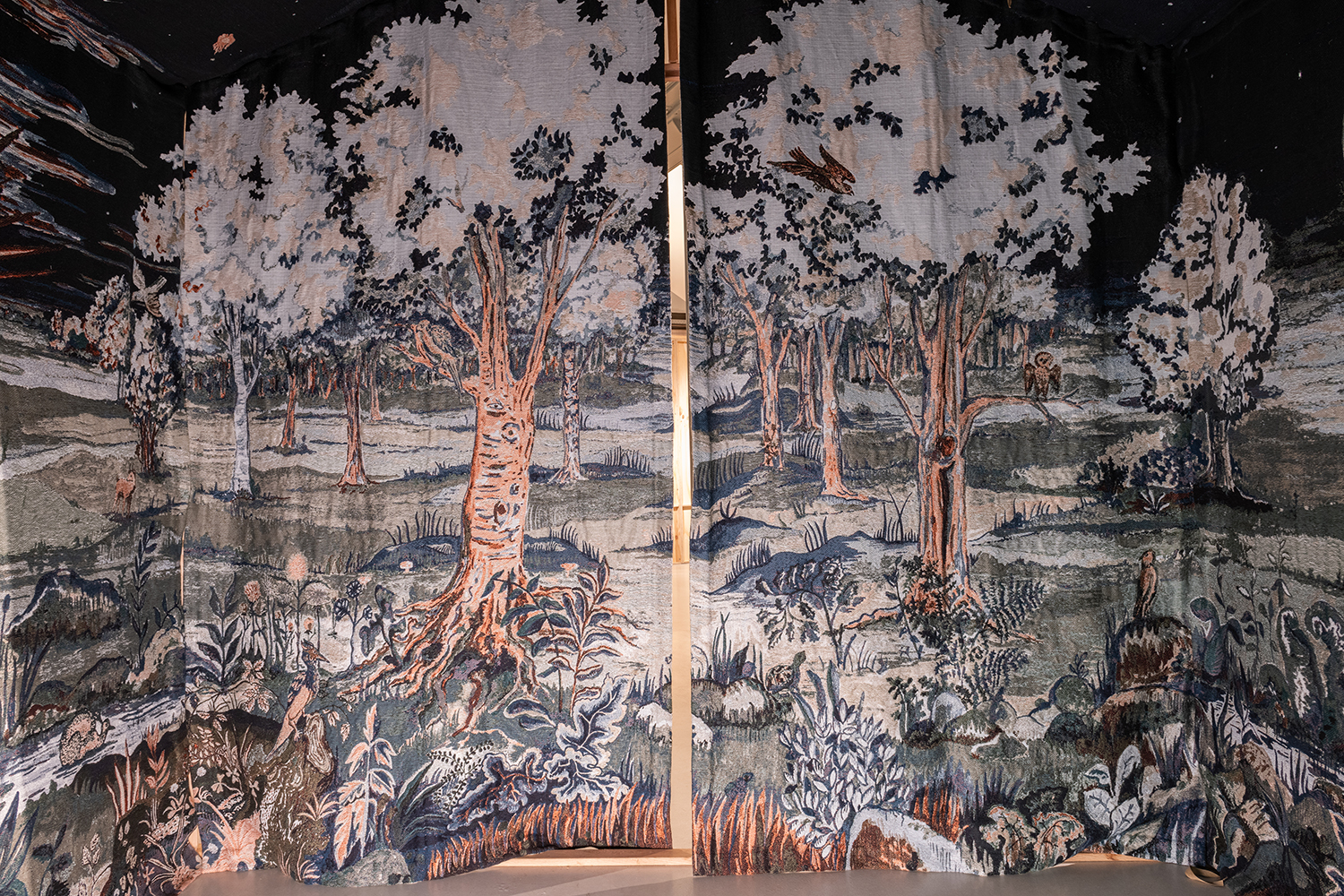
FIG 3. Perpetual Light (2023)

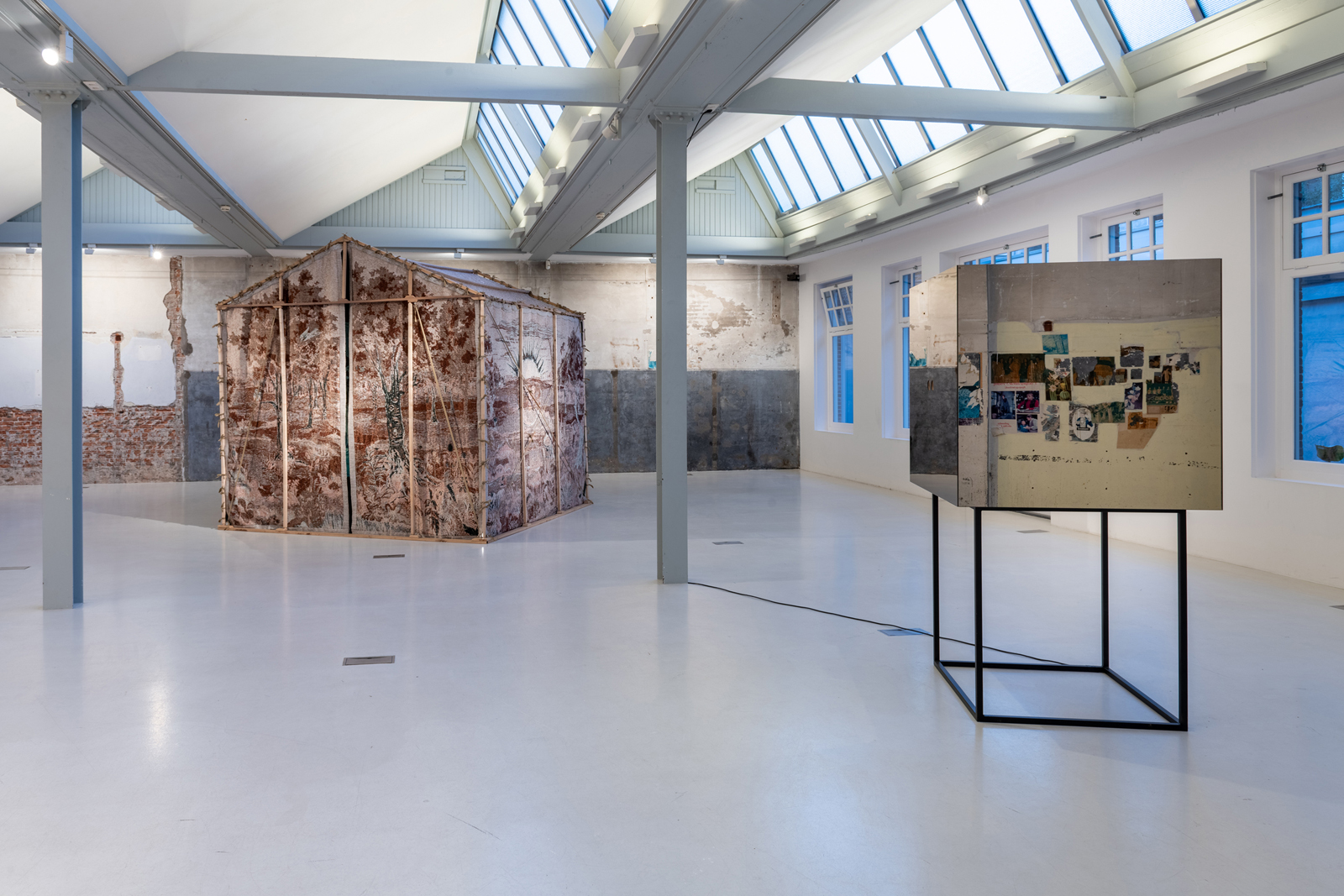
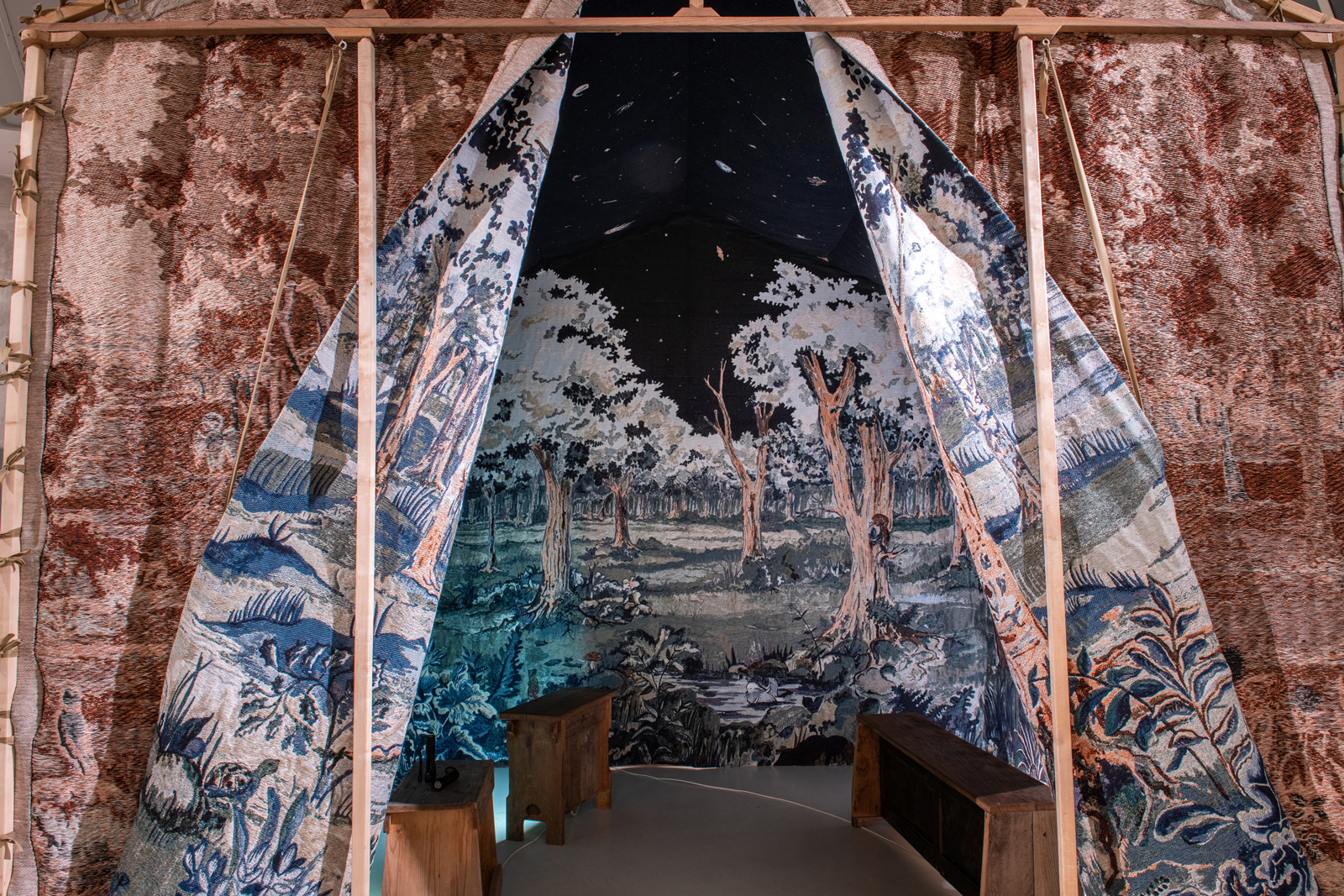
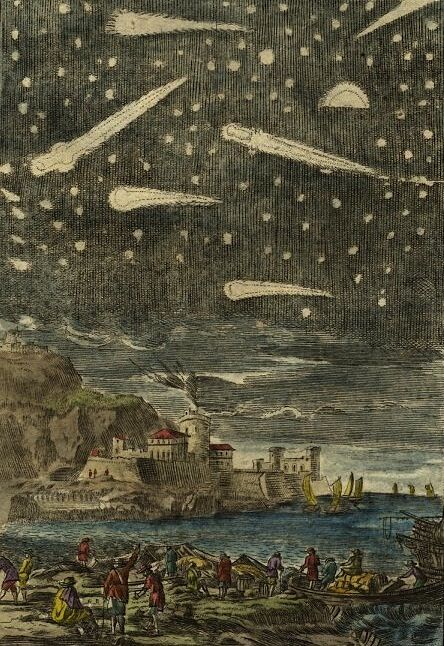
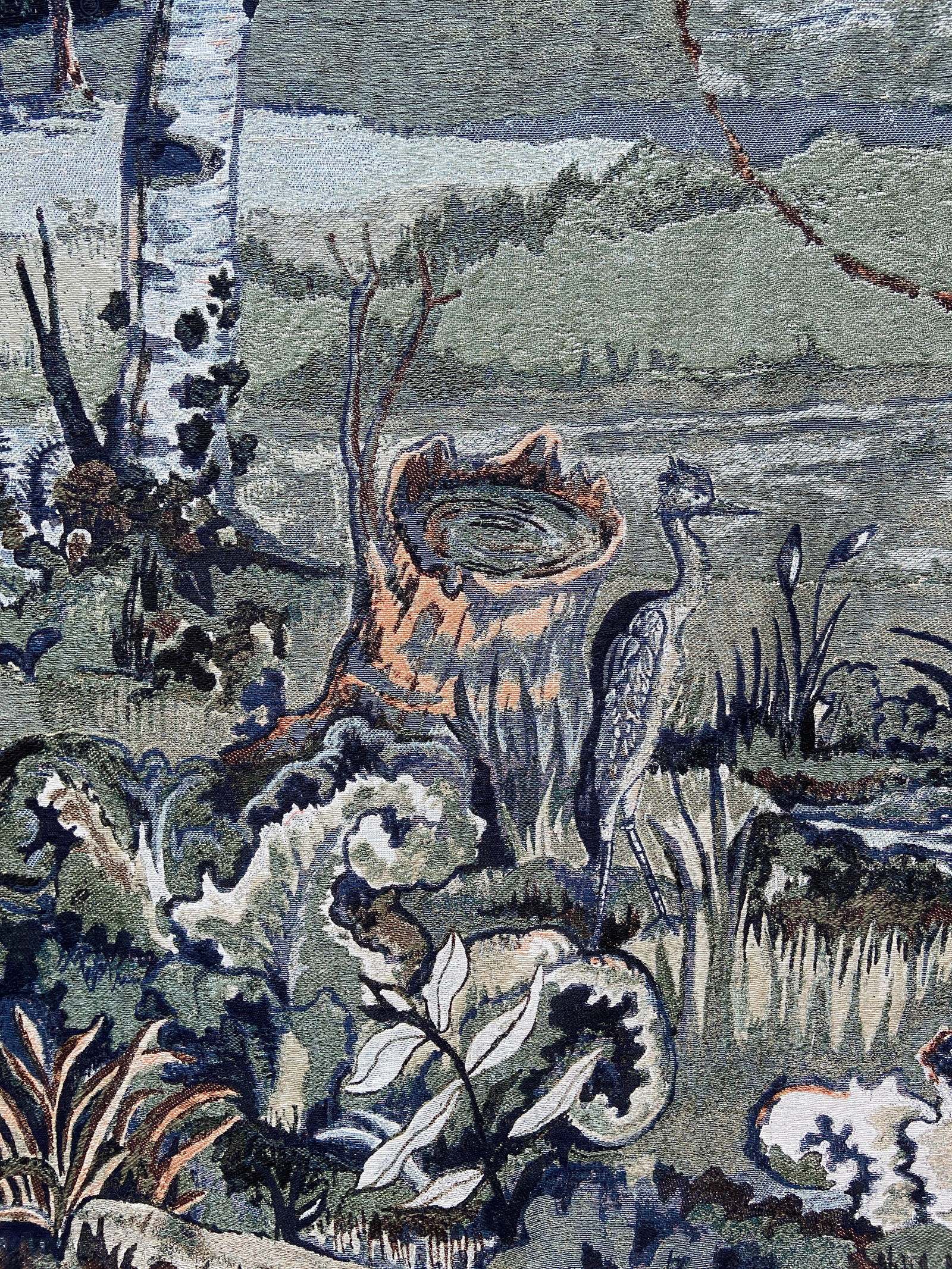
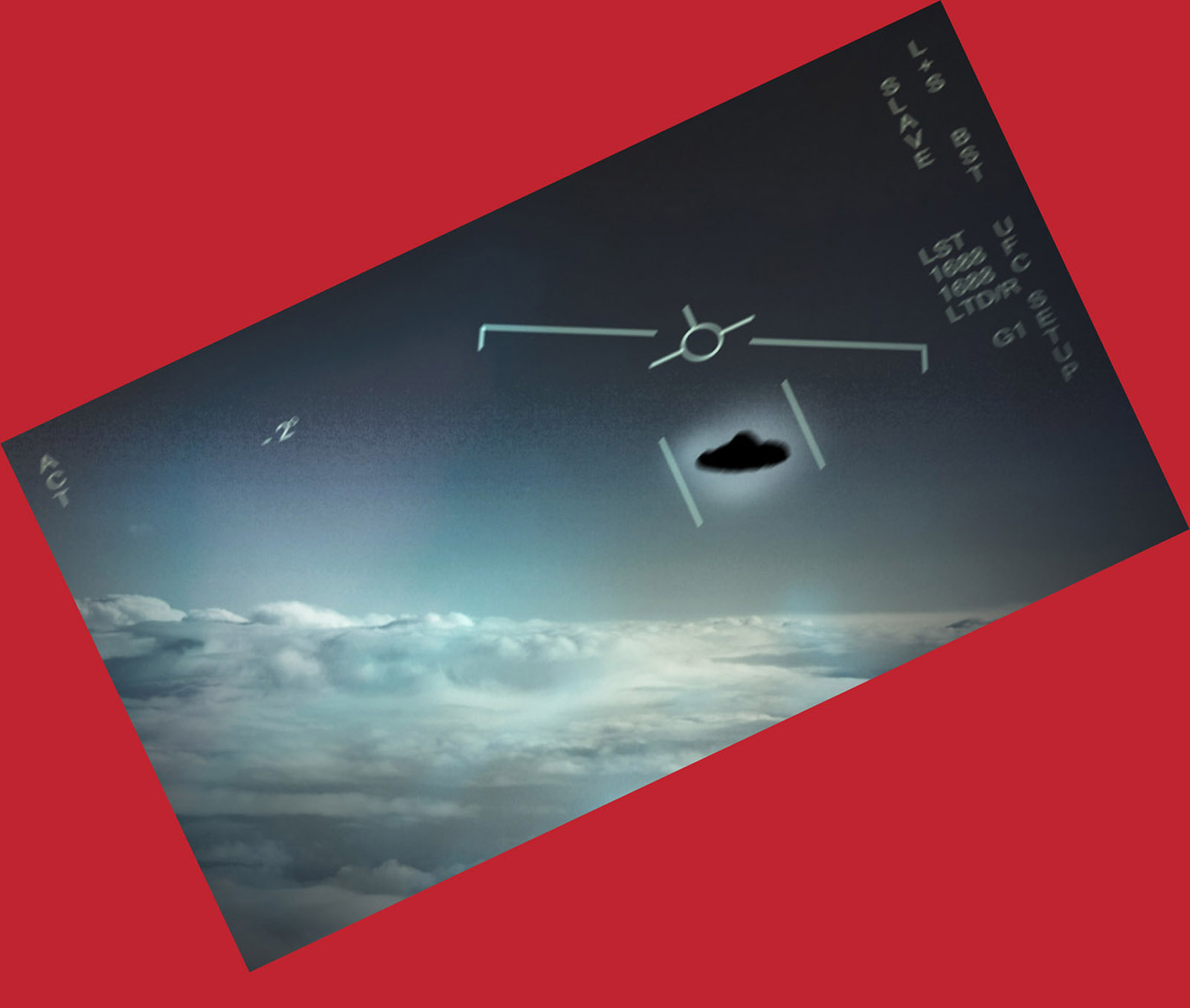
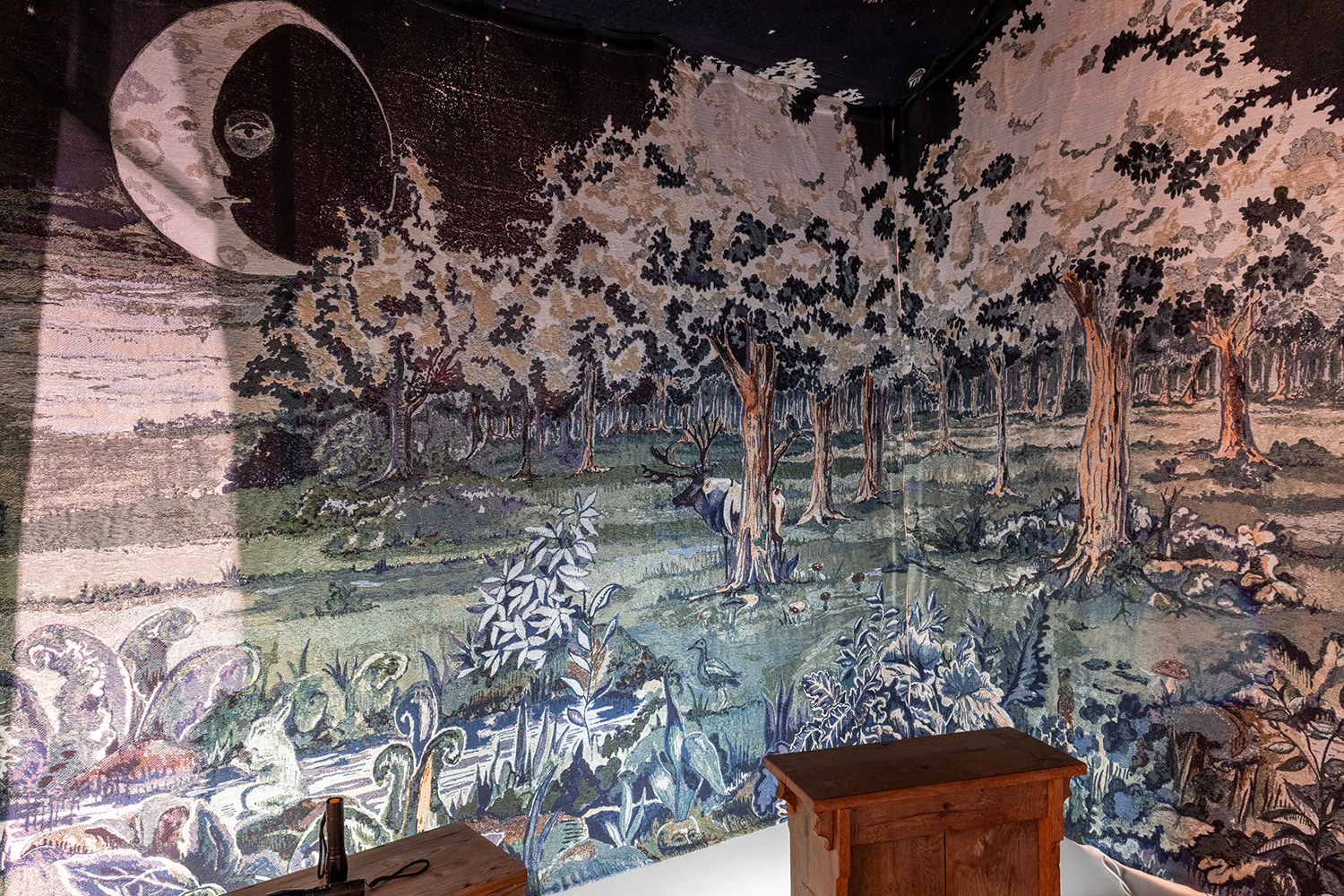
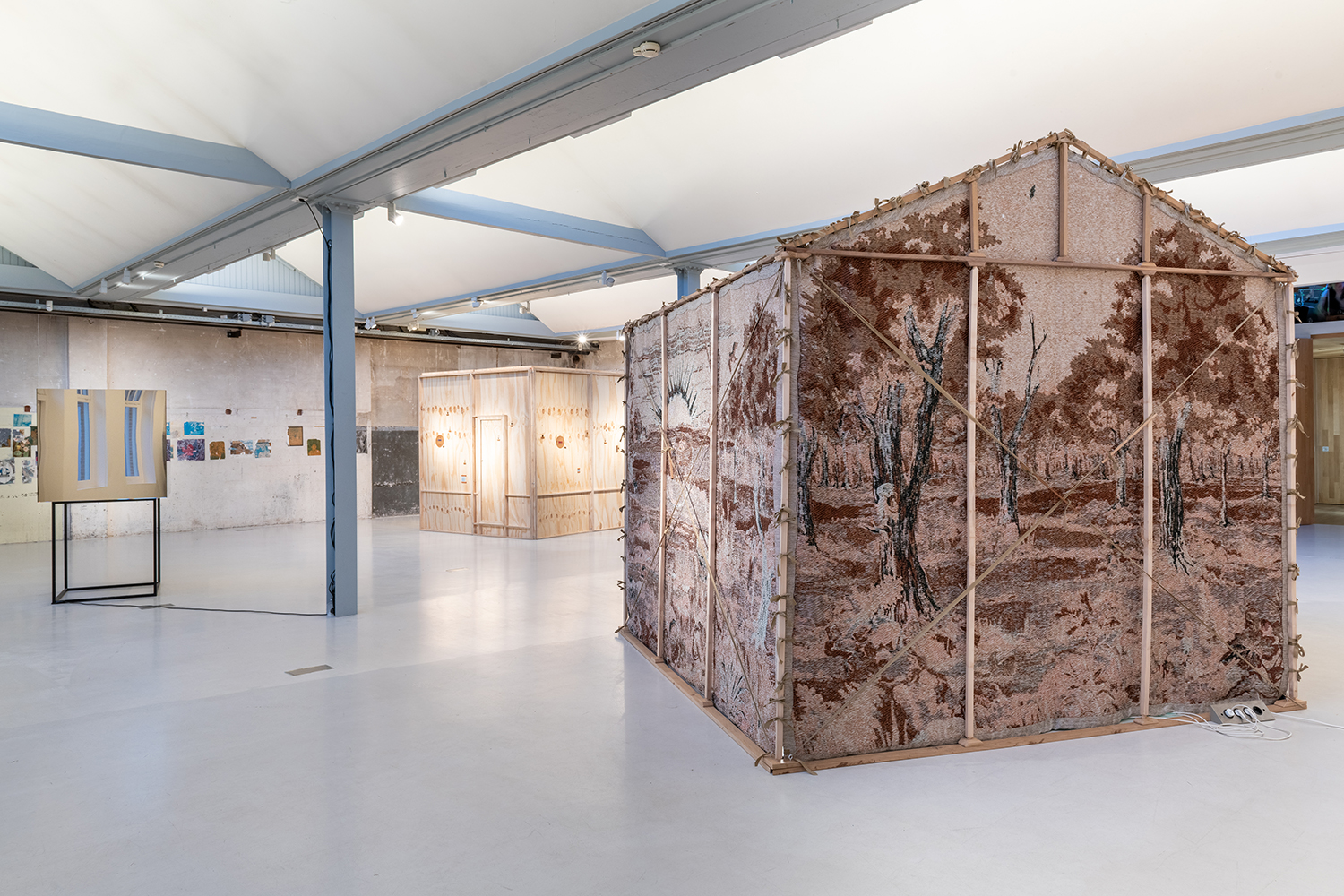
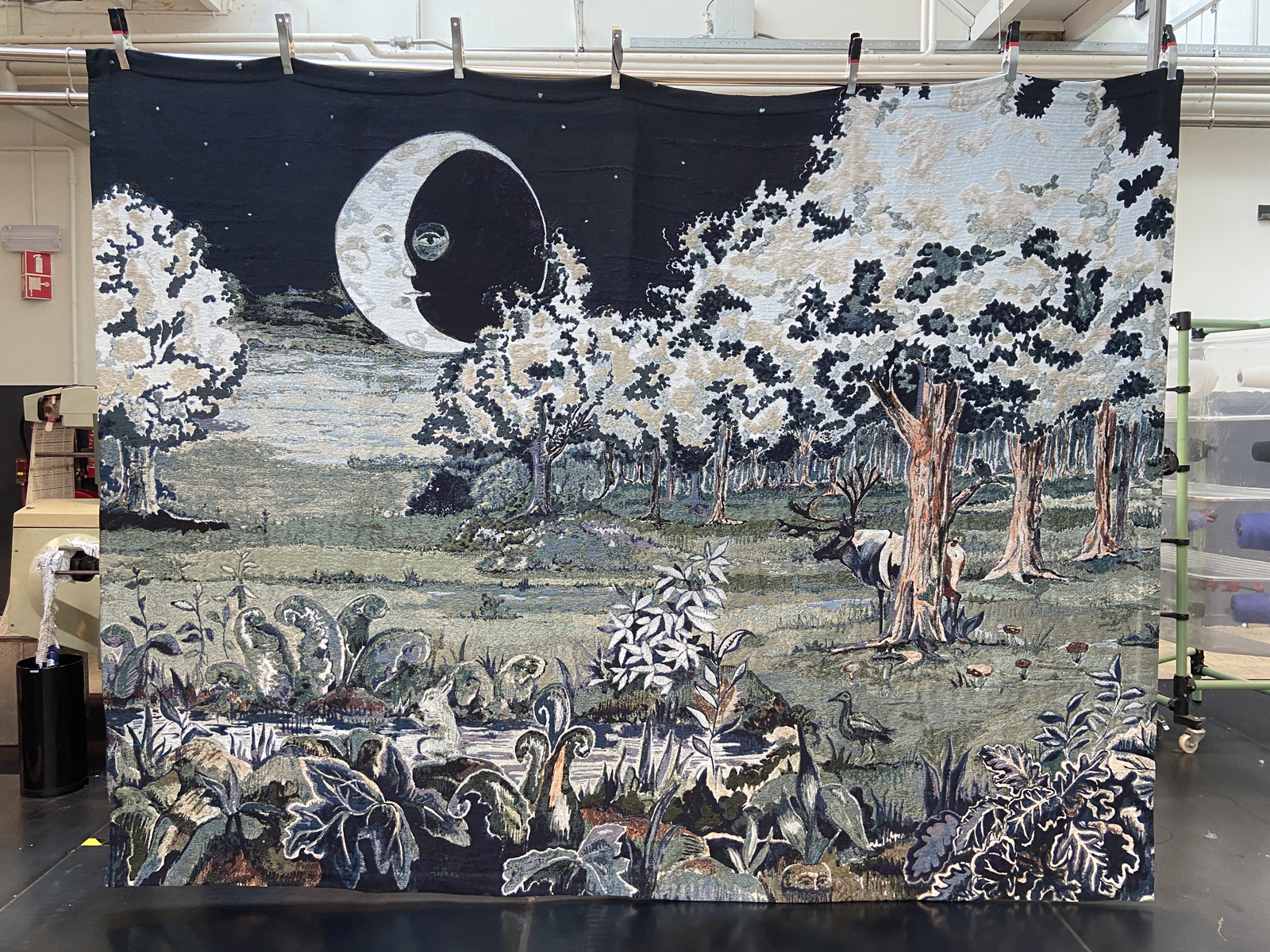
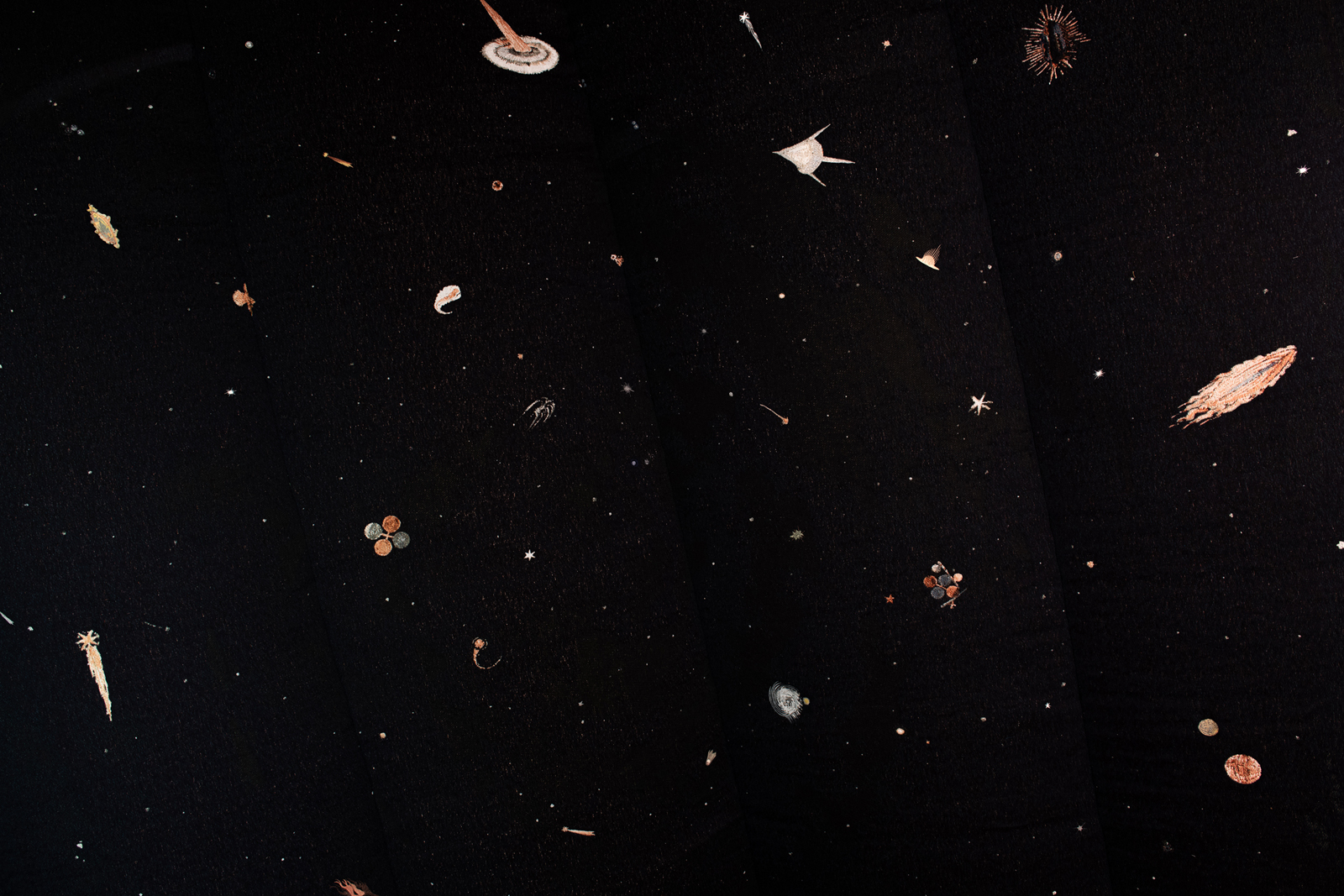
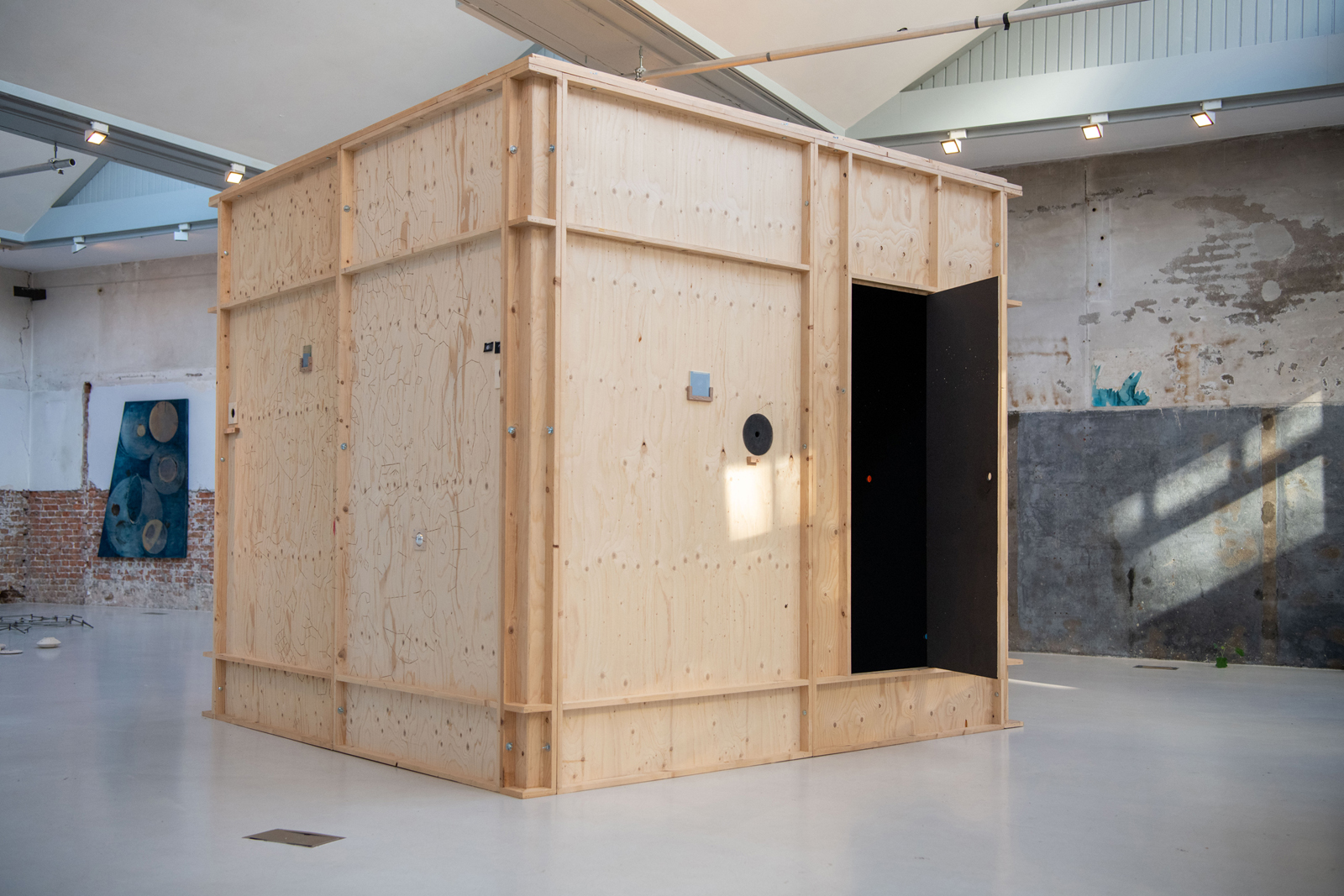
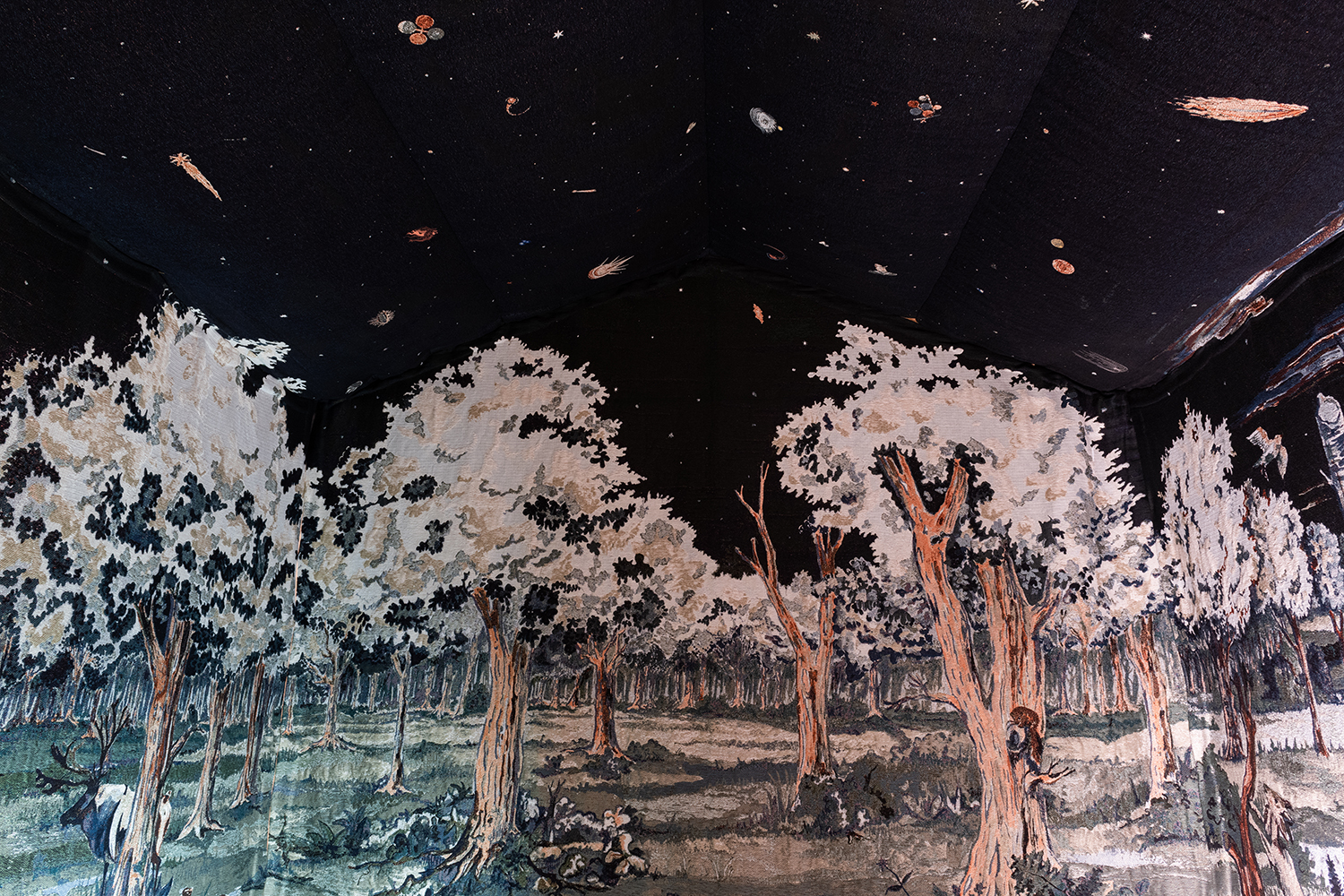
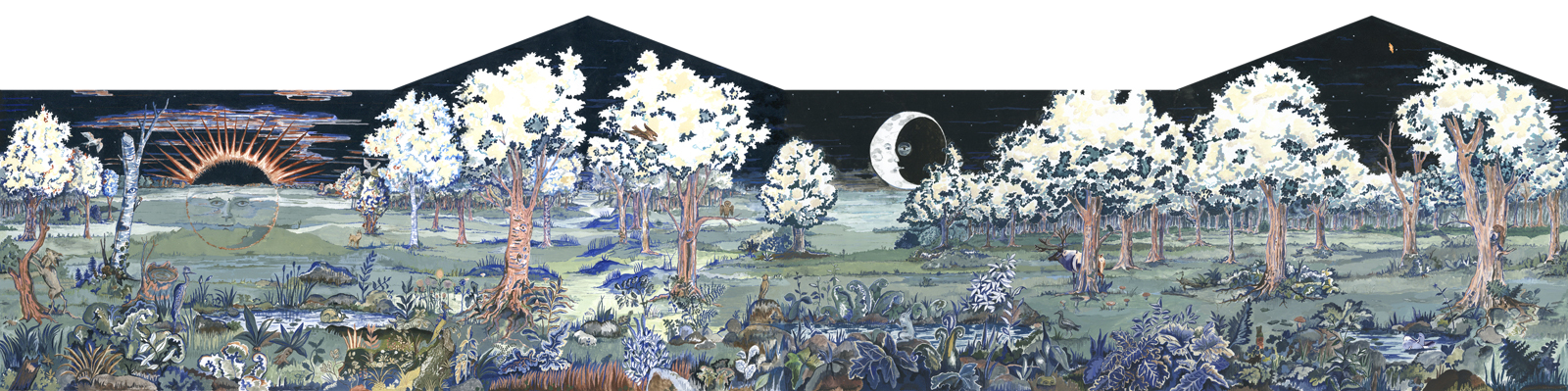
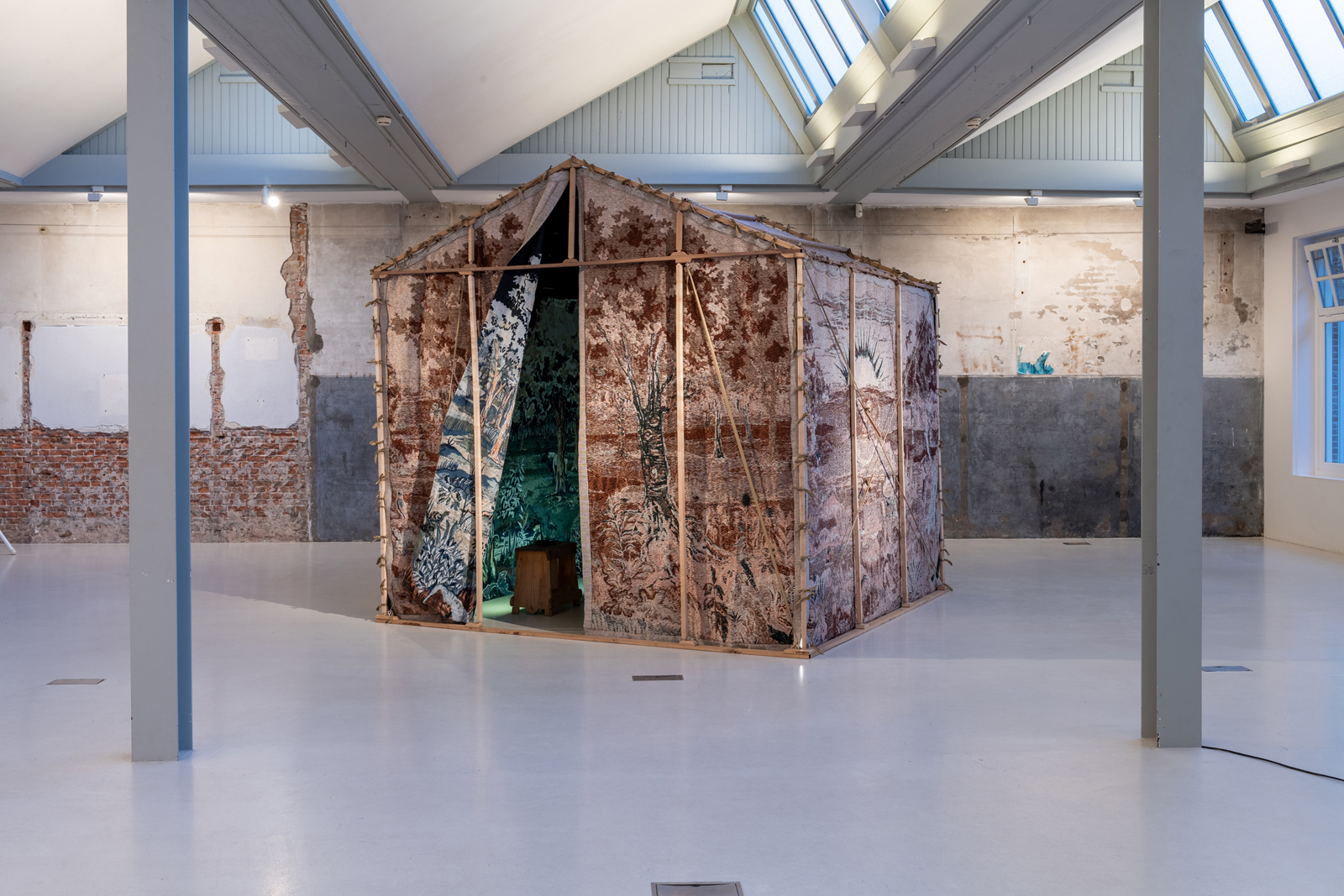
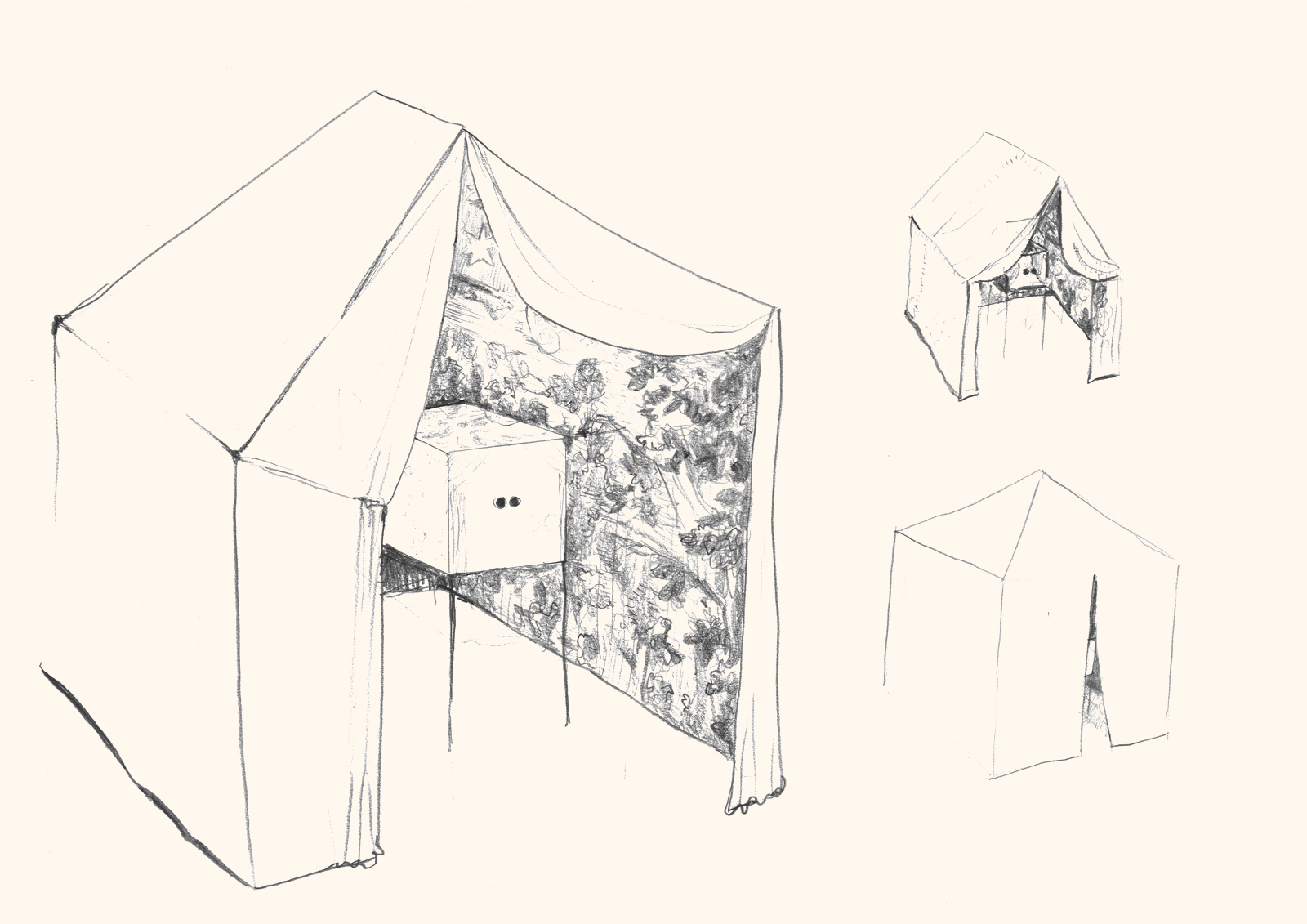
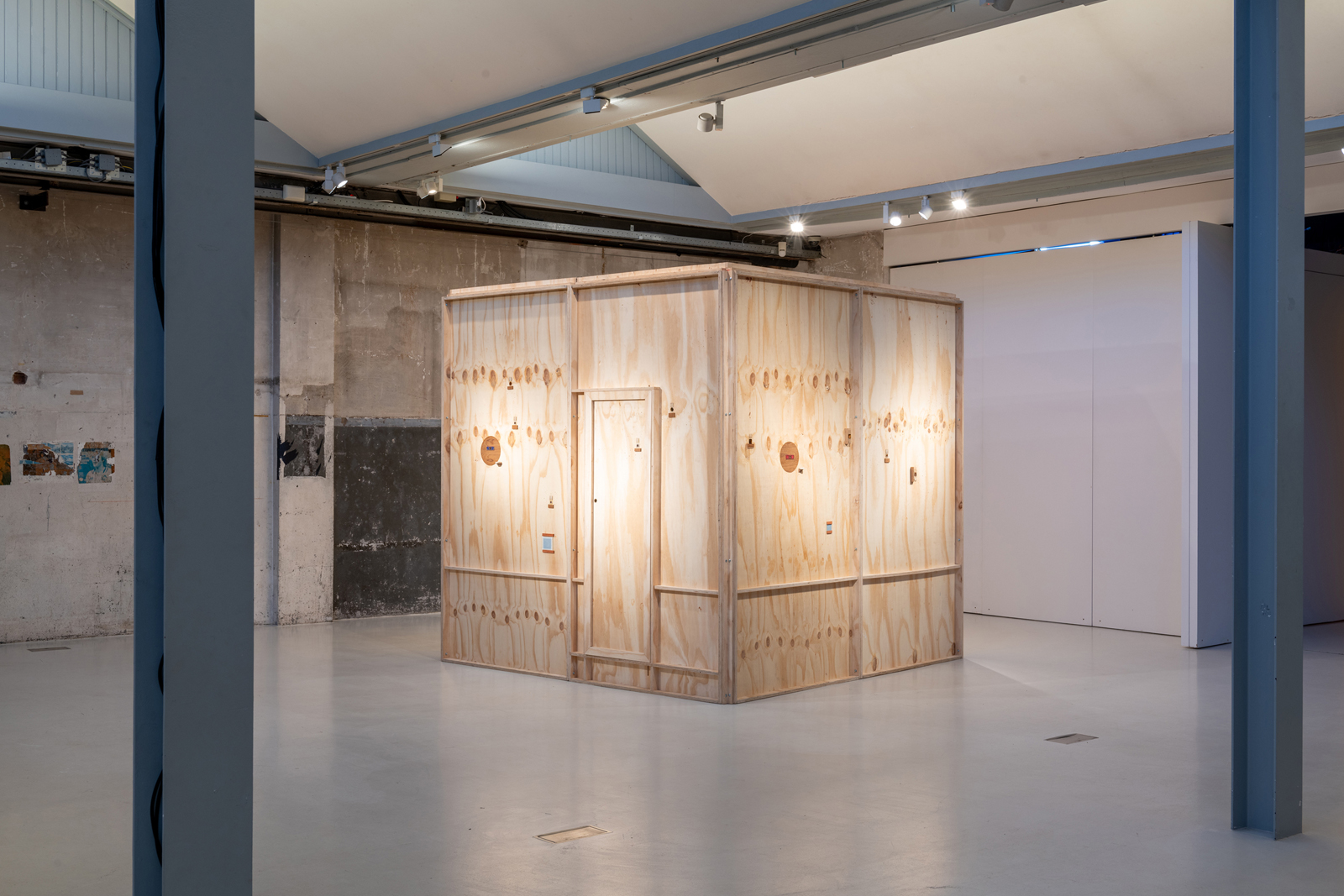
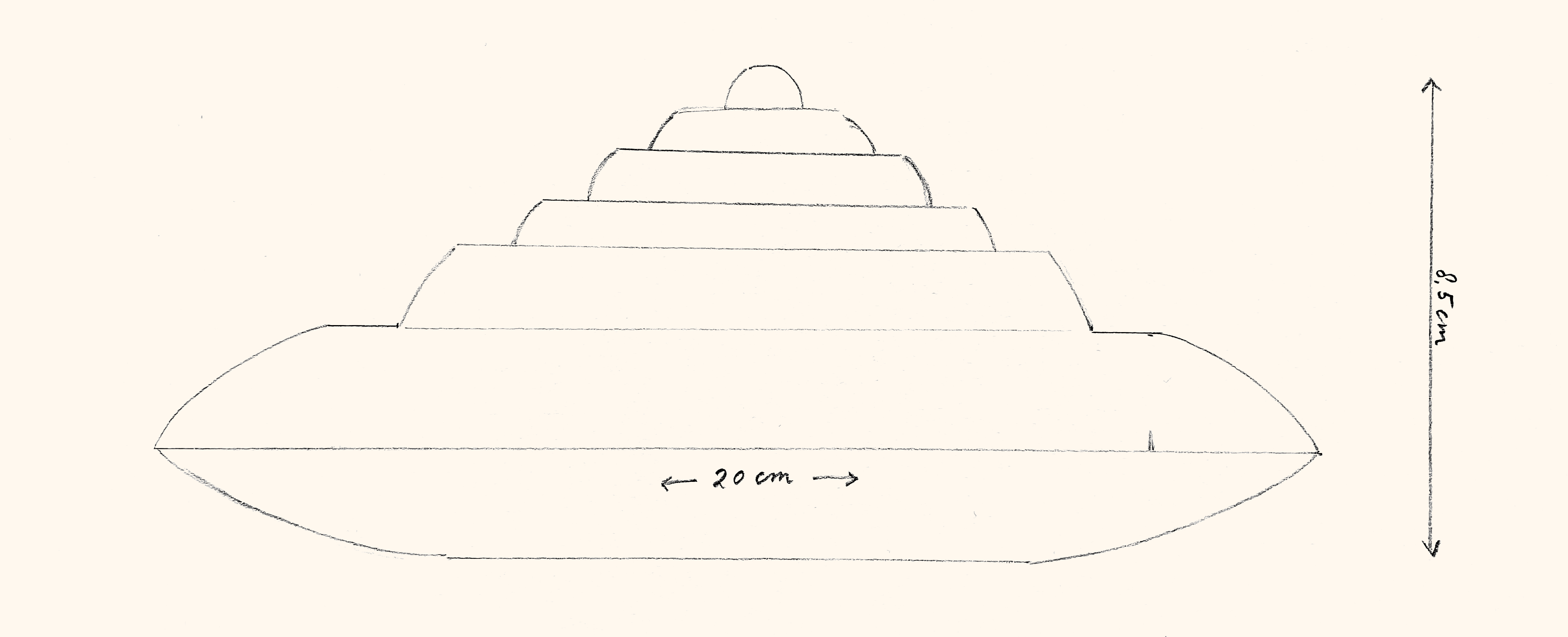
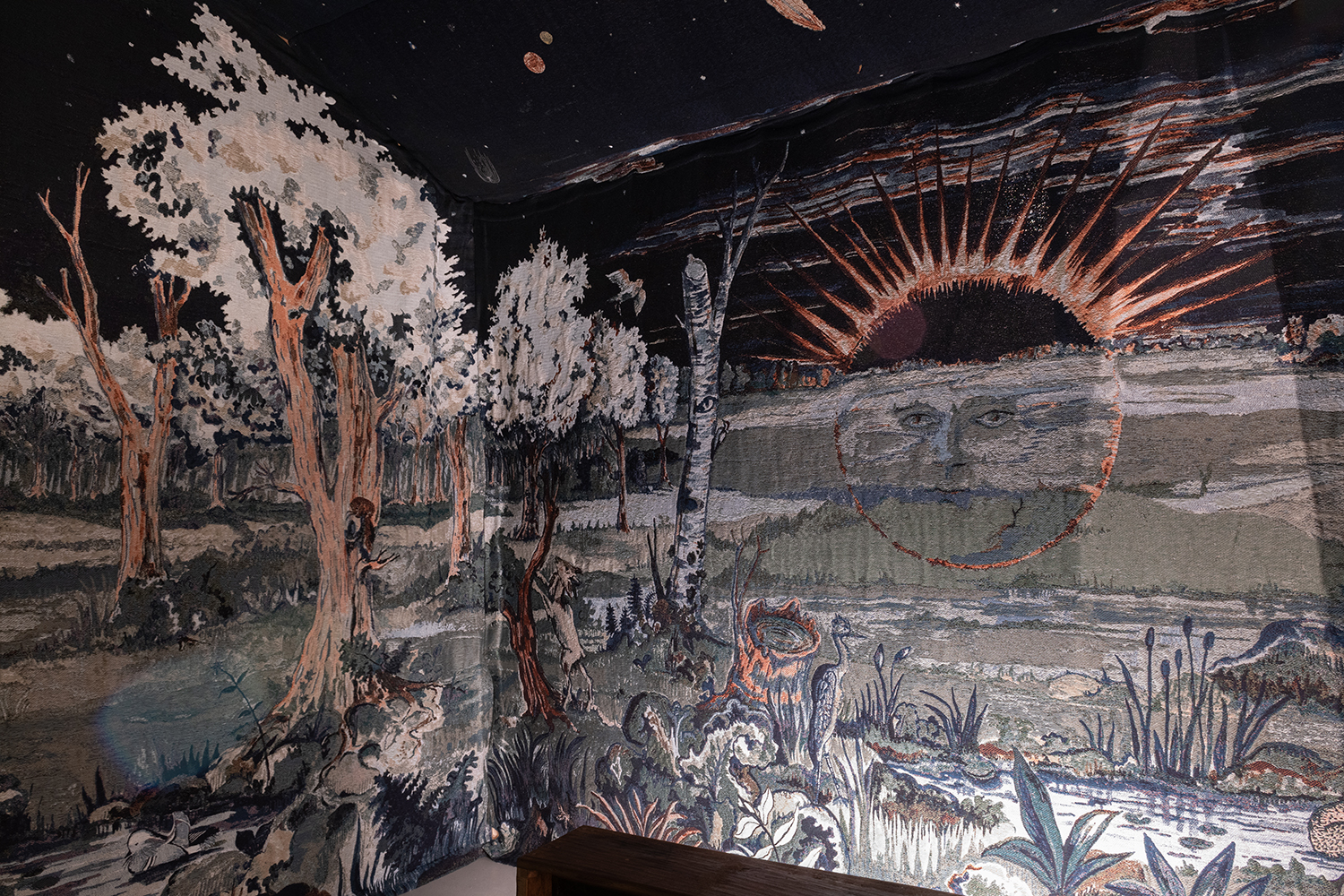
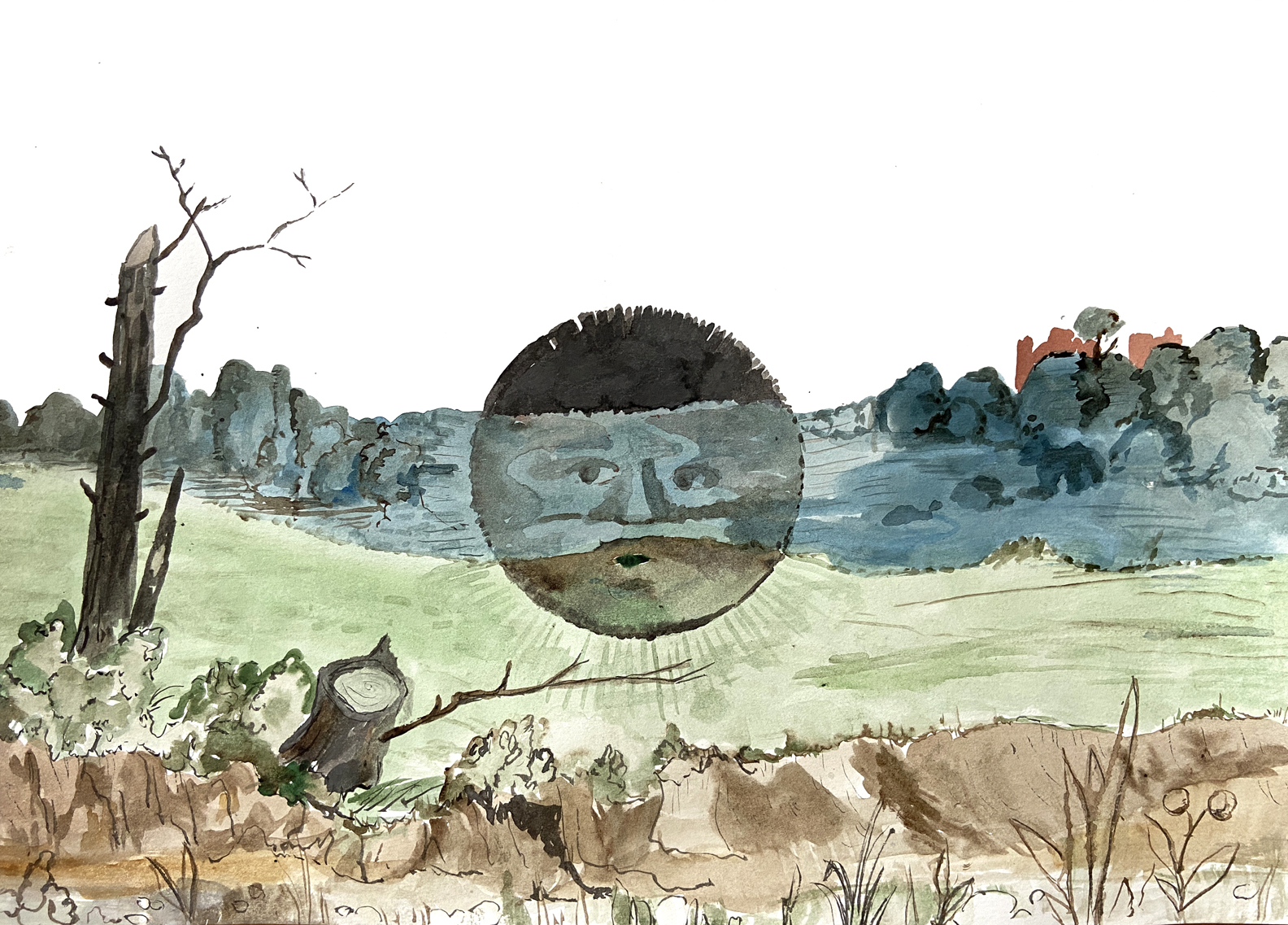
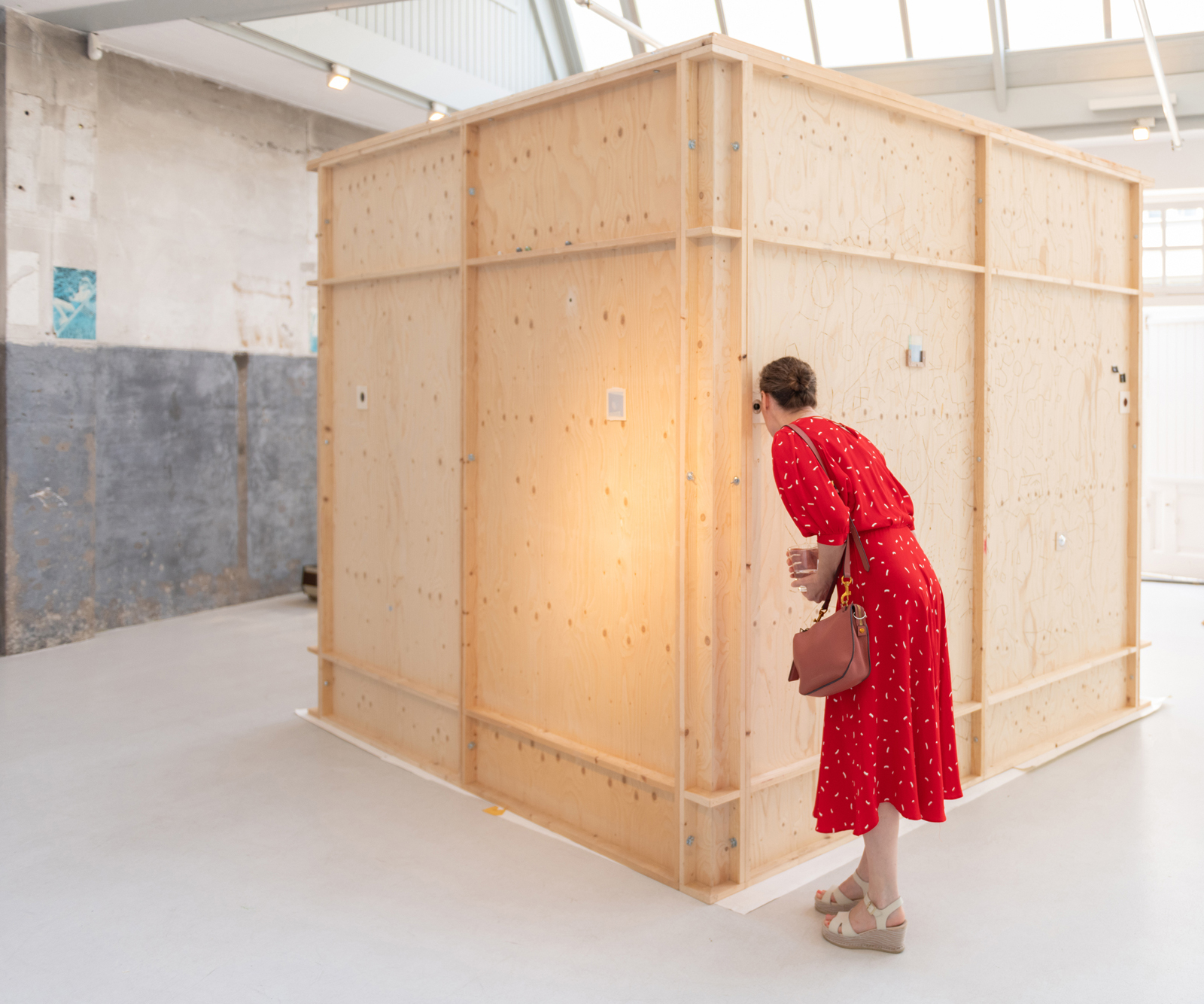
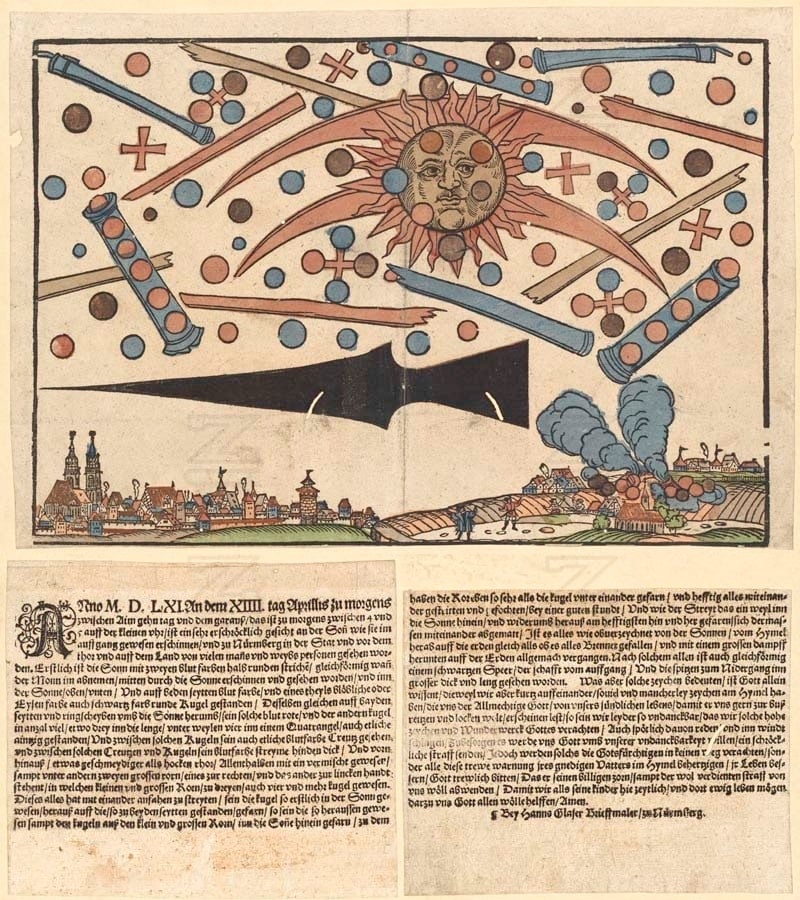
Perpetual Light is a tent with a wooden frame, made of jacquard woven and embroidered tapestry, inspired by seventeen-century wall tapestries. The interior panorama depicts a lush landscape and a starry sky with celestial bodies, and mysterious flying objects, based on historical paintings and drawings of phenomena (nowadays often interpreted as UFOs (or UAPs). The tapestry upends the belief that the world exists only for human beings. In Perpetual Light, the world is there while man is playing no part in it. Yet, the world as shown in the tapestry was created for man, as a work of art. The tent invites spectators to physically enter this portable universe. They in turn can be observed as they become part of the depicted landscape. Inside the tent you are in a state of in-betweenness, you are neither inside nor outside, it is neither day nor night, you are physically present, but absent in the depicted world.

FIG 4. We are in the universe (2022) (peepshow box)
FIG 5. And the universe is in us (2023) (peepshow box)

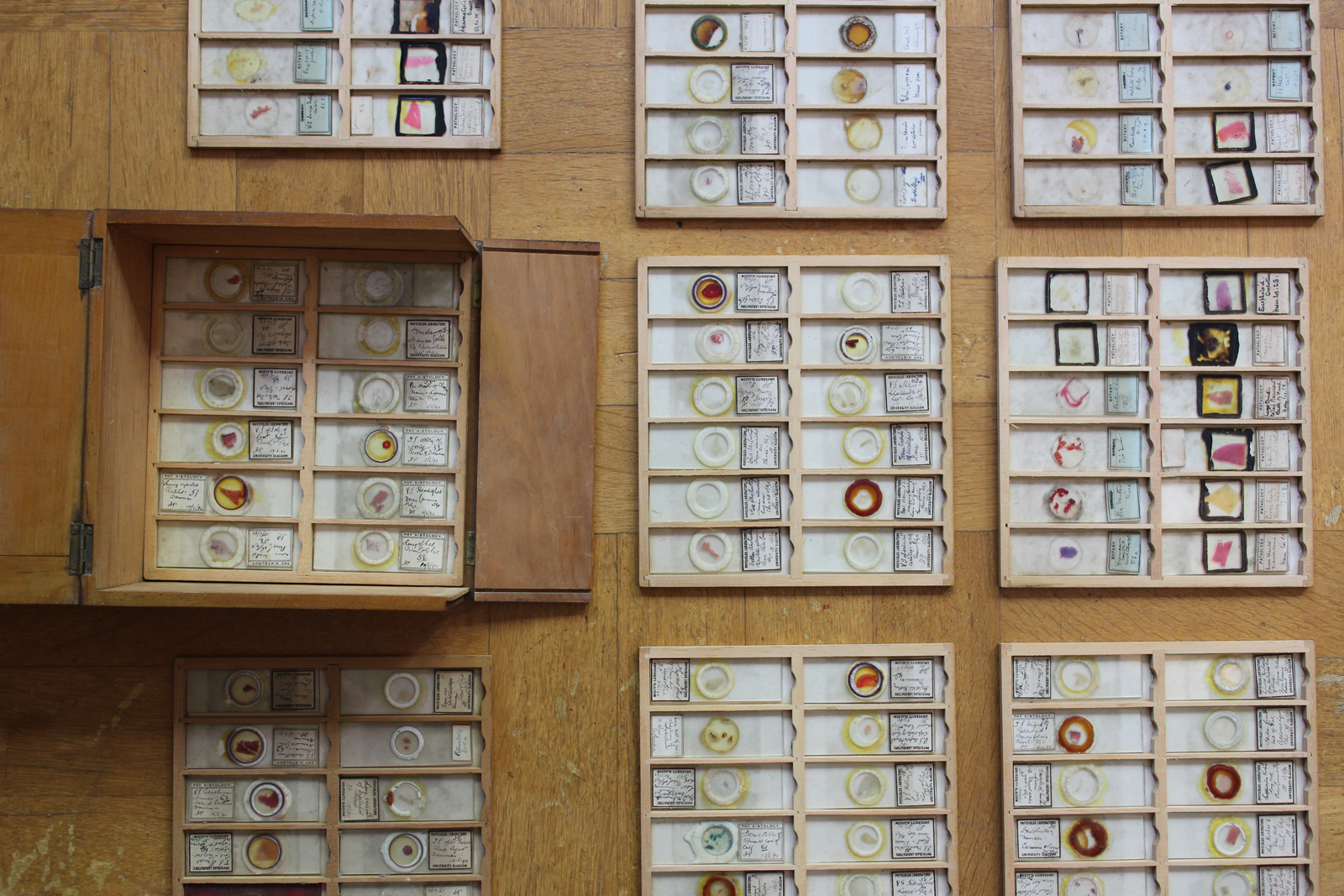
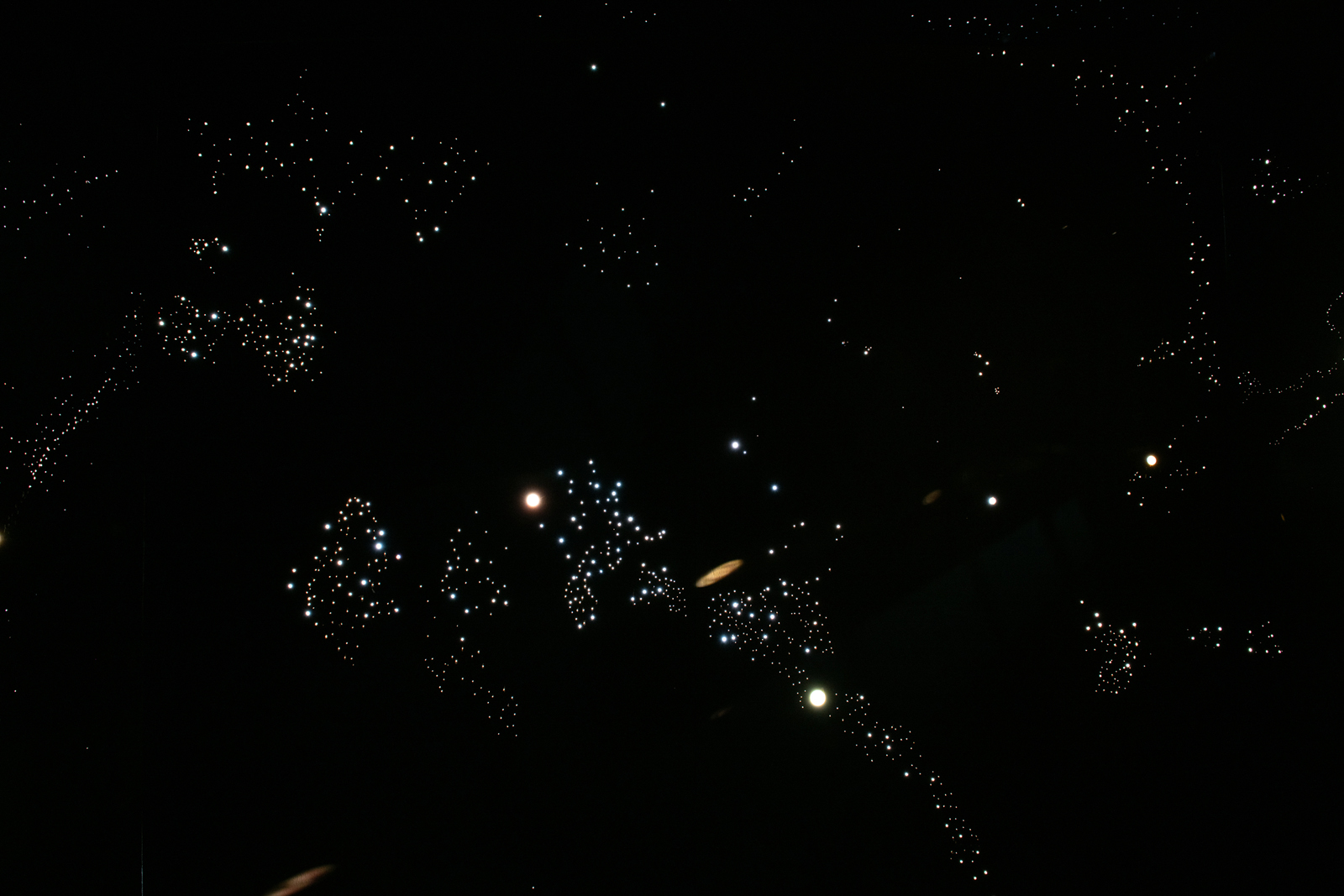
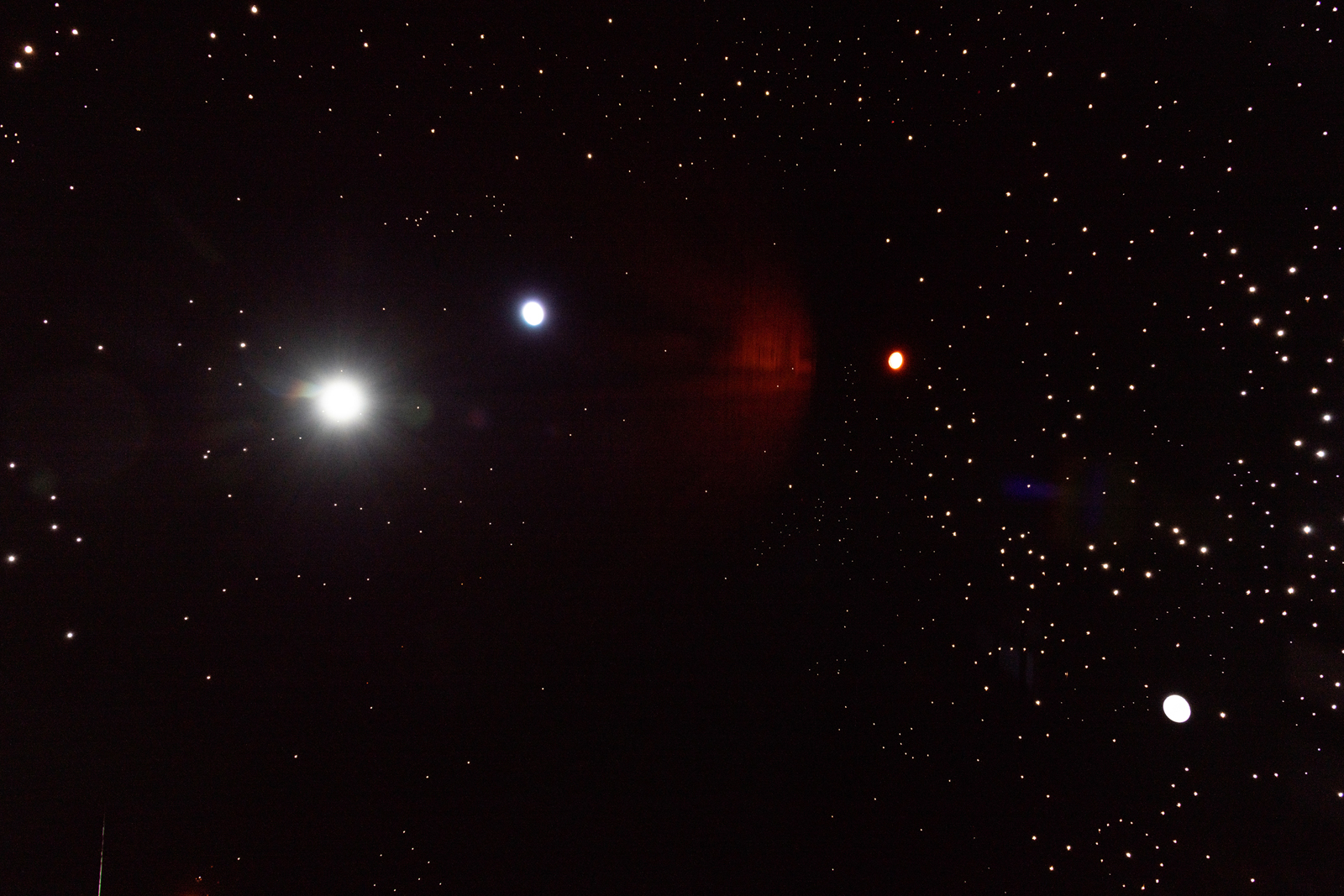
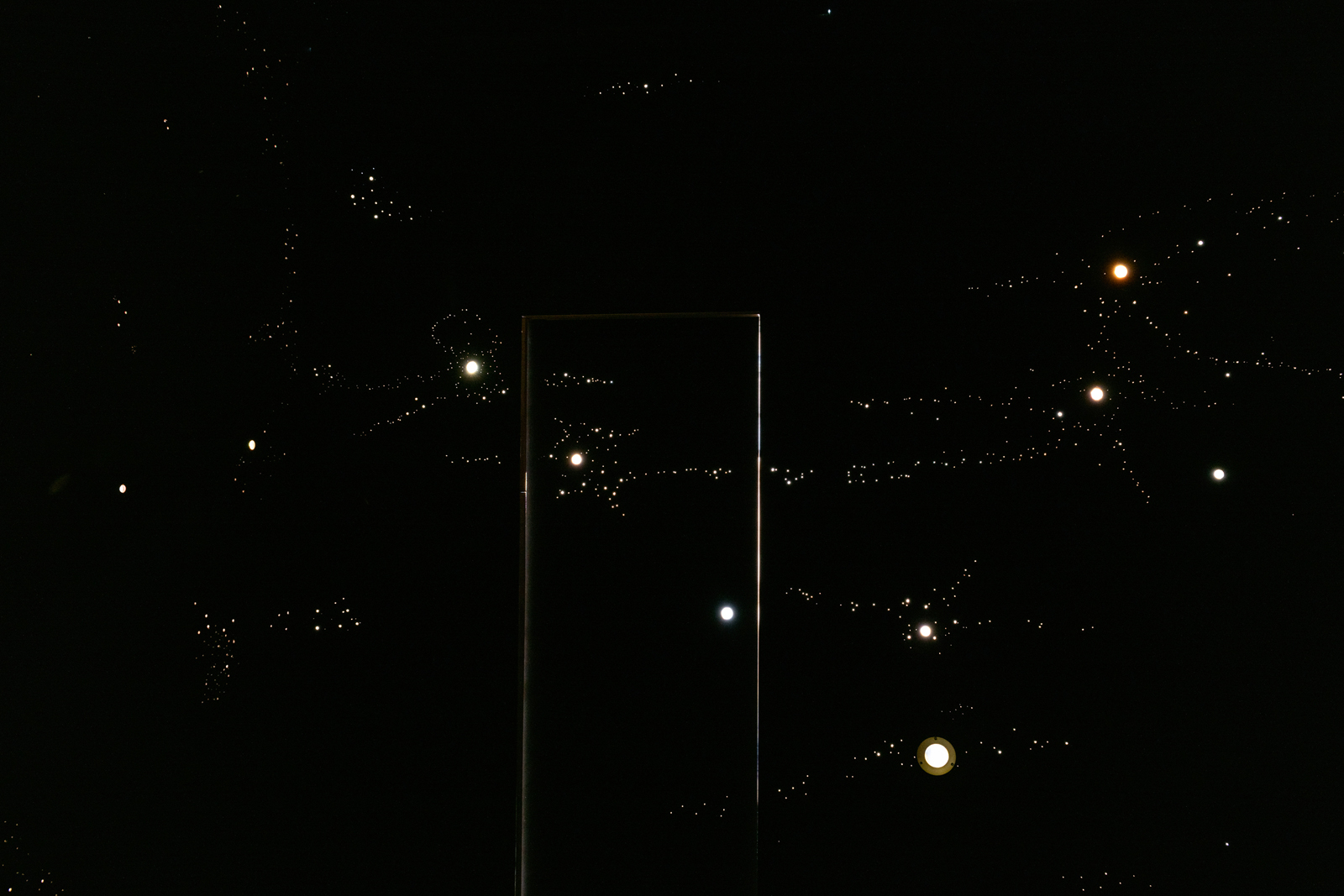
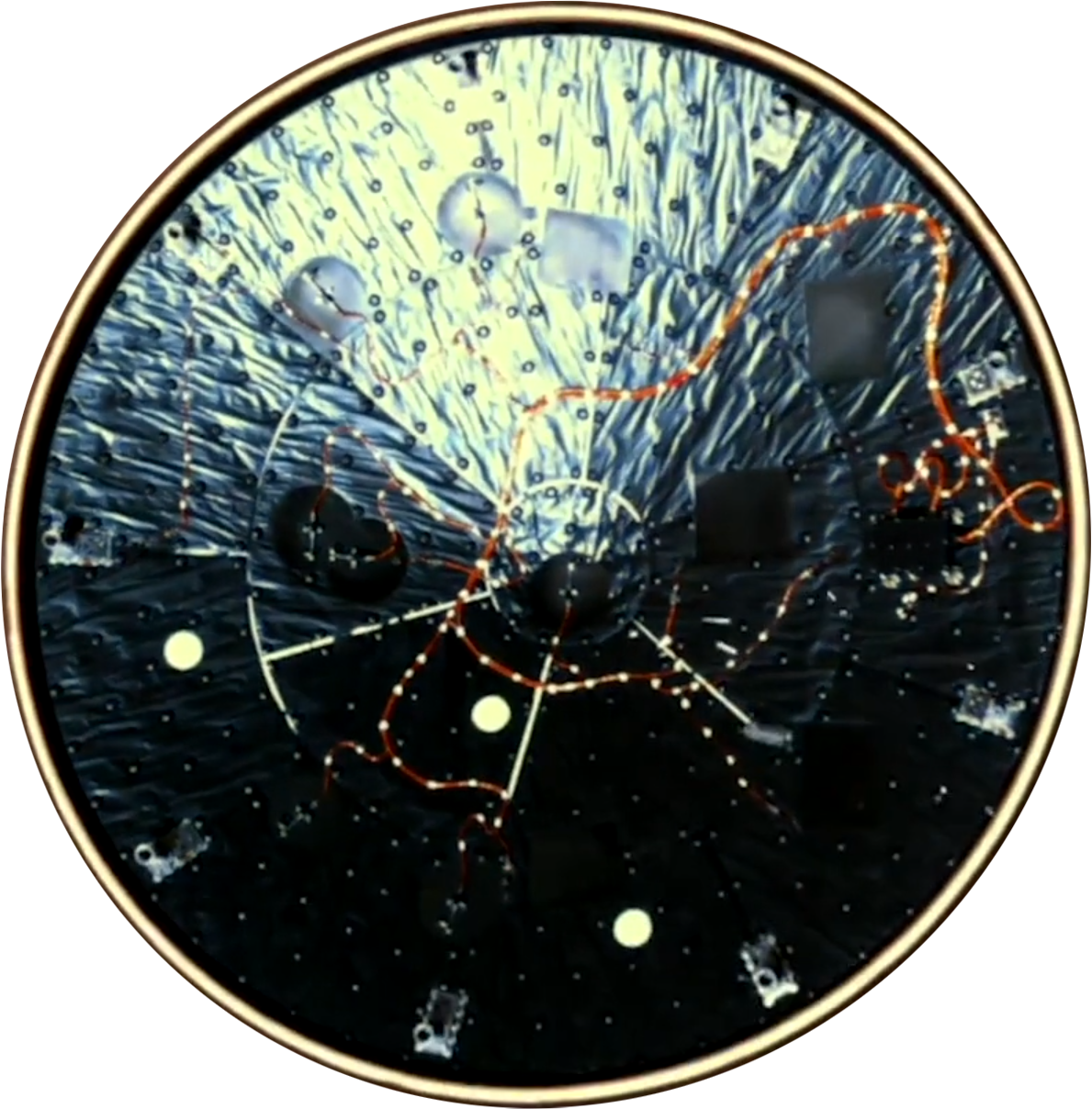
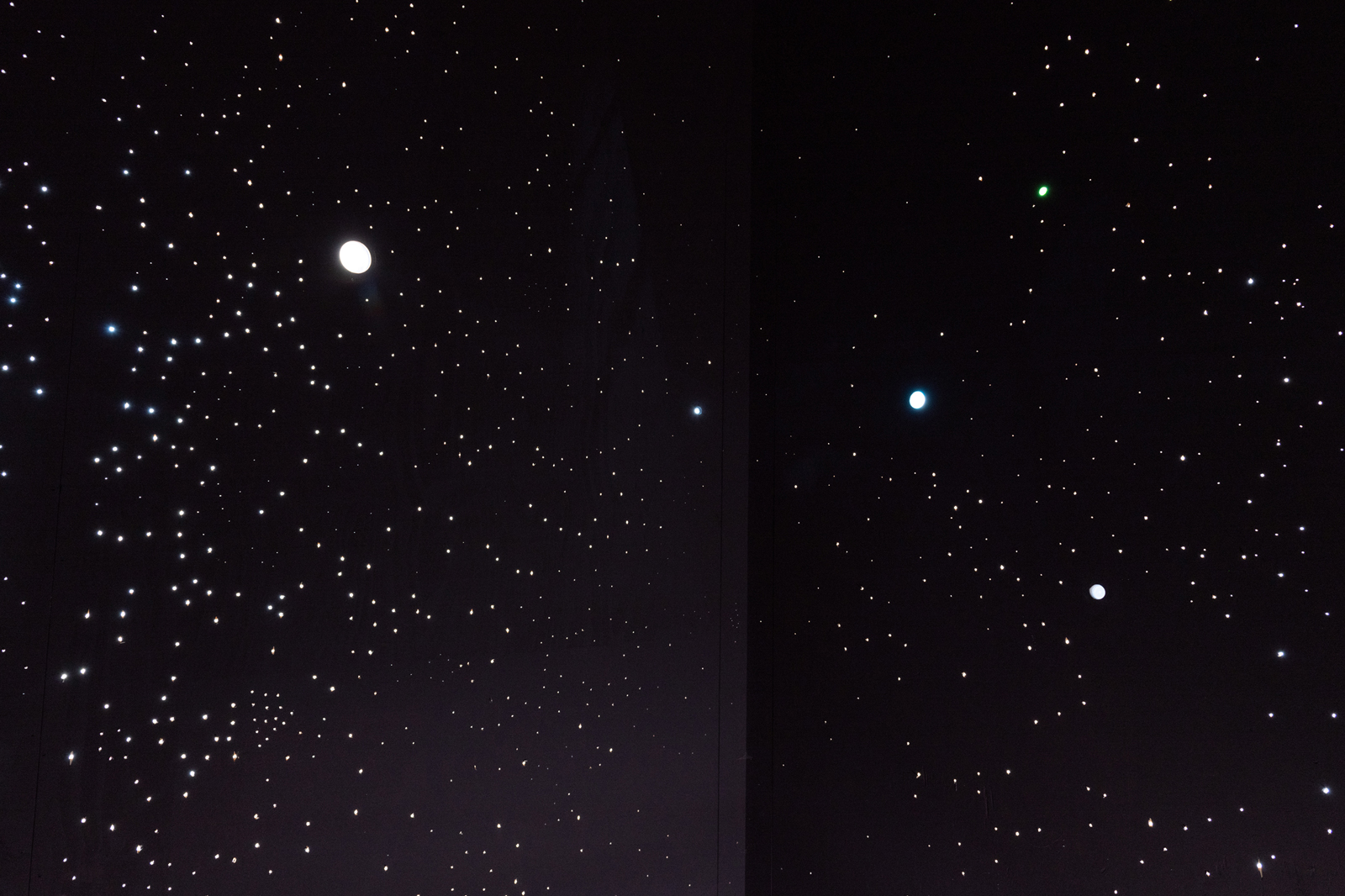
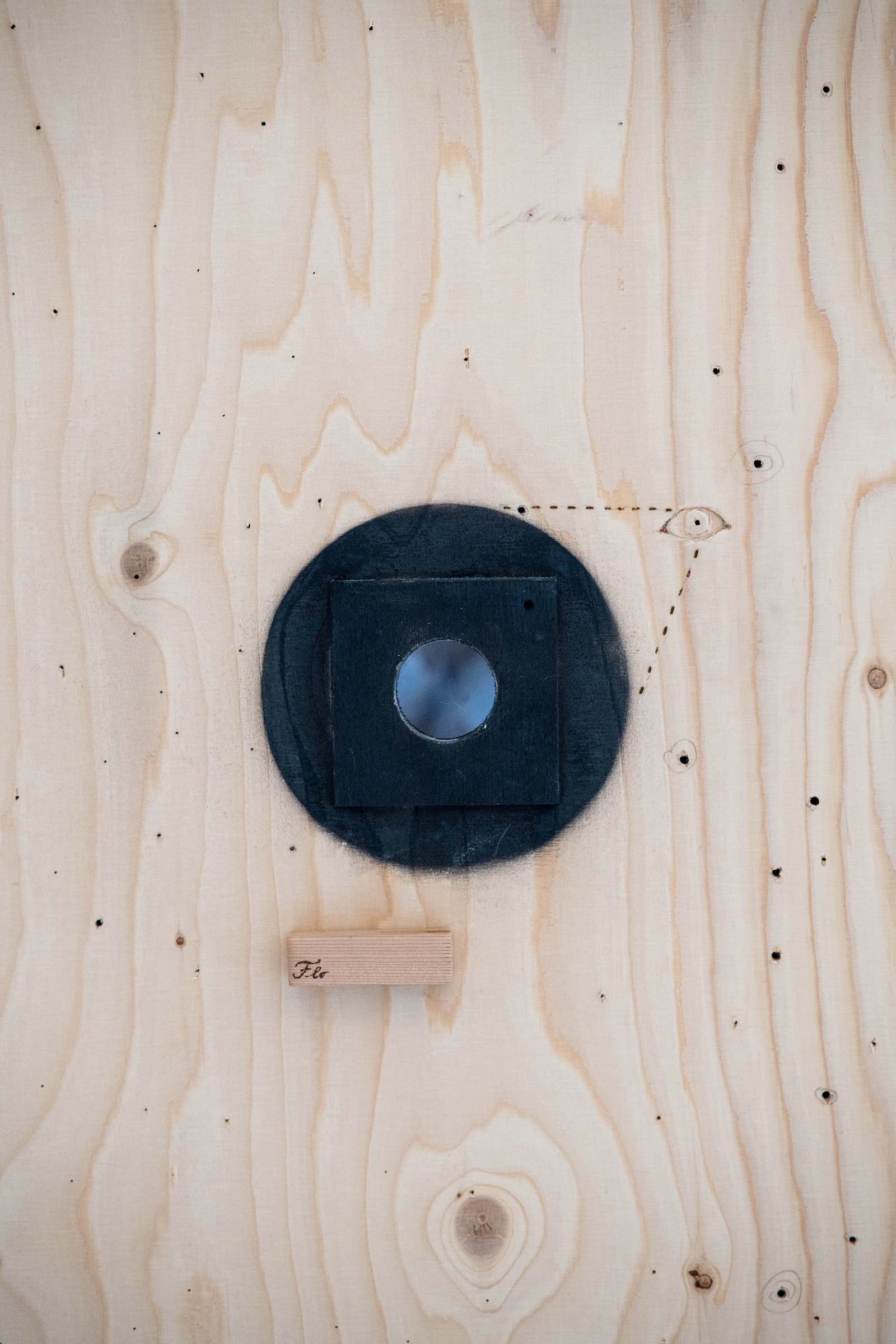
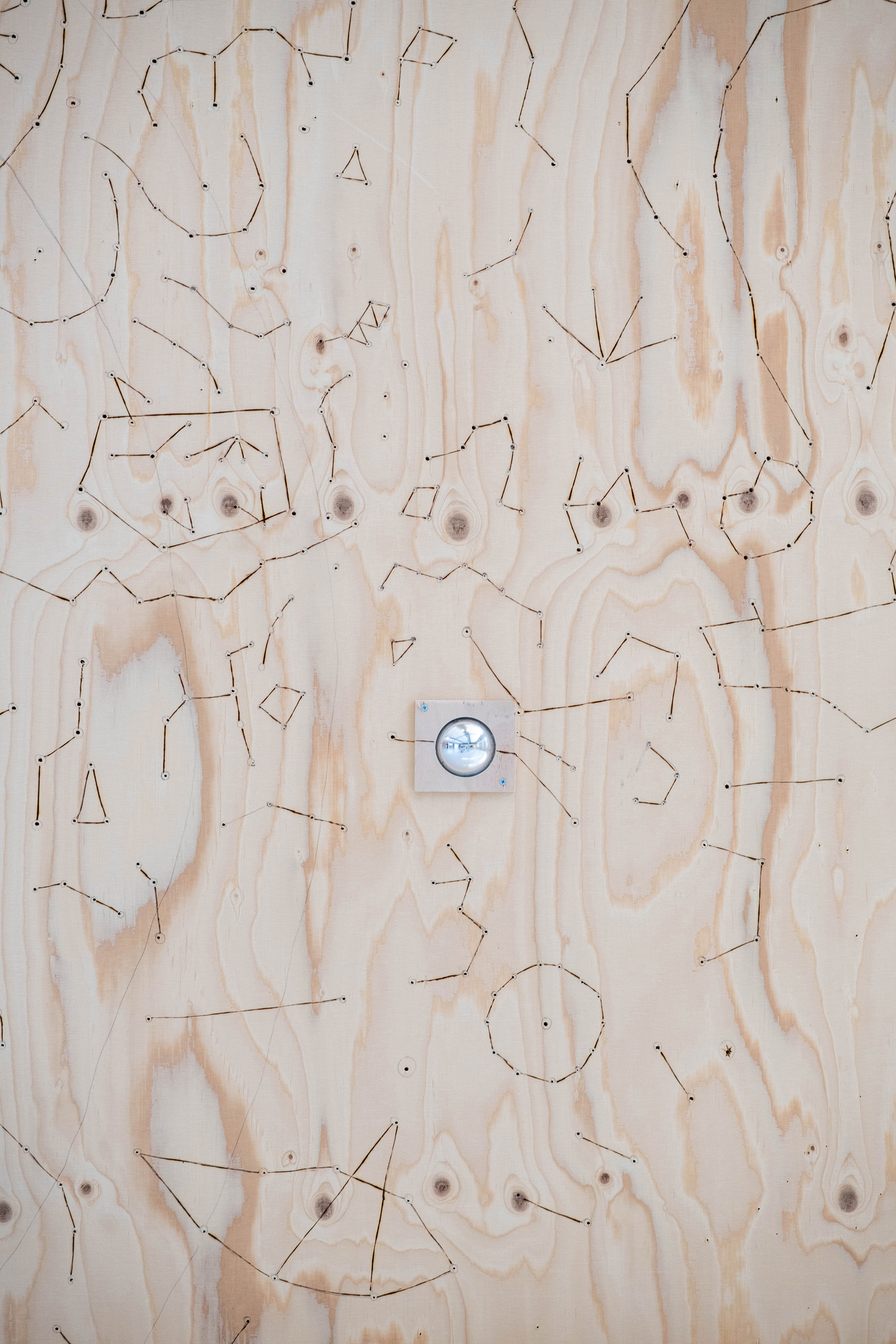
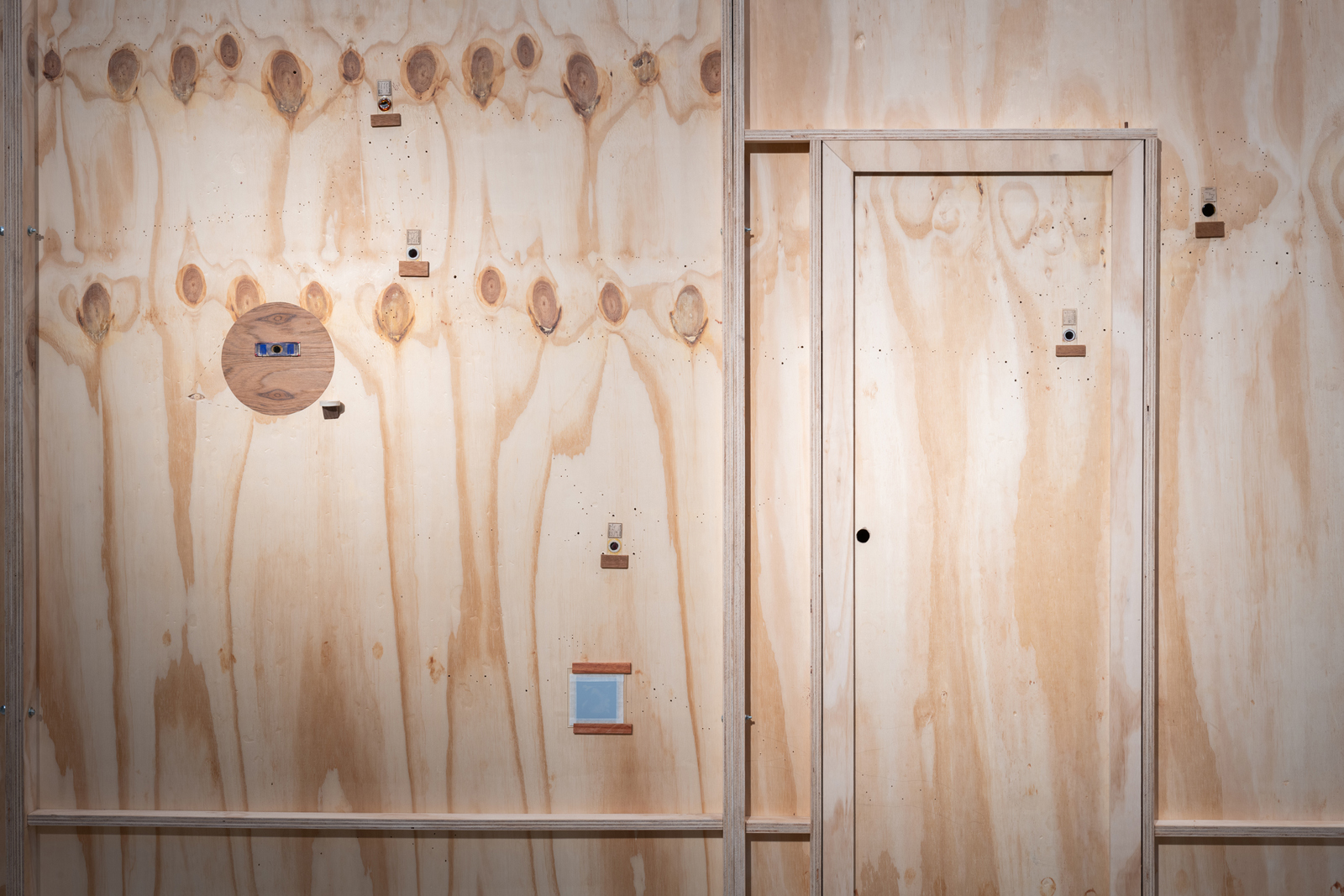
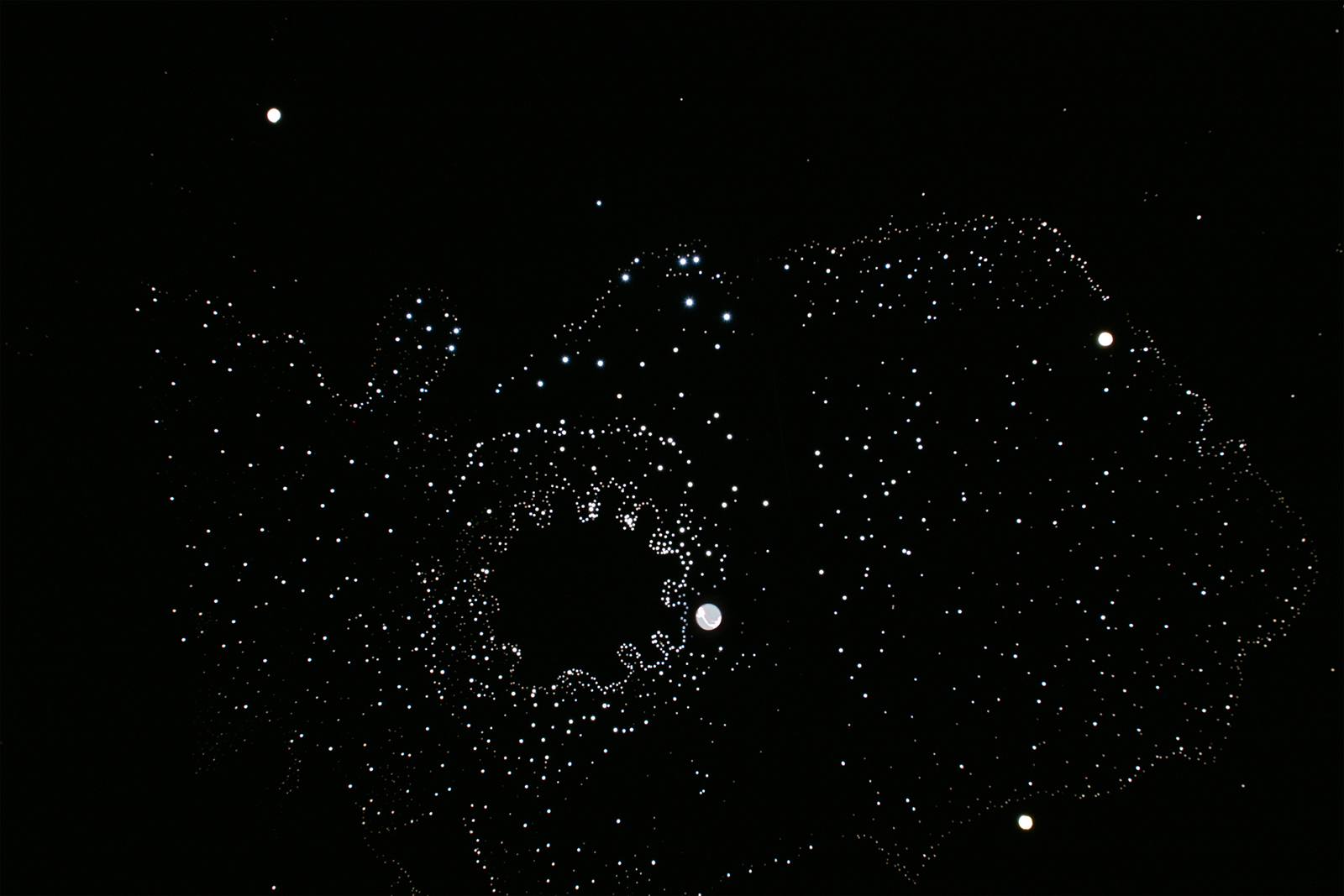
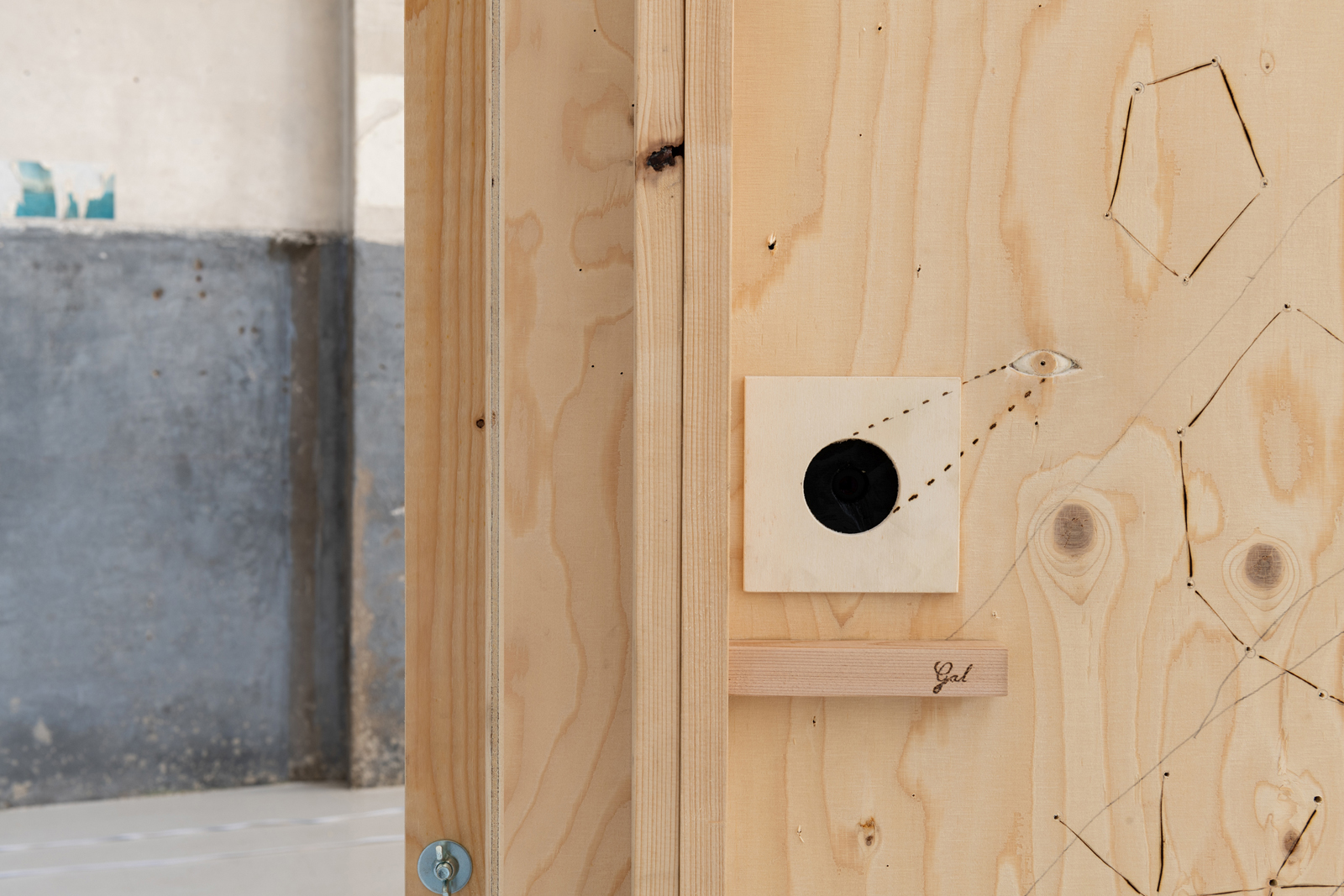
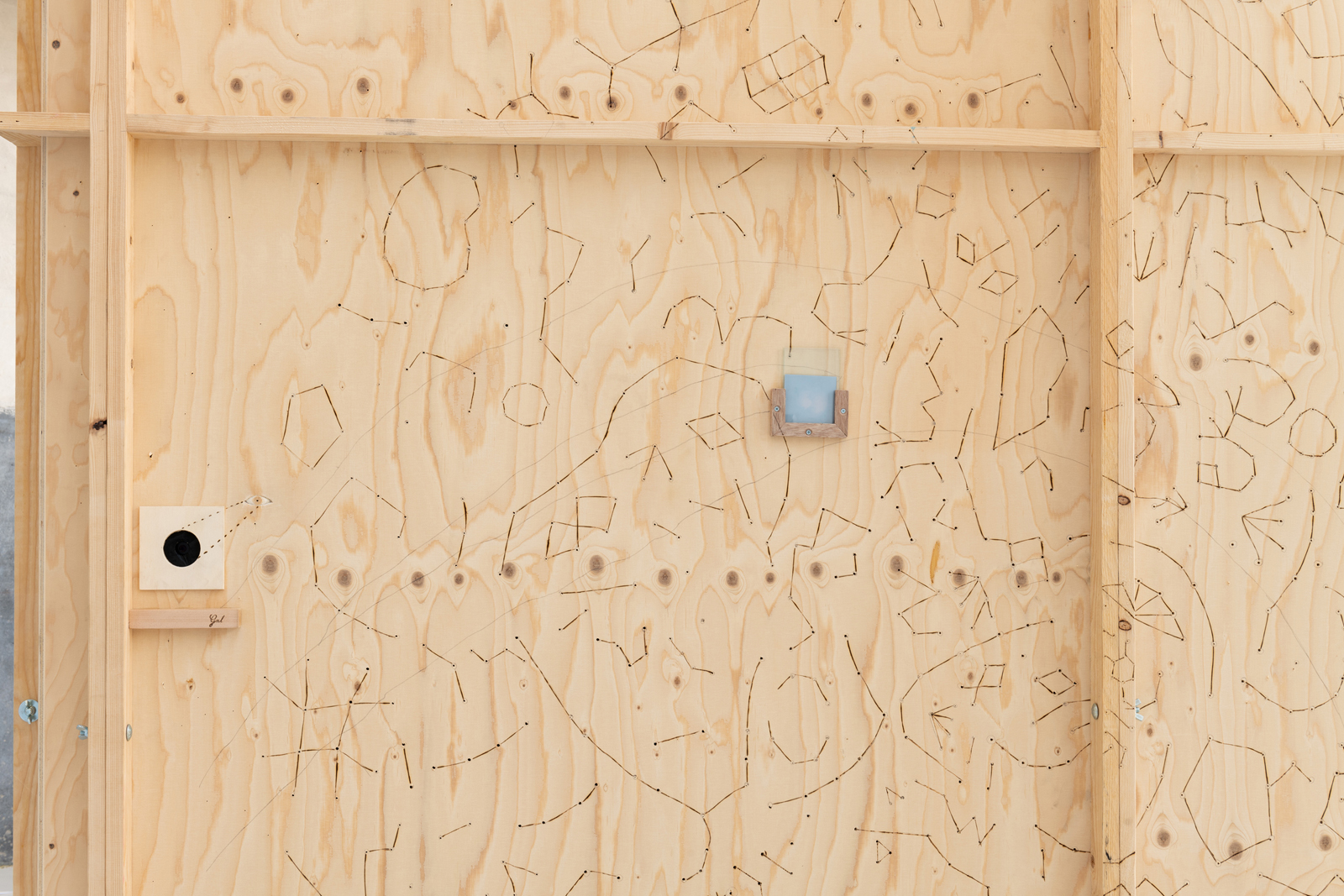
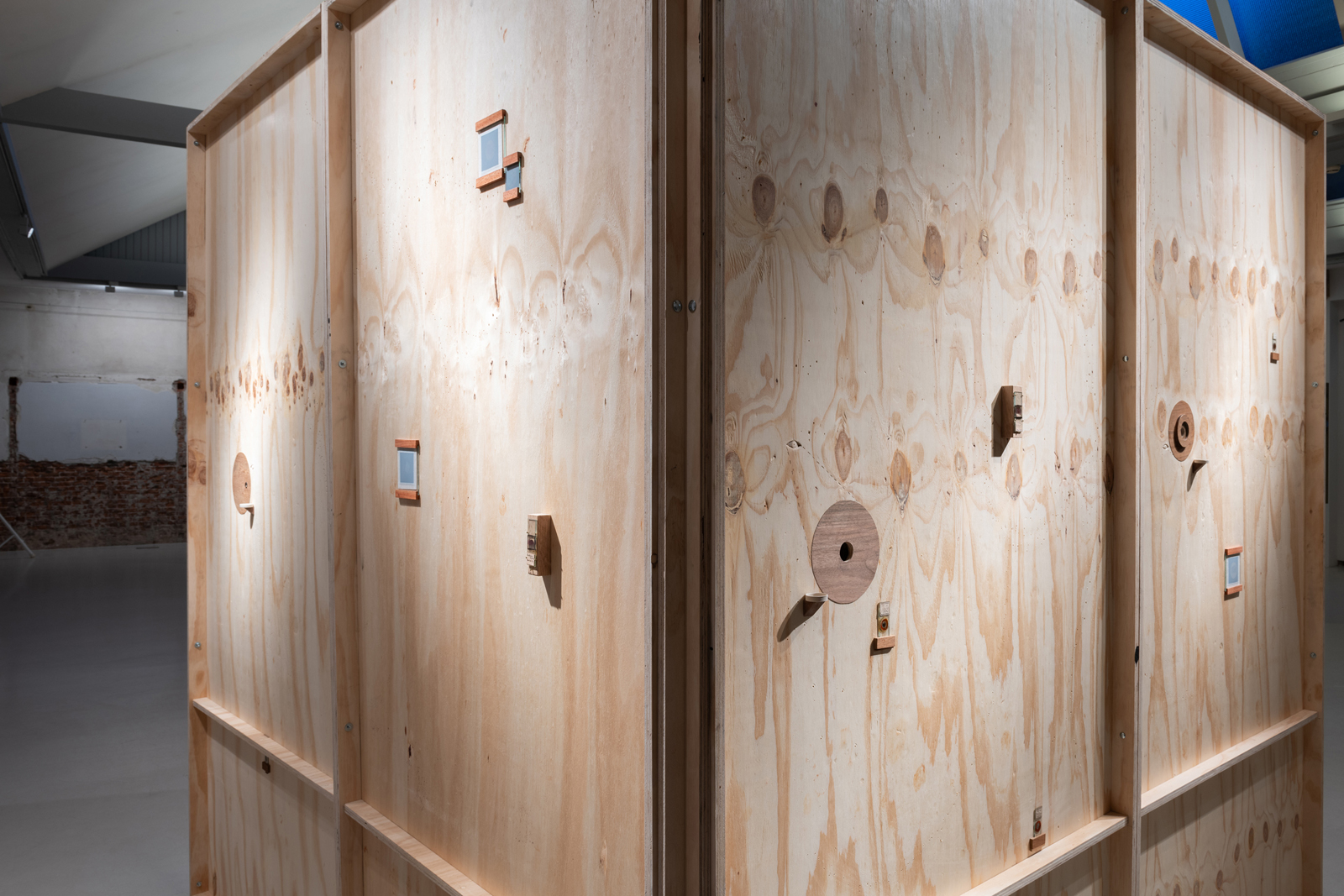
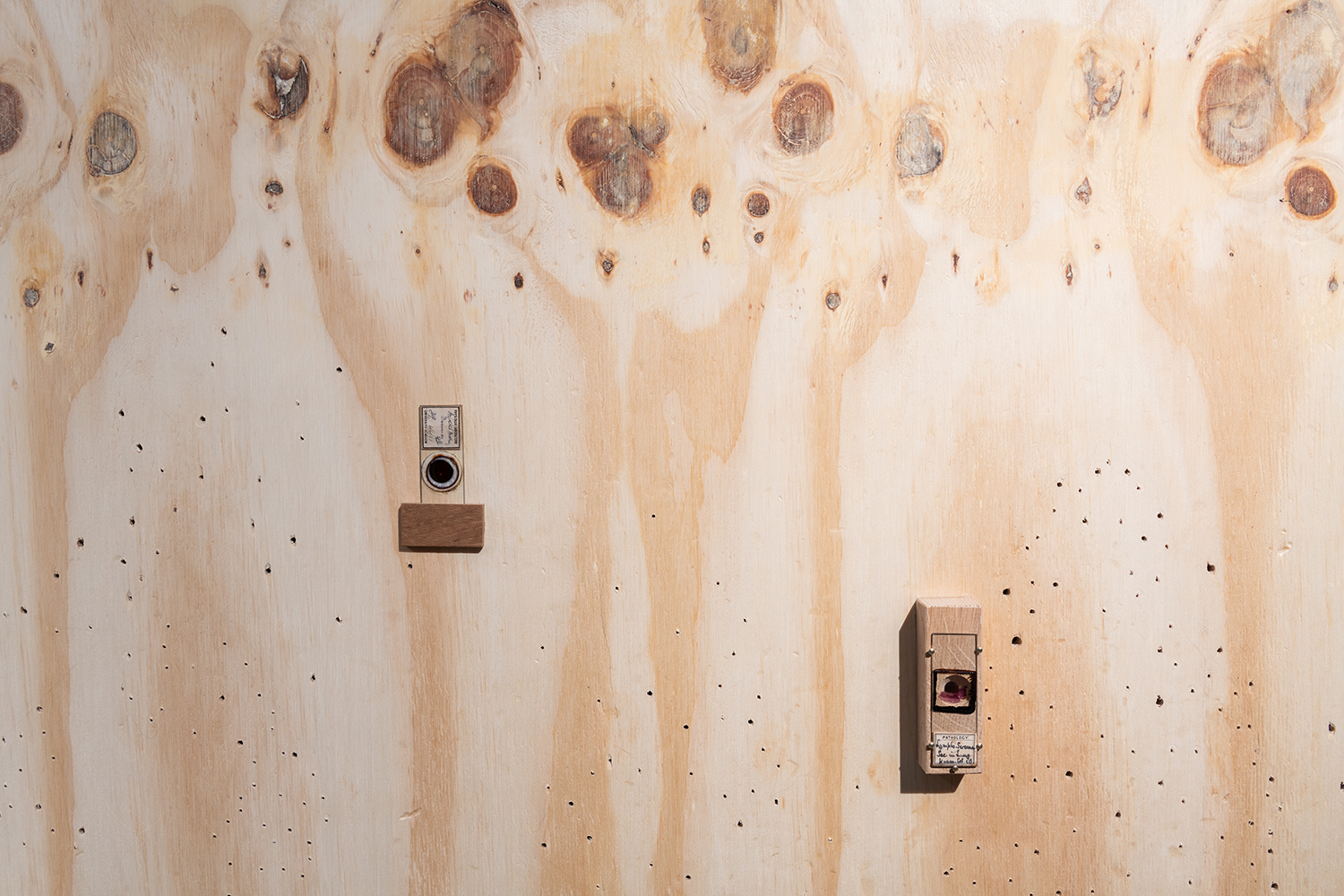
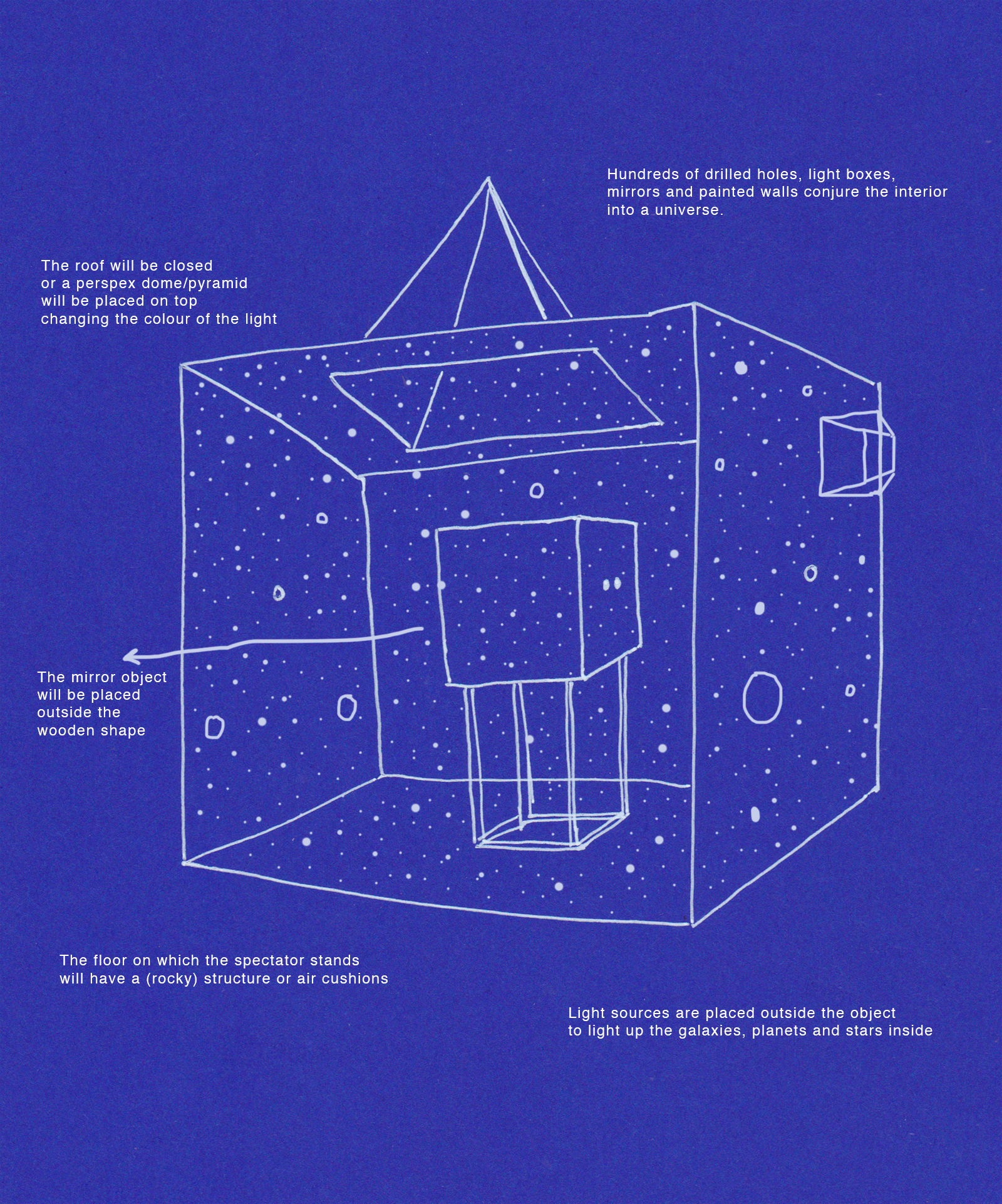
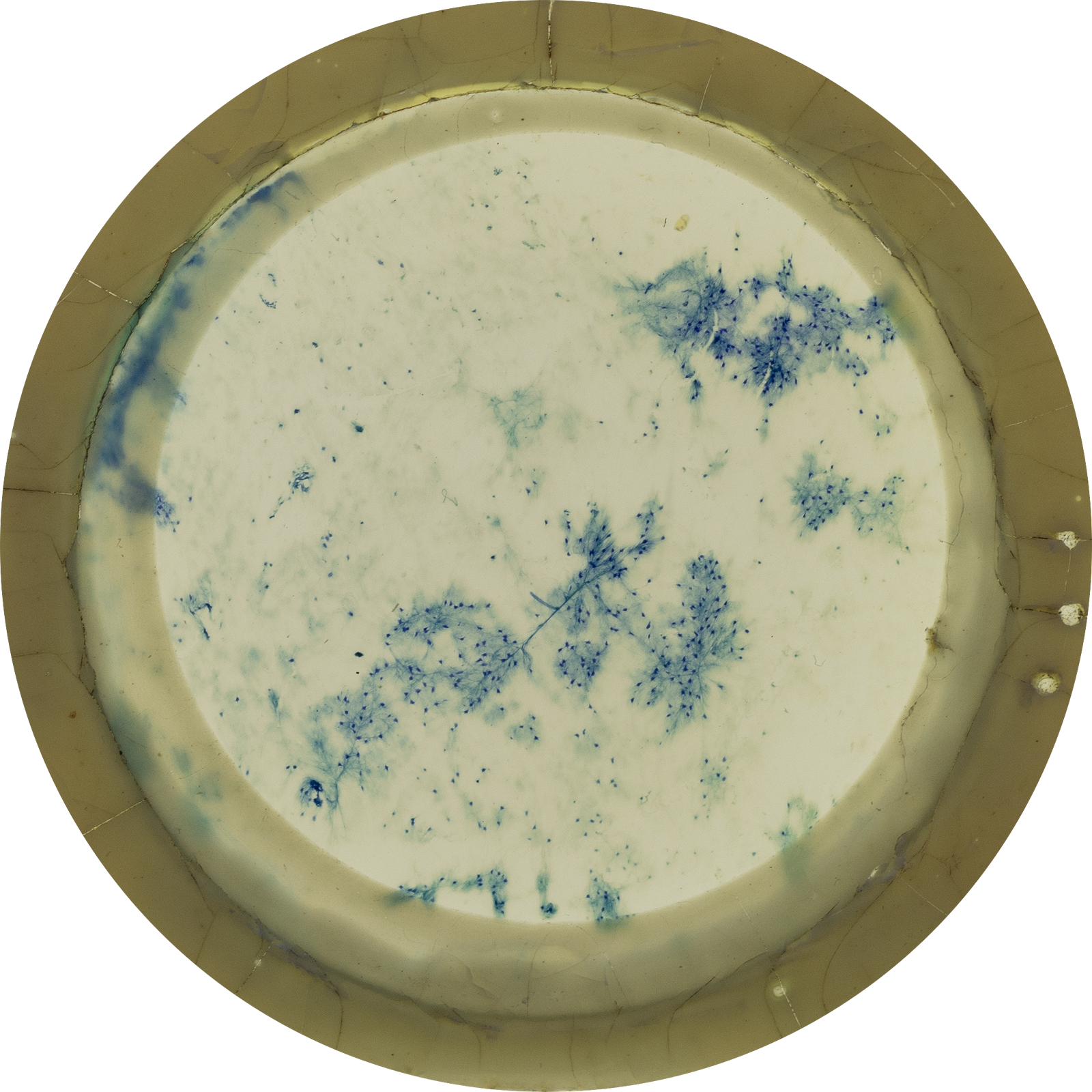
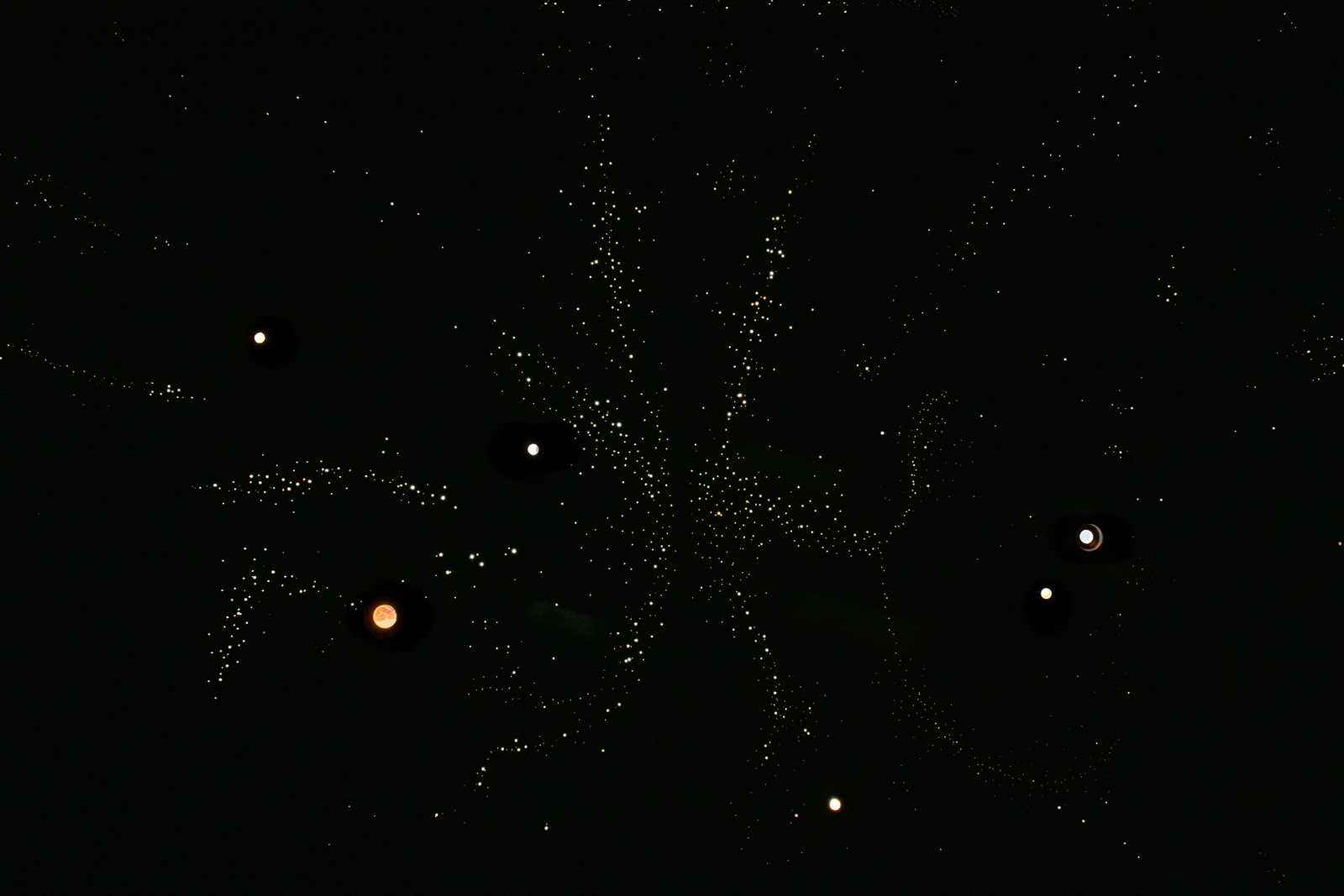
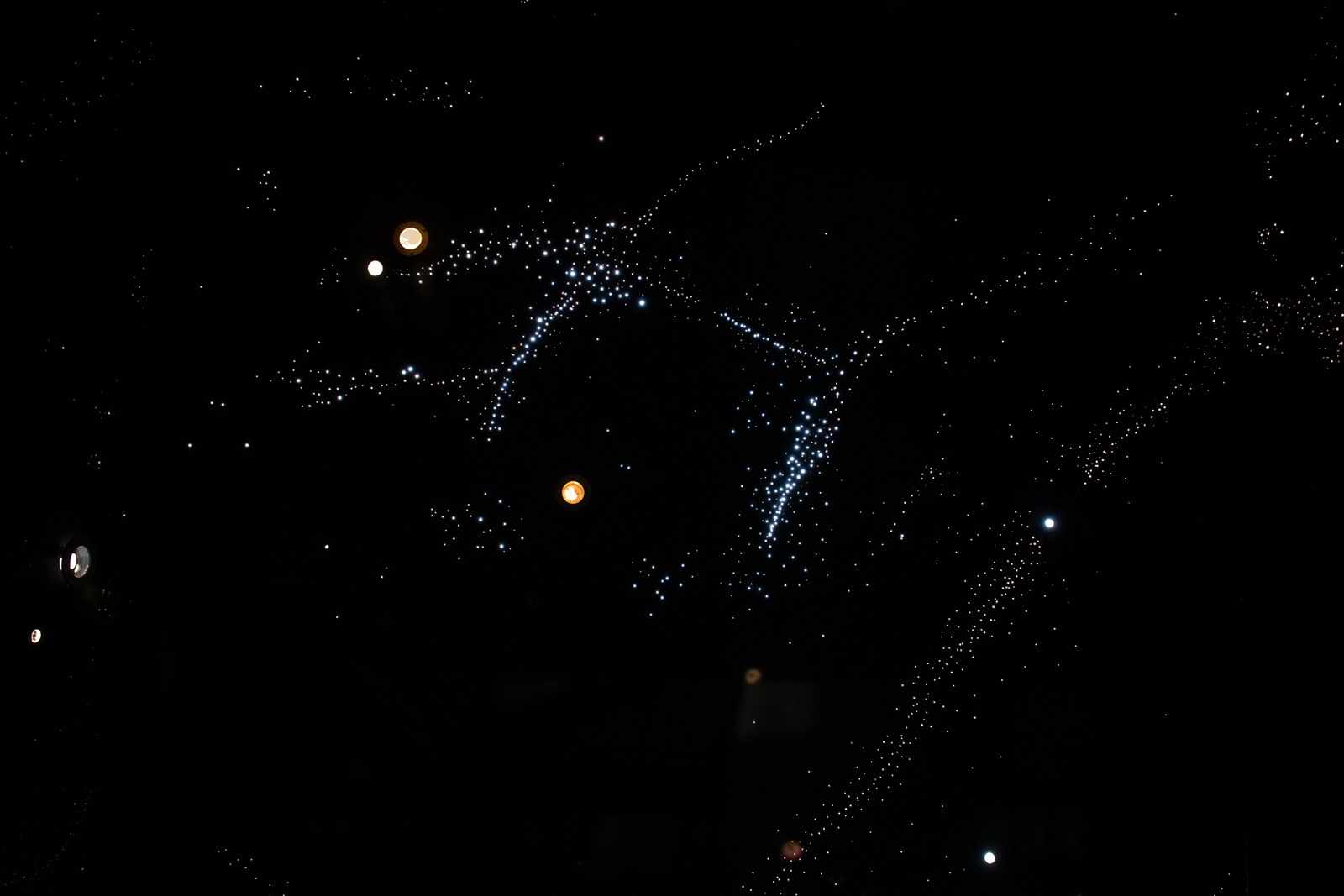
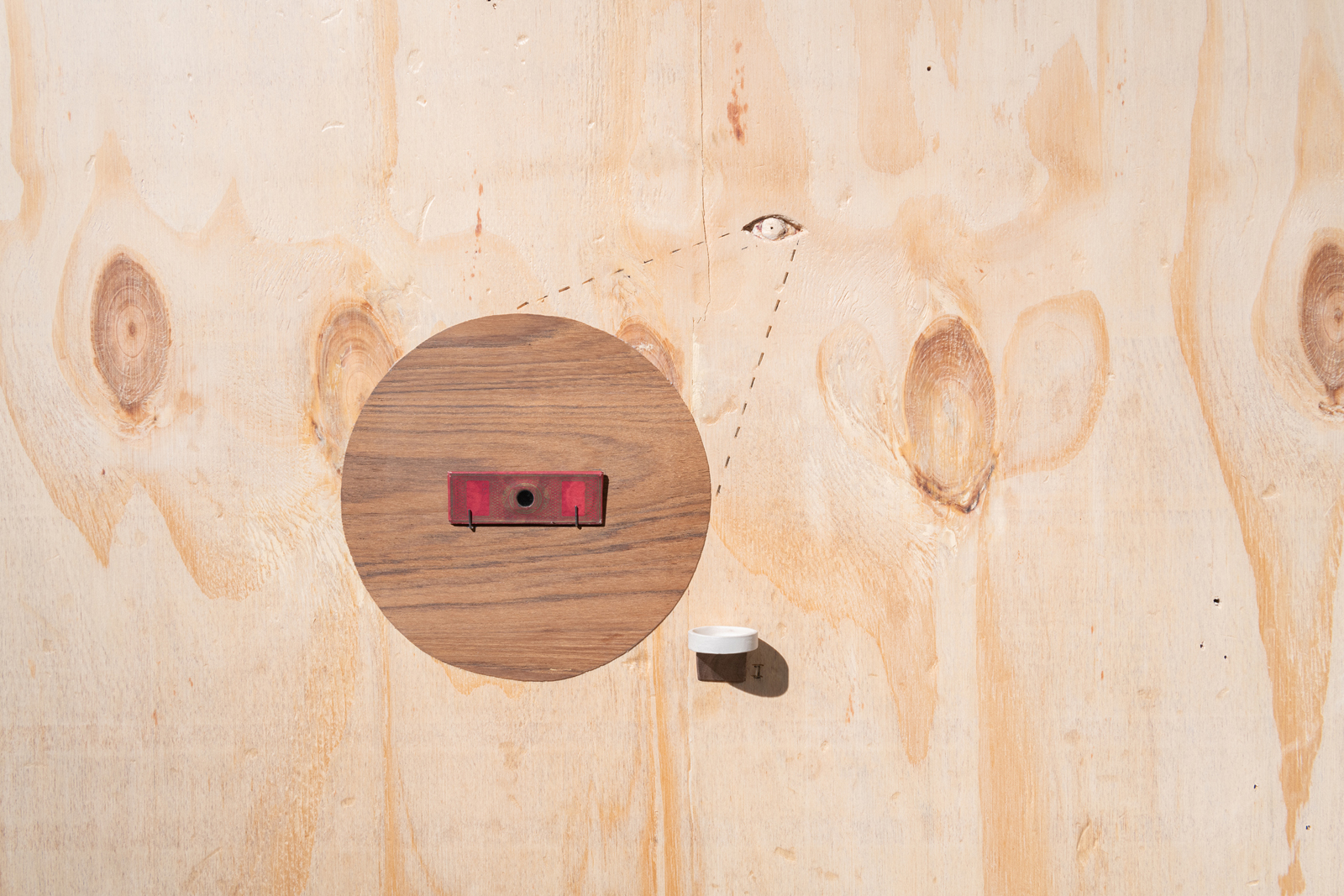
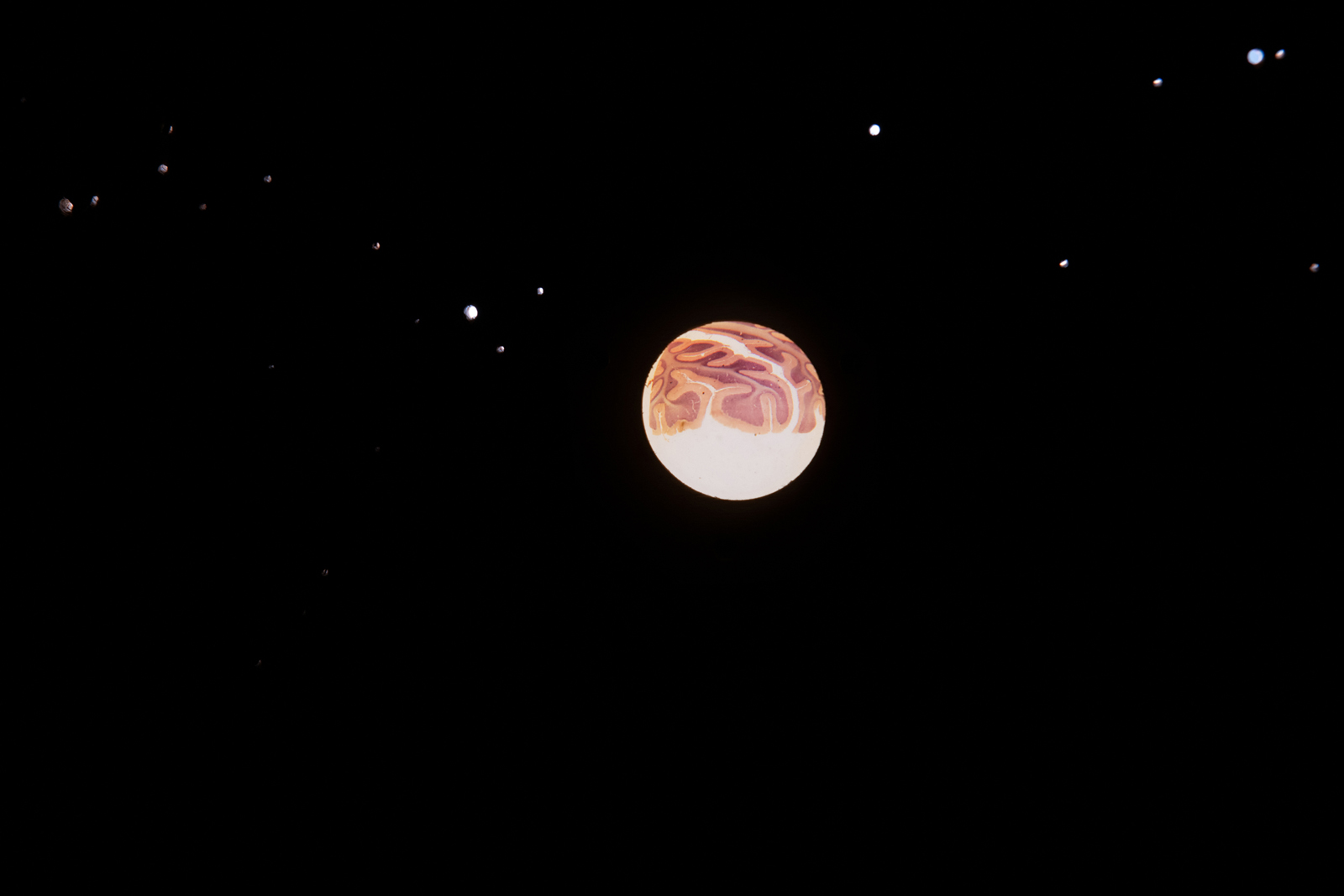
We are in the universe and And the universe is in us are sister installations that have not yet been shown next to each other, but which were made in line with each other. We are in the universe was made during the public research residency, Spiritus - Archiving the (Un)imaginable at Looiersgracht 60 in the summer of 2022. During this residency, the first ideas for the exhibition Of Gaia and Ouranos were developed. And the universe is in us was part of the exhibition Of Gaia and Ouranos. Both installations are inspired by the 17th-century peepshow box or rarekiek* and consist of a wooden space that you can look into through peepholes. The space can be entered through a small door. Hundreds of holes are drilled into each box, through which light comes in. When the viewer enters We are in the universe, one is surrounded by a universe; the unimaginably large. In addition to the holes drilled according to constellations, this installation contains small light boxes with lenses and images taken by the Hubble Telescope, and other objects, such as marbles also act as celestial bodies and other celestial phenomena. And the universe is in us can also be experienced as a universe, but in this space you step into a representation of the unimaginably small. In this box, the countless holes that resemble constellations are drilled according to the patterns of our nervous tissue. Larger circular images that resemble celestial bodies are light boxes made with lenses and glass preparations of human and animal tissue intended for a microscope and originating from an early 19th century collection of the University of Glasgow. Both installations contain five different scents that can be smelled when you peep through a hole. The scents are inspired by imaginary and real scents of the universe and the body and were developed by perfumer Alessandro Gualtieri (alias The Nose).

*The rarekiek or the peepshow box (its English equivalent) was first mentioned in the 17th century, possibly even earlier. The rarekiek was a box usually carried by a person on their backs, who would demonstrate it as a town fair attraction. One could view the inside of these wooden box scenes, lit up by candles or daylight, while the Rarekiekman (occasionally a woman) sang or narrated the story that could be viewed through its peepholes. The boxes often contained several peepholes and by employing a lens and mirrors, illusions of depth were created, transforming two-dimensional images into seemingly three-dimensional ones. Different prints placed behind one another could also be moved by using strings for the illusion of movement.

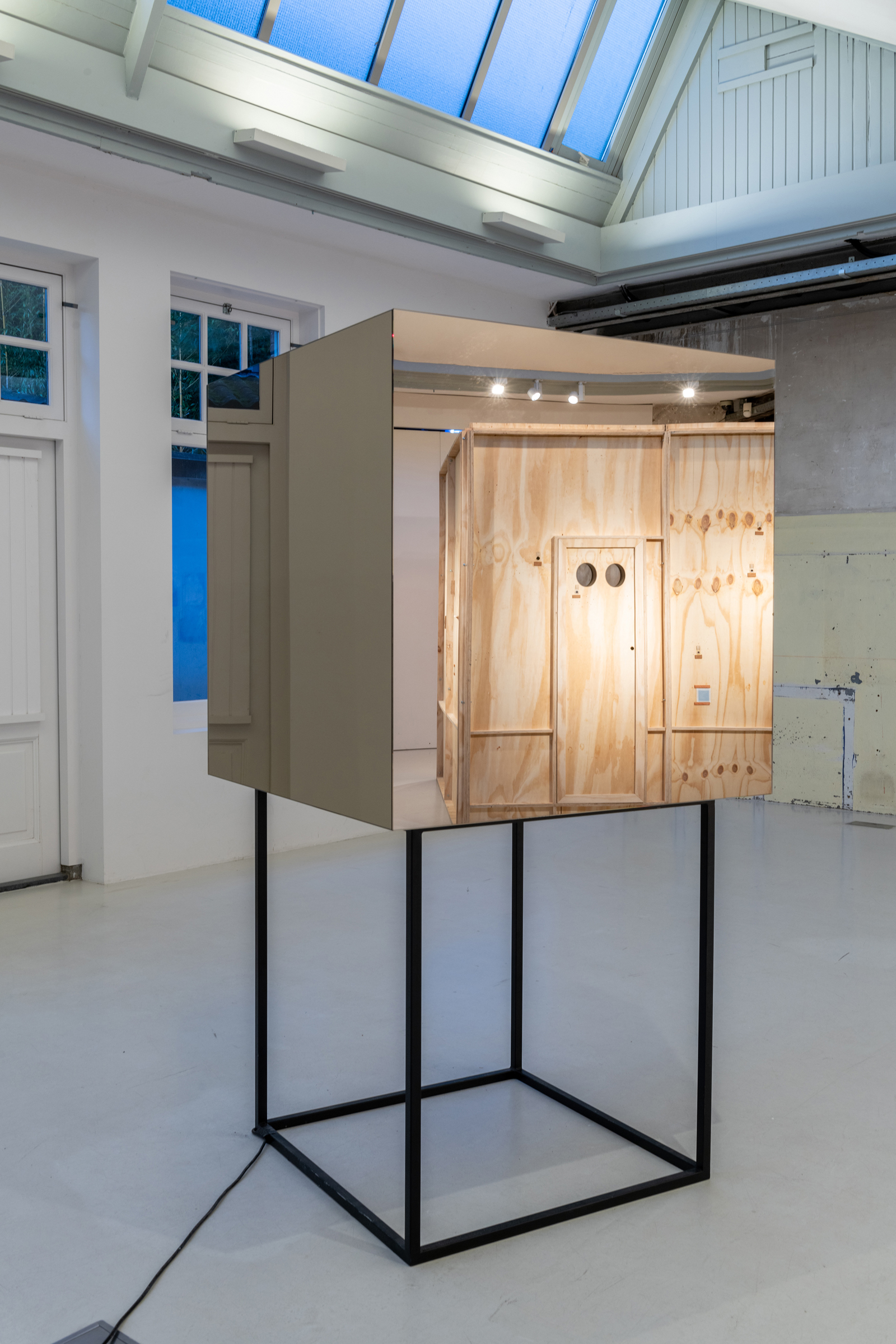
FIG 6. Resonance Box (2023) (peepshow box) 

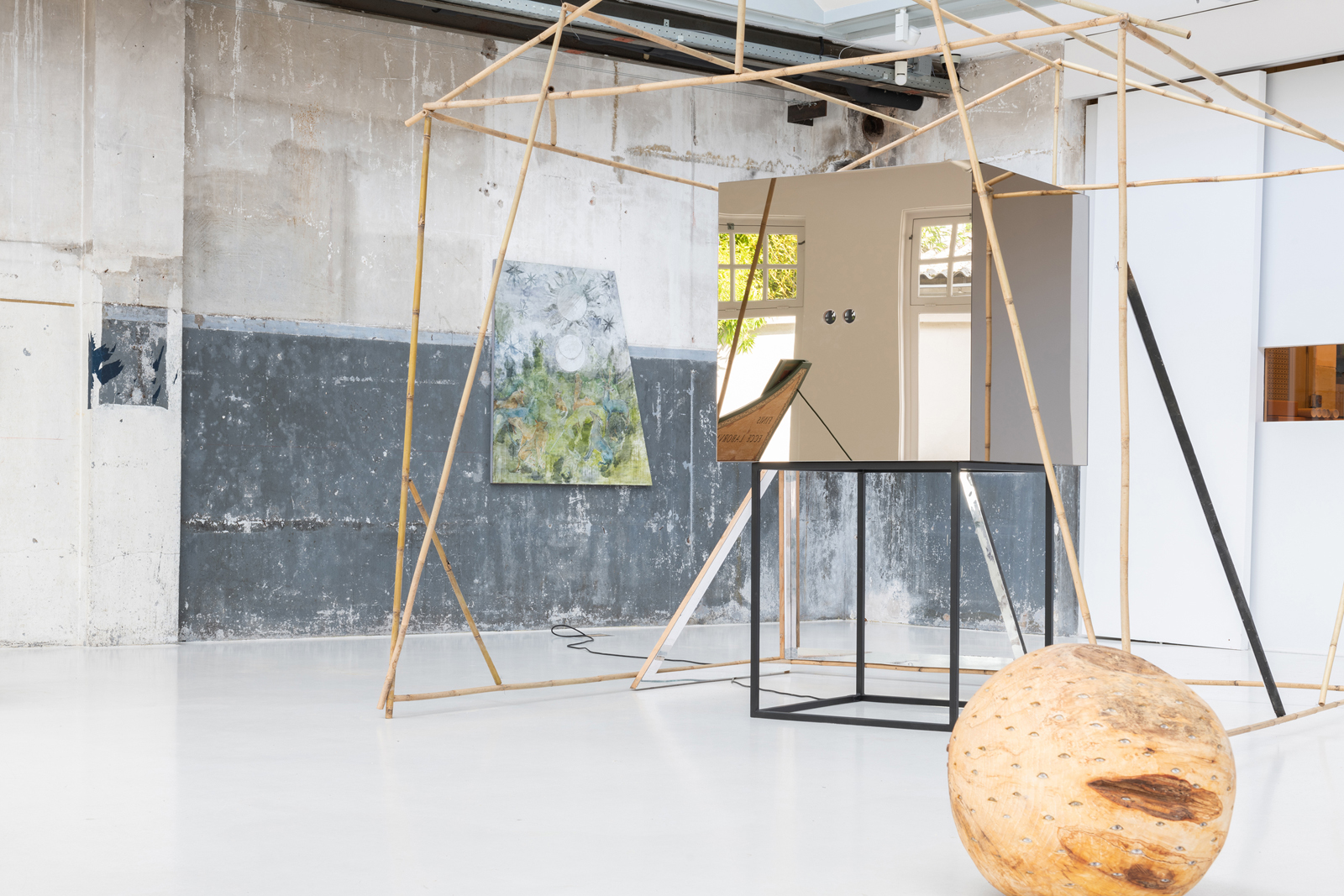
This peepshow box made of mirrors plays with the idea of the internal and external. The universe, which we suppose is infinite, is ‘caught’ inside this box. The exterior of the box enables one to become aware of one’s surrounding context, in a fragmented yet spacious manner. A mirror can show a thing as it is and also distort it, thus reflecting an illusion. By virtue of its mirroring quality, the piece ‘collects’ the other installations in this space, allowing them to be seen through different lenses. 

FIG 7. Of Ouranos and Kronos (2022-2023) (uranium-glass installation)

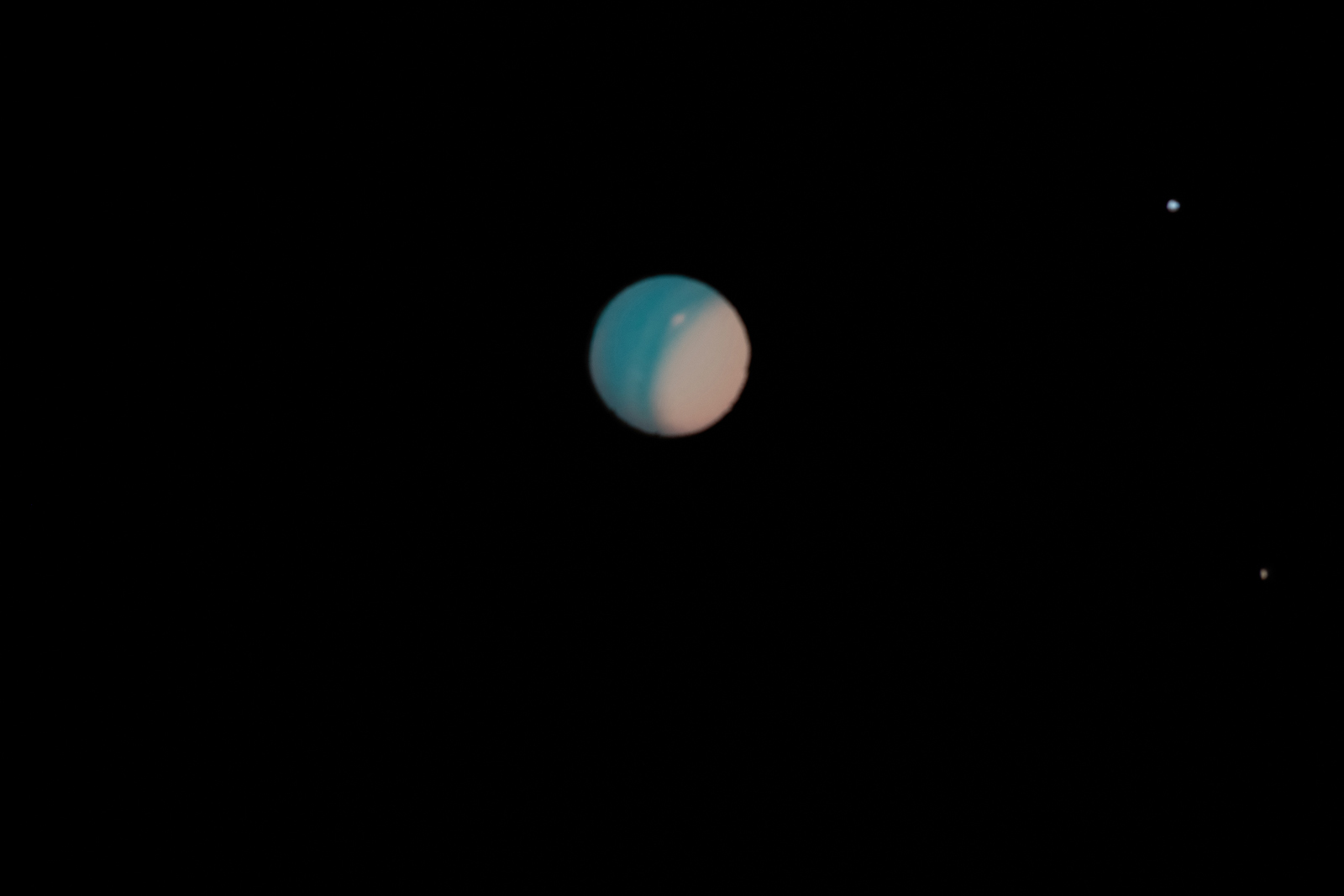
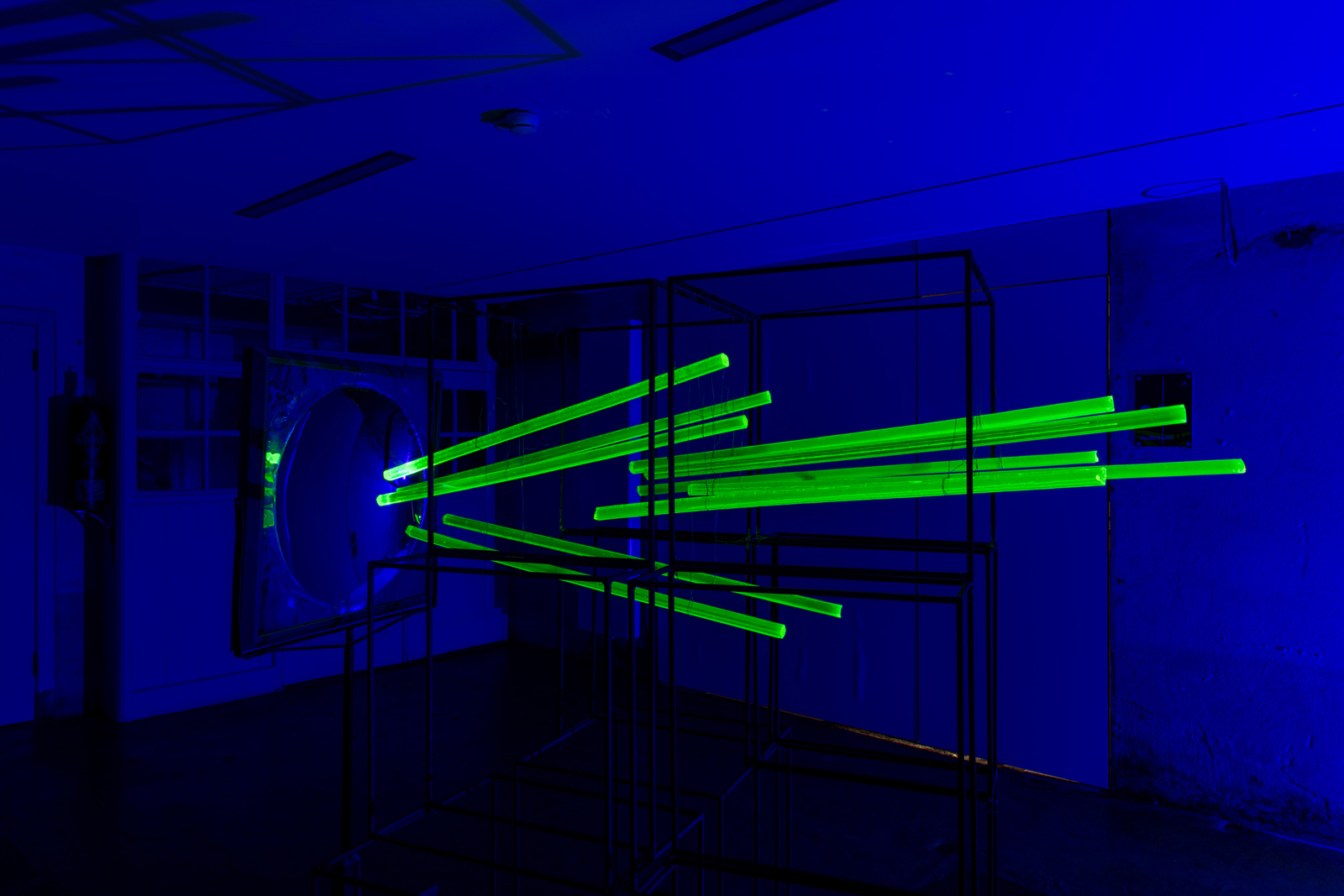
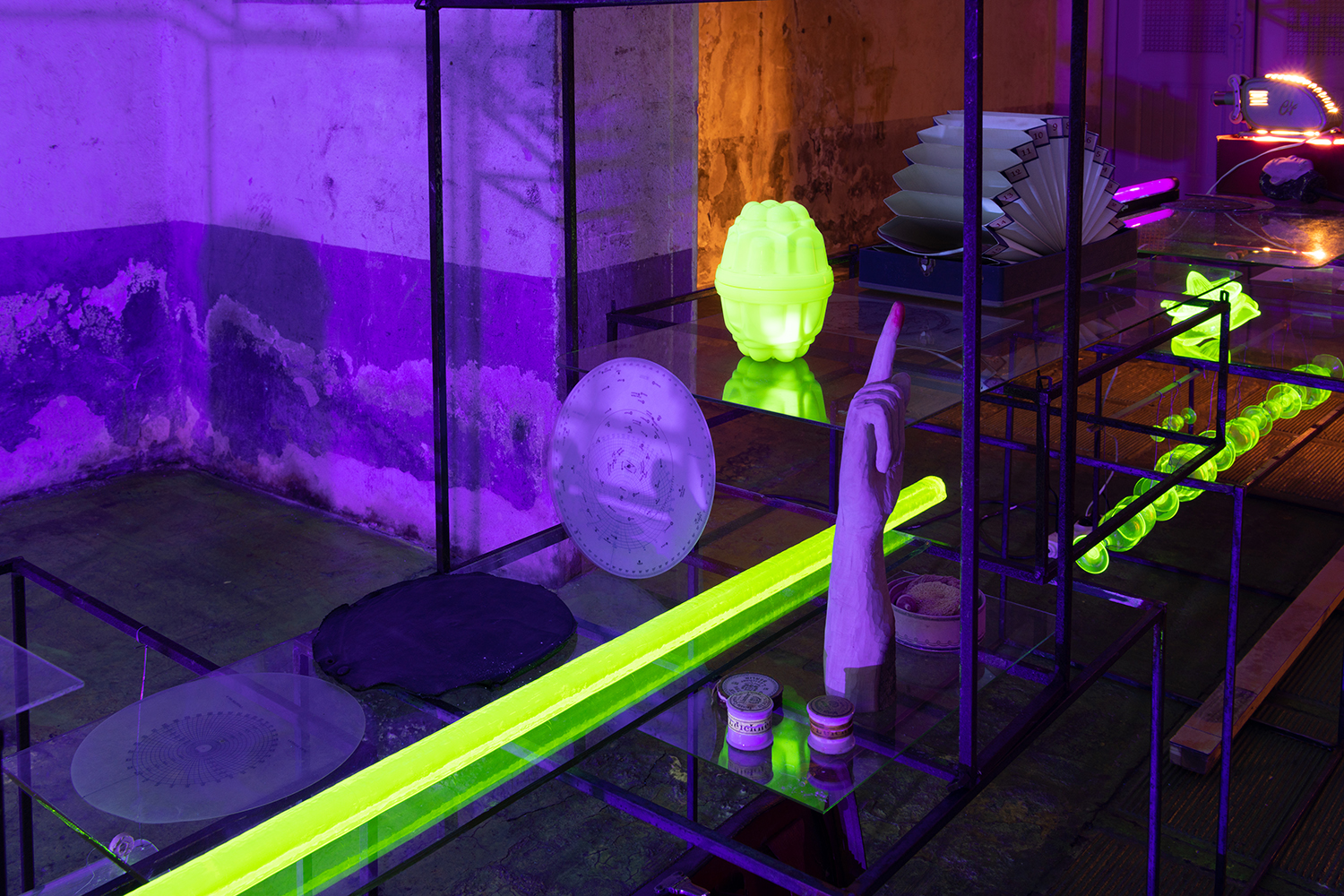
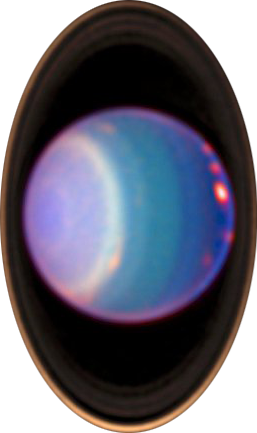
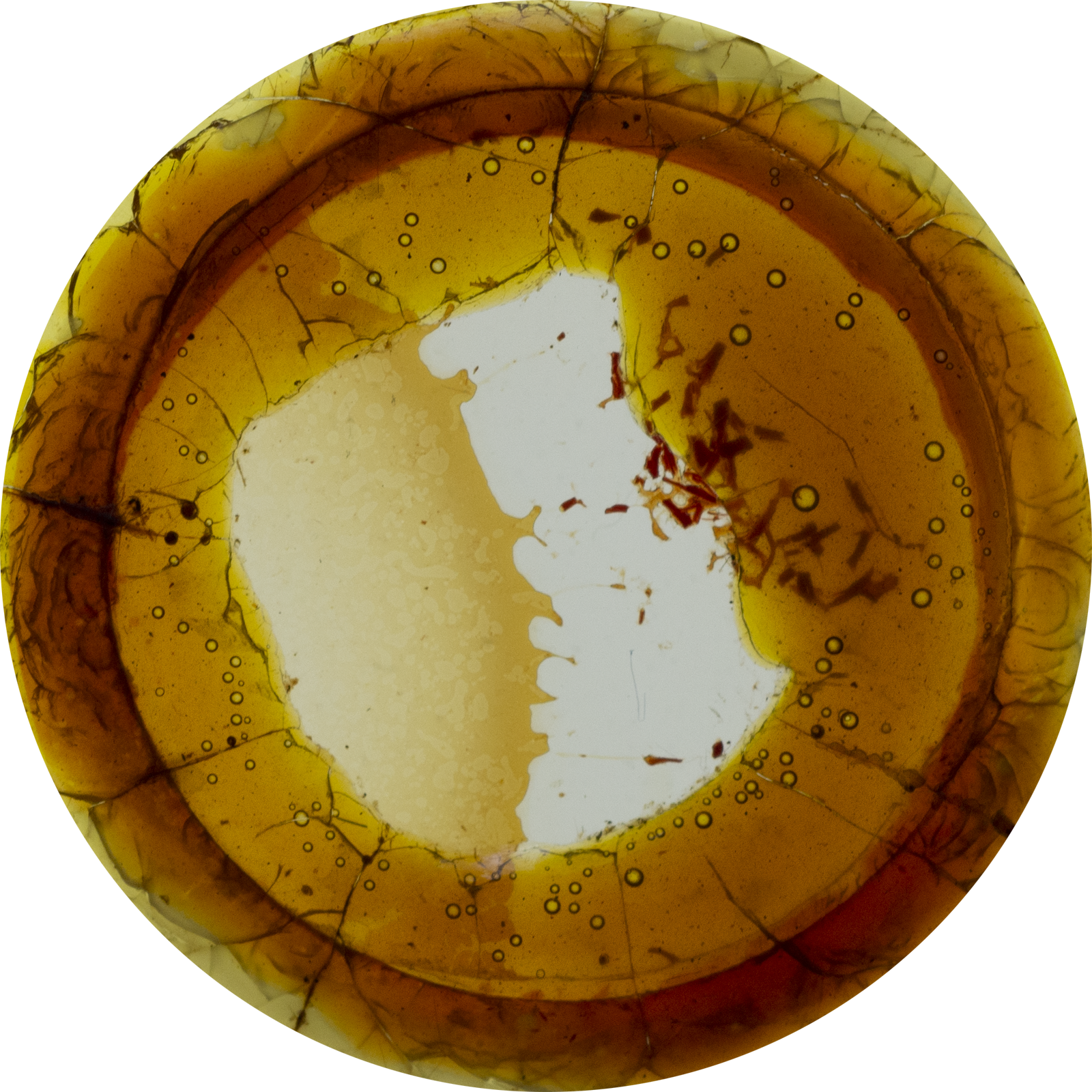
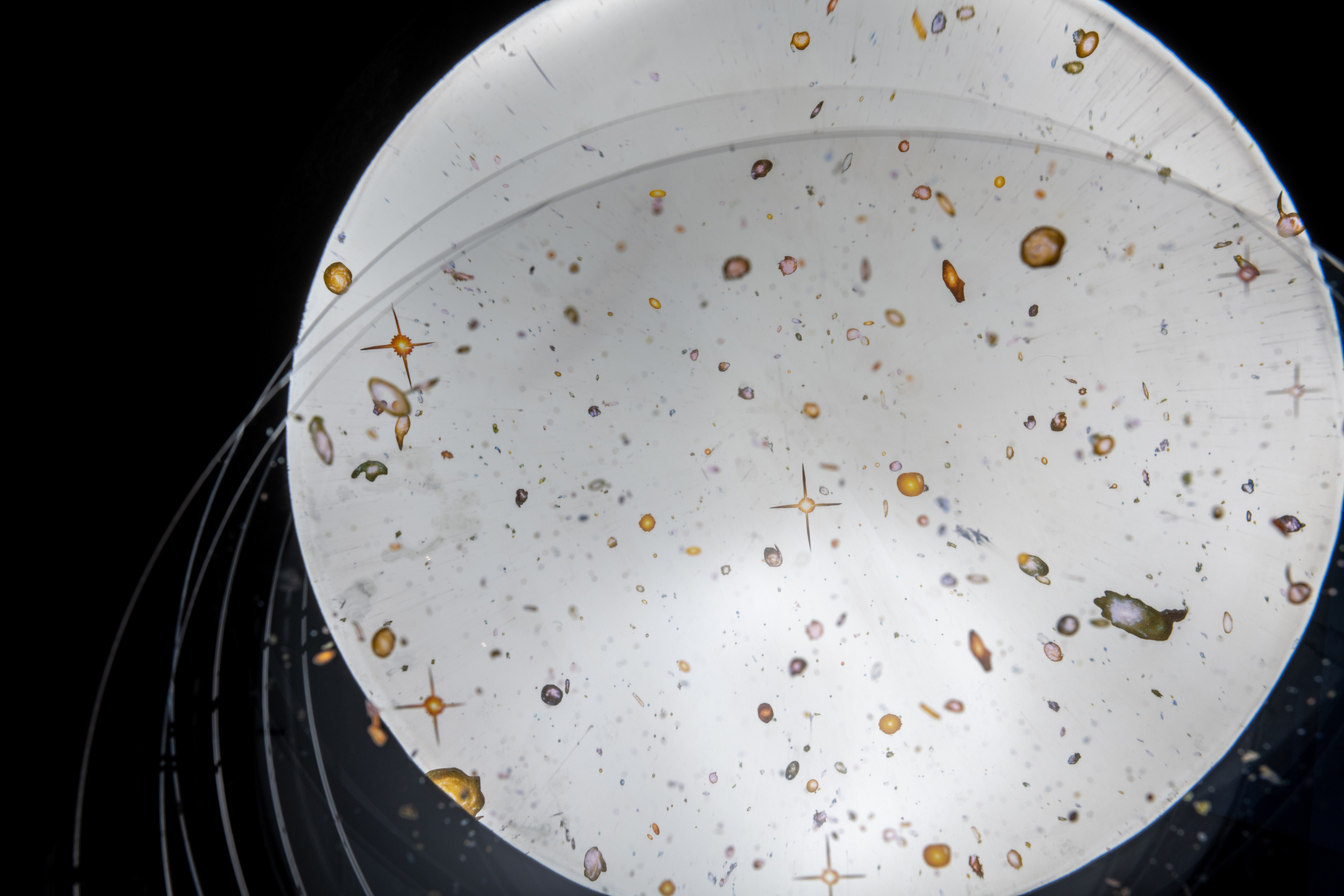
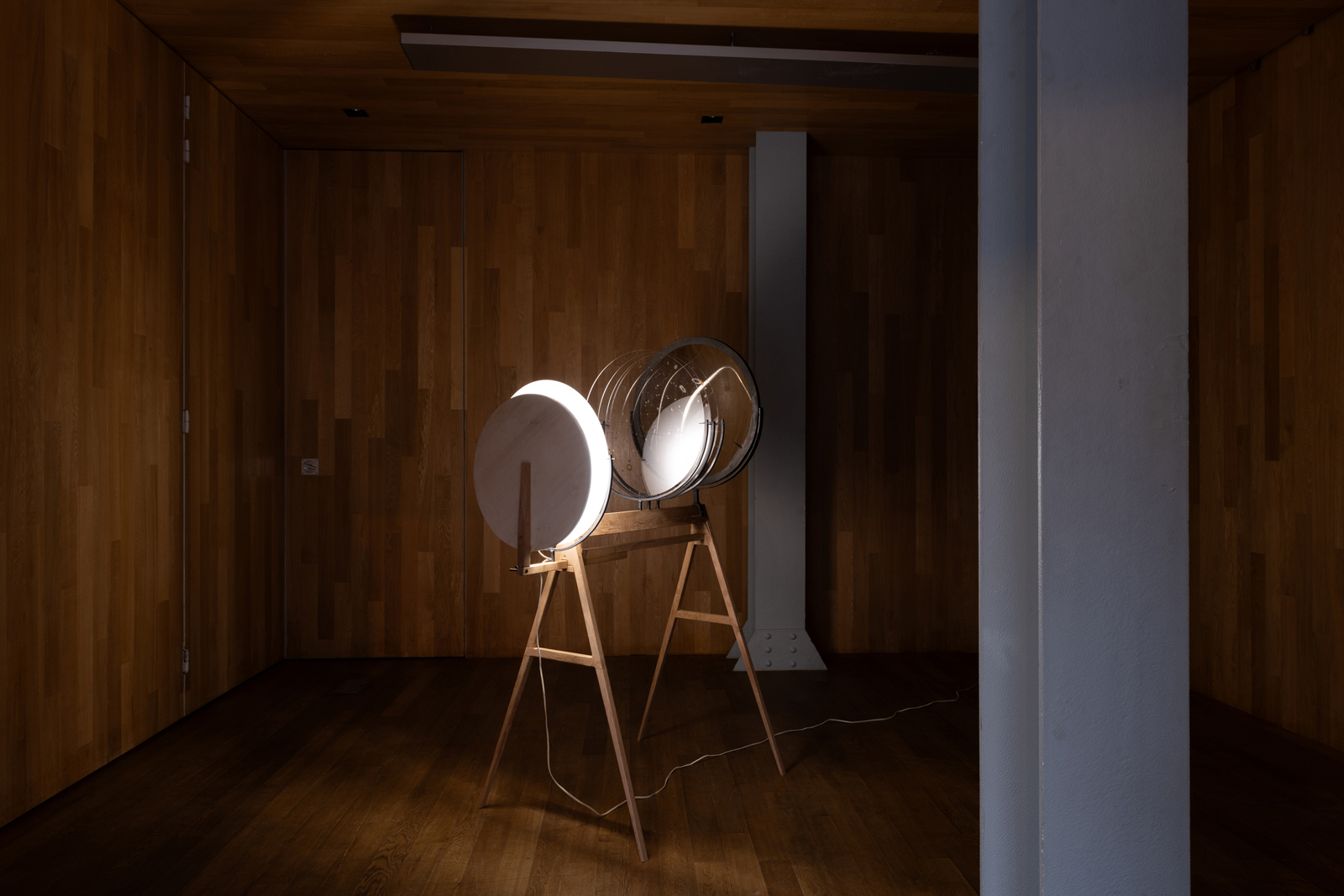
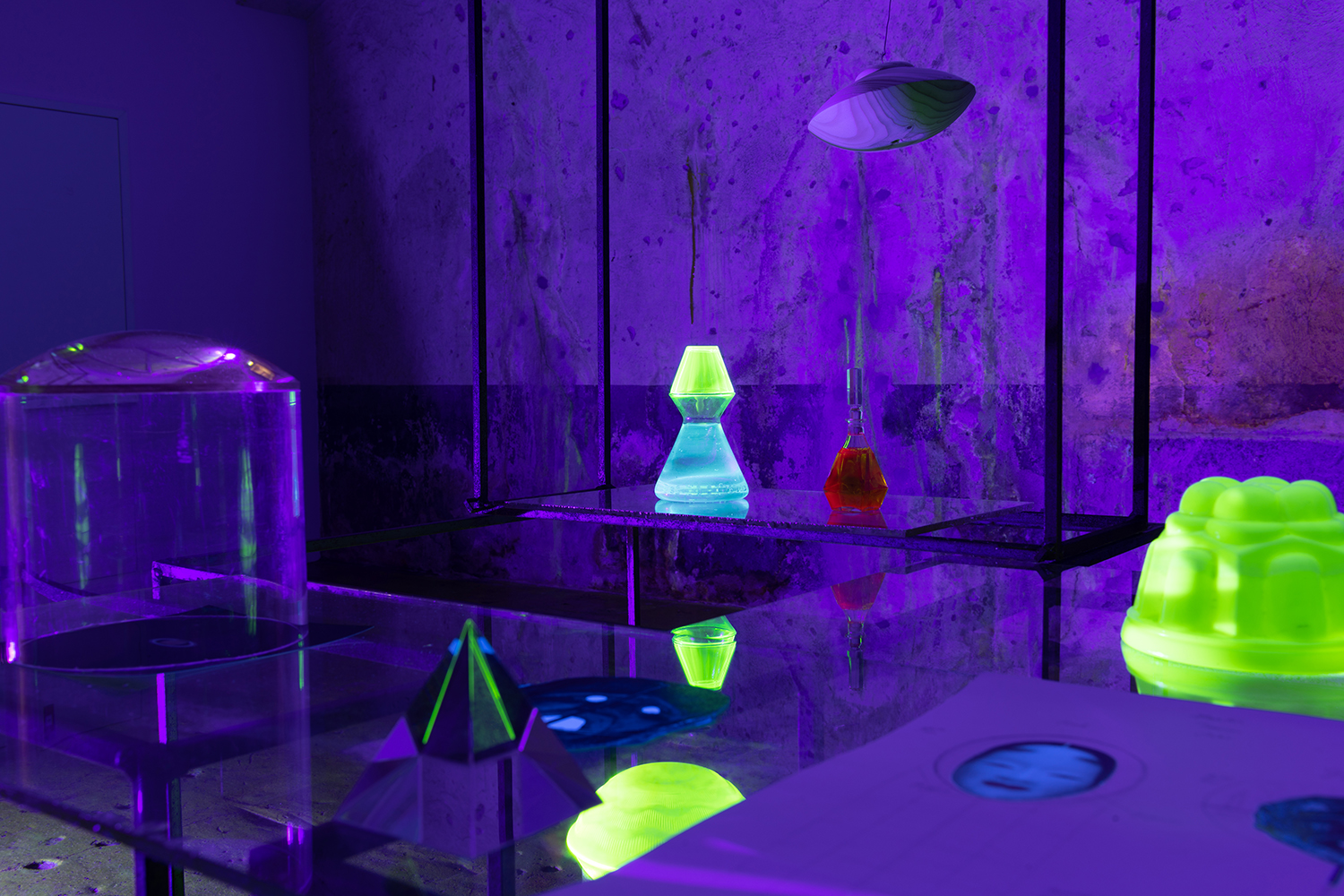
Ouranos refers to the planet Uranus (discovered in 1781, long after the ancient Greeks and Romans had named Mercury, Venus, Mars, Jupiter, and Saturn) and to the element uranium, which was named after the planet. Just as Ouranos is the son of Gaia, the element uranium originates from the Earth. Ultimately, like every other element and particle, it has cosmic origins. Specifically for the basement of Looiersgracht 60, the artists built the futuristic installation Of Ouranos and Kronos with uranium glass. This glass contains tiny amounts of radioactive uranium, which glows under UV light. In our imaginations and historiographies, we travel to pasts and futures, and share stories that merge the historical, speculative, fantastic, and spiritual. Radioactive material reaches beyond our concept of time (Kronos) because it carries energy for durations that are (nearly) incomprehensible to the human imagination. Uranium glass represents a concrete, material translation of this expansive sense of time. The radiation from a uranium-containing object renders something invisible to the senses that is likely to persist for millennia.

This website also shows the preliminary studies for this installation, made during the public research residency Spiritus - Archiving the (Un)imaginable at Looiersgracht 60 in the summer of 2022.

FIG 8. Living Archive (2023) (site-specific installation)

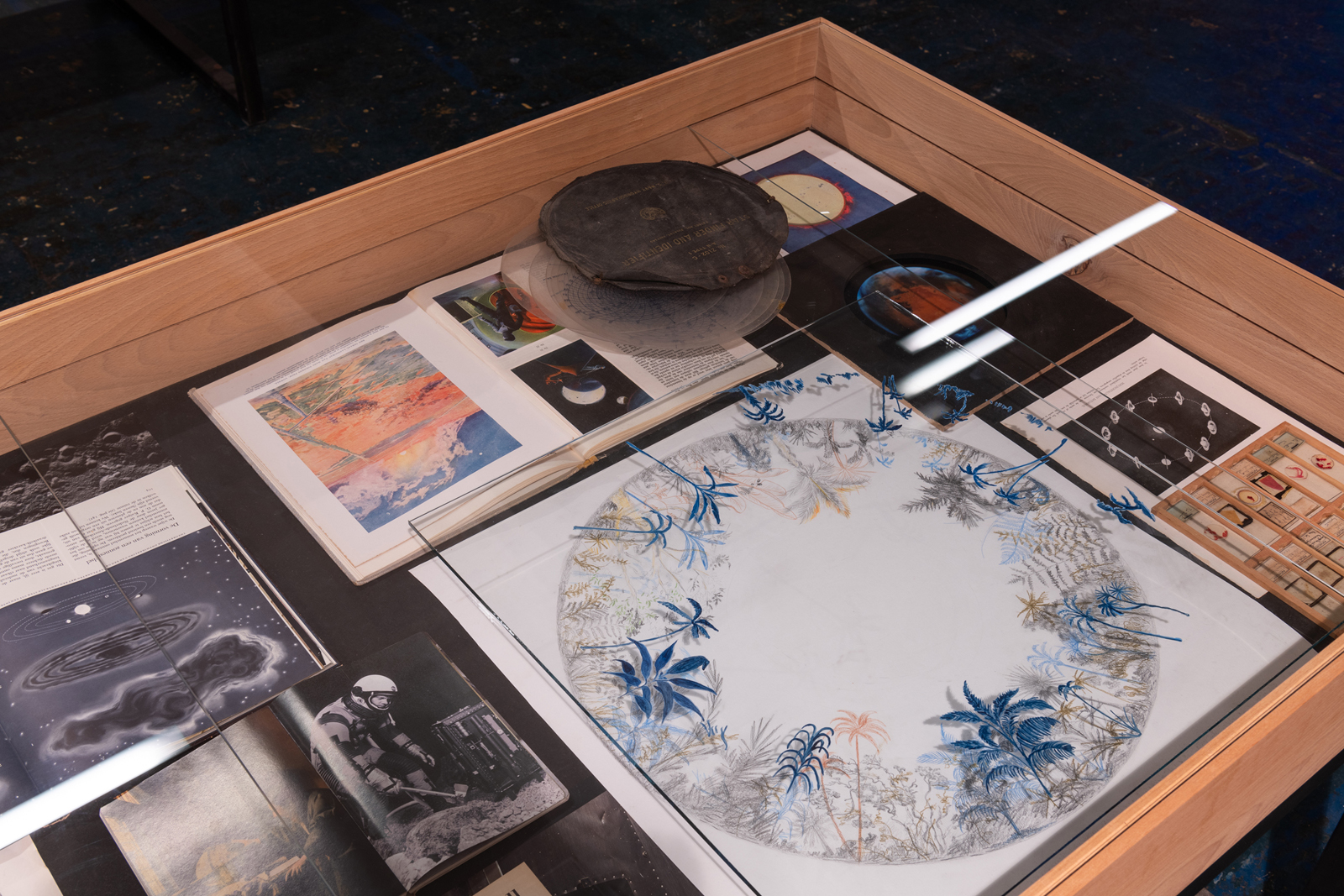
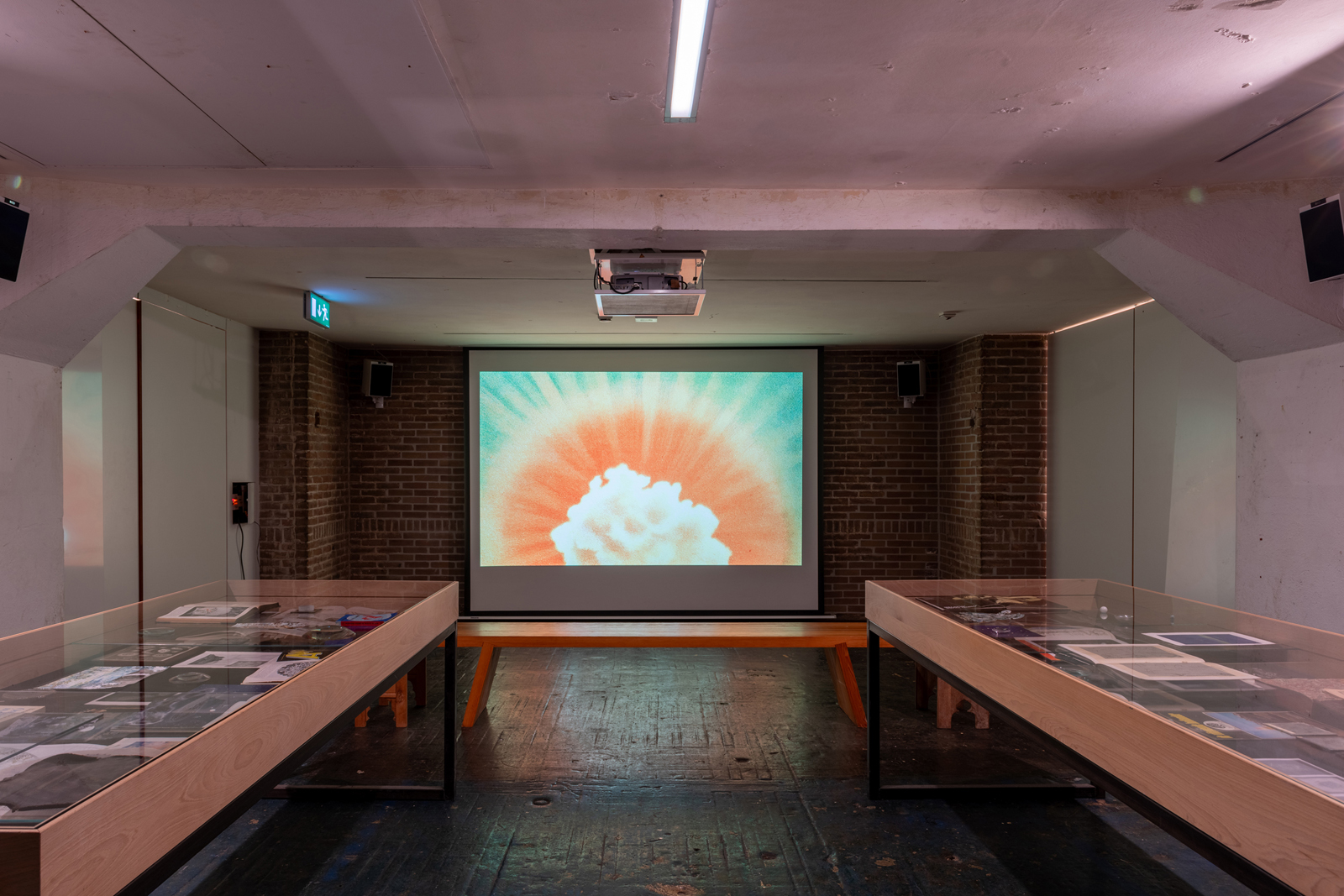
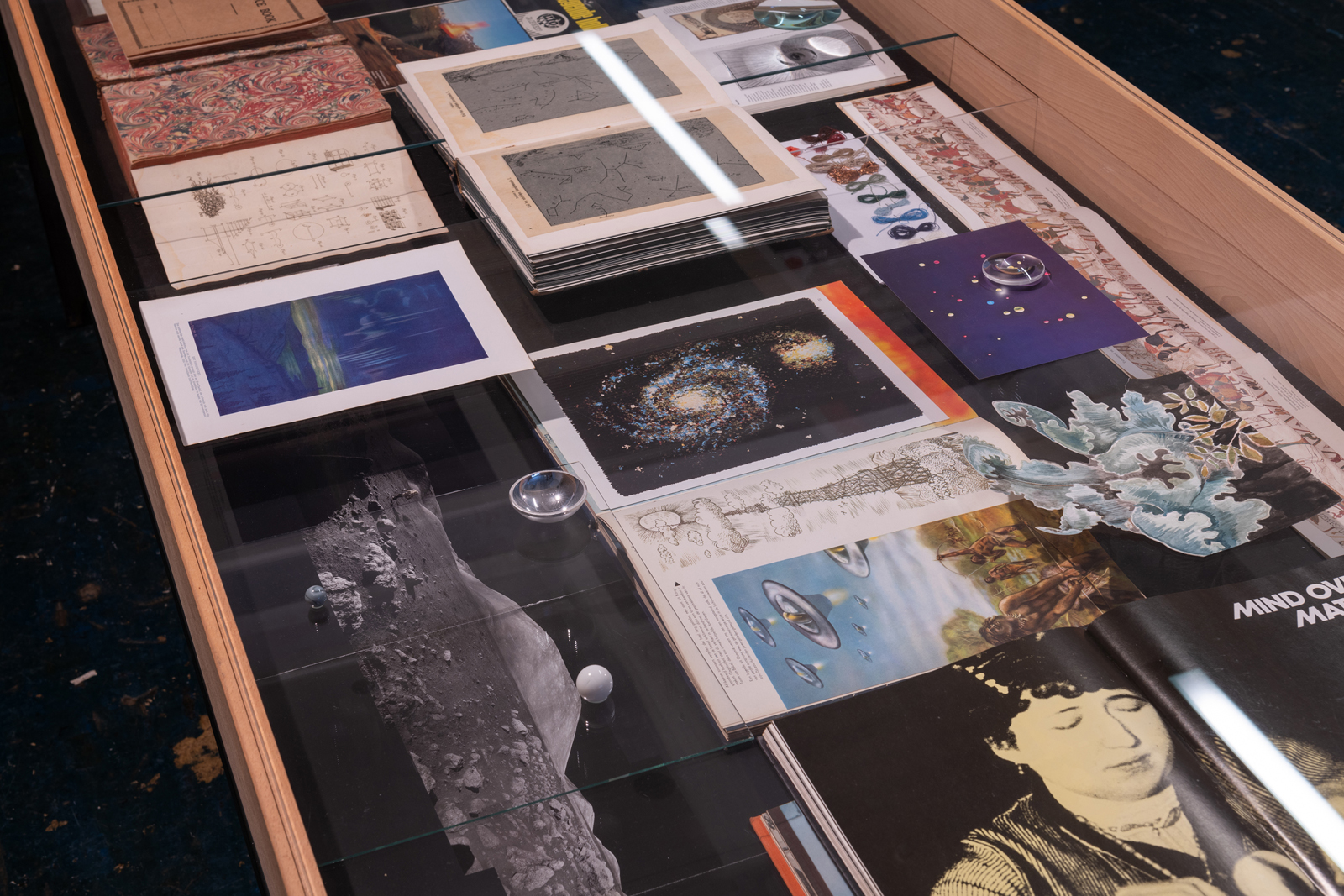
Following the presentations during the public research residency in 2022 Spiritus—Archiving the (Un)imaginable, also at Looiersgracht 60, the artists have created a new iteration of the living archive. Two showcases display a curated selection of books, paraphernalia, sketches, and research materials, co-curated by Frank van der Stok. Accompanying this physical archive is a selection of images projected as a slide show, to which Van der Stok compiled substantial materials from both his archives of printed matter alongside online collections from the Public Domain Review. The hundreds of images brought together here have either served as direct inspirational imagery or simply resonated with a spirit of ‘cosmic modesty’. 

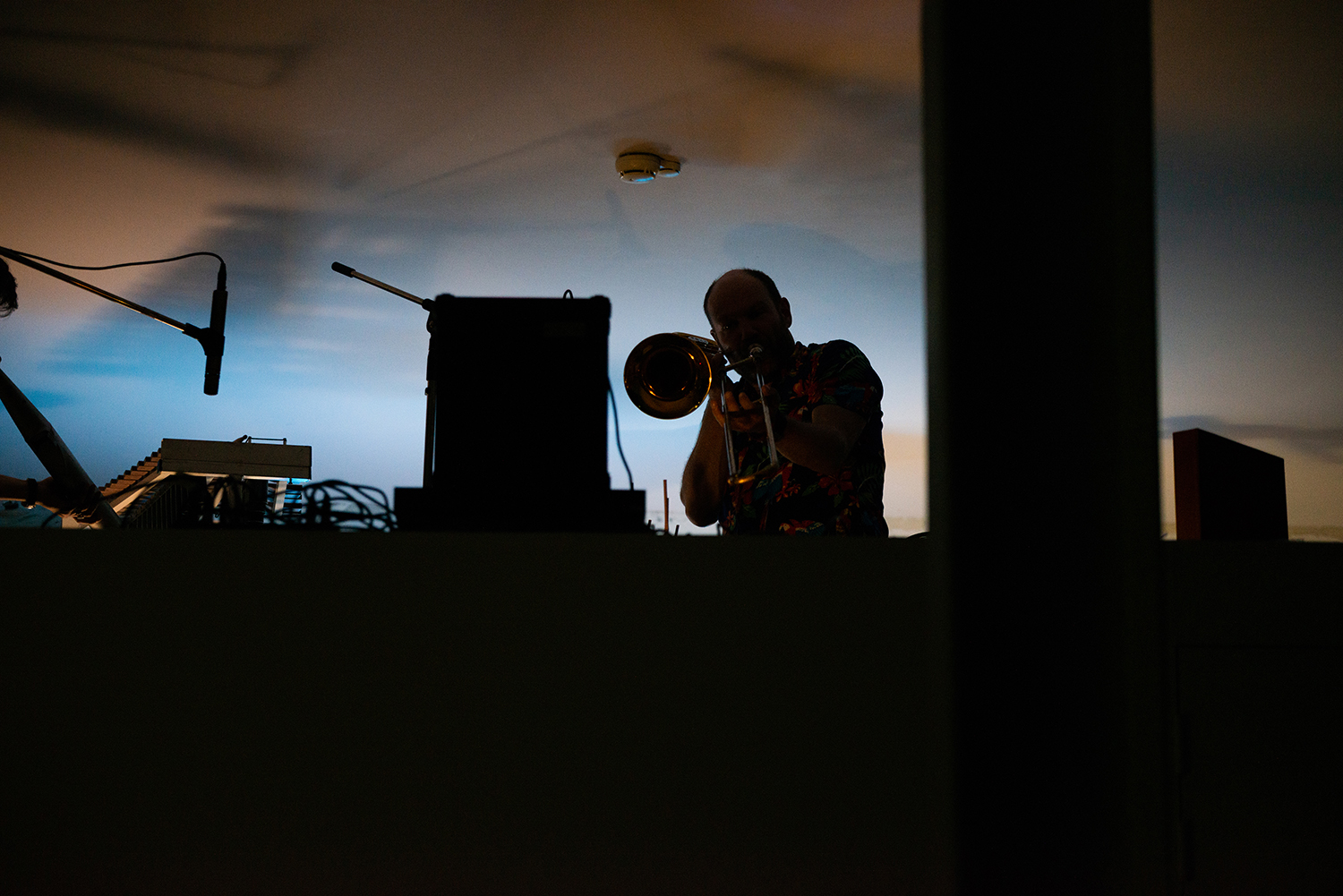
FIG 9. Of Rheia and Kronos (2023) (performance/audio piece)

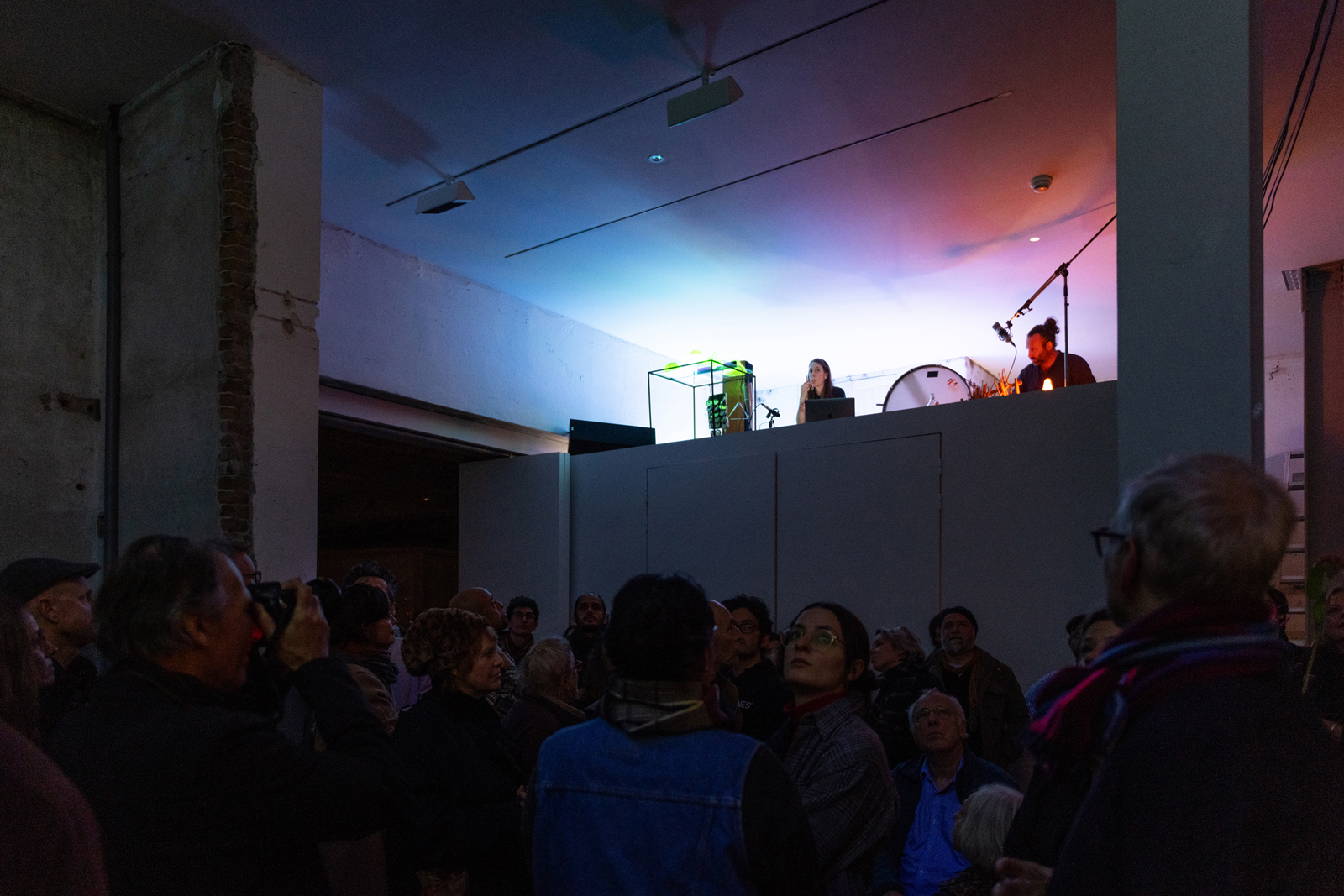
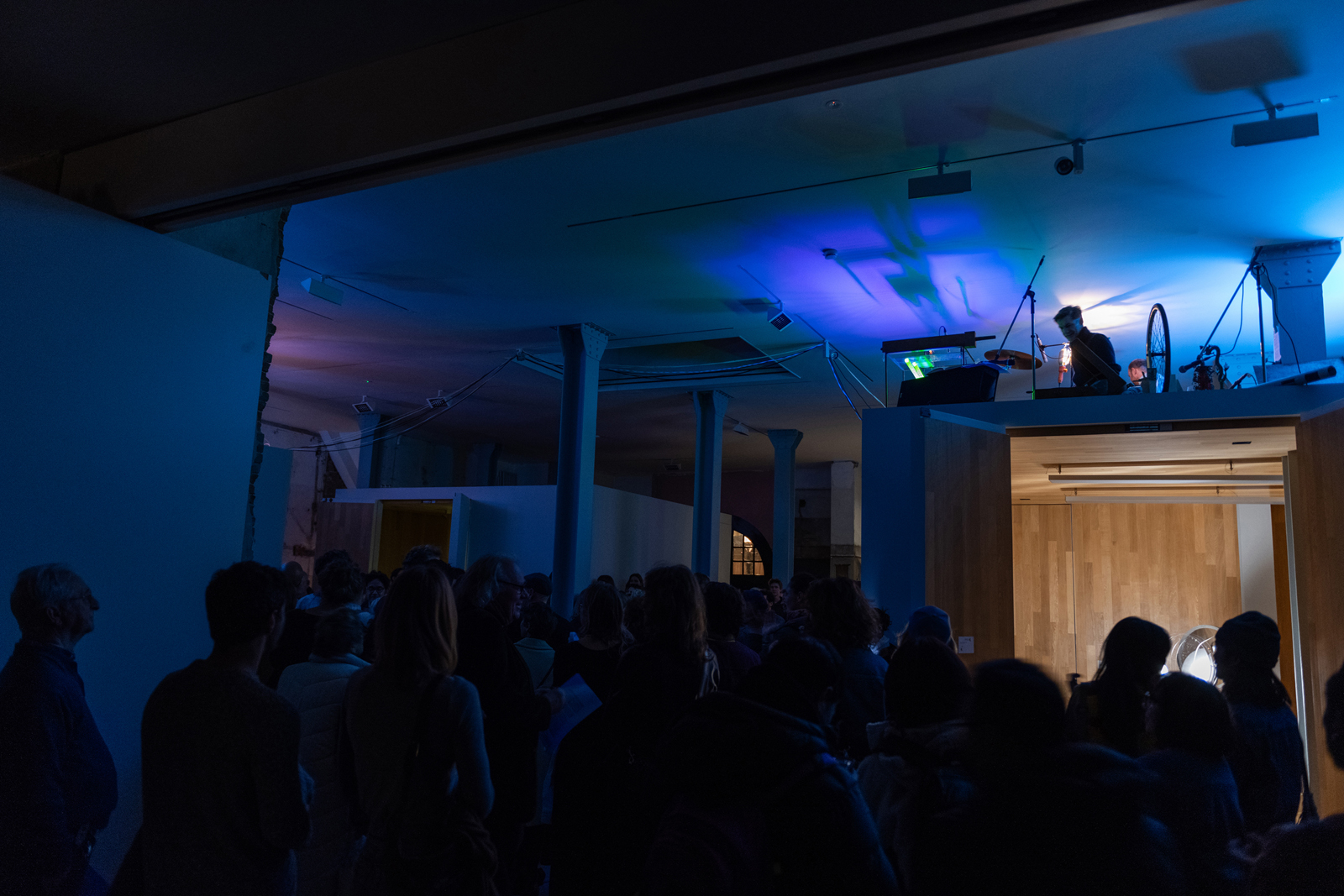
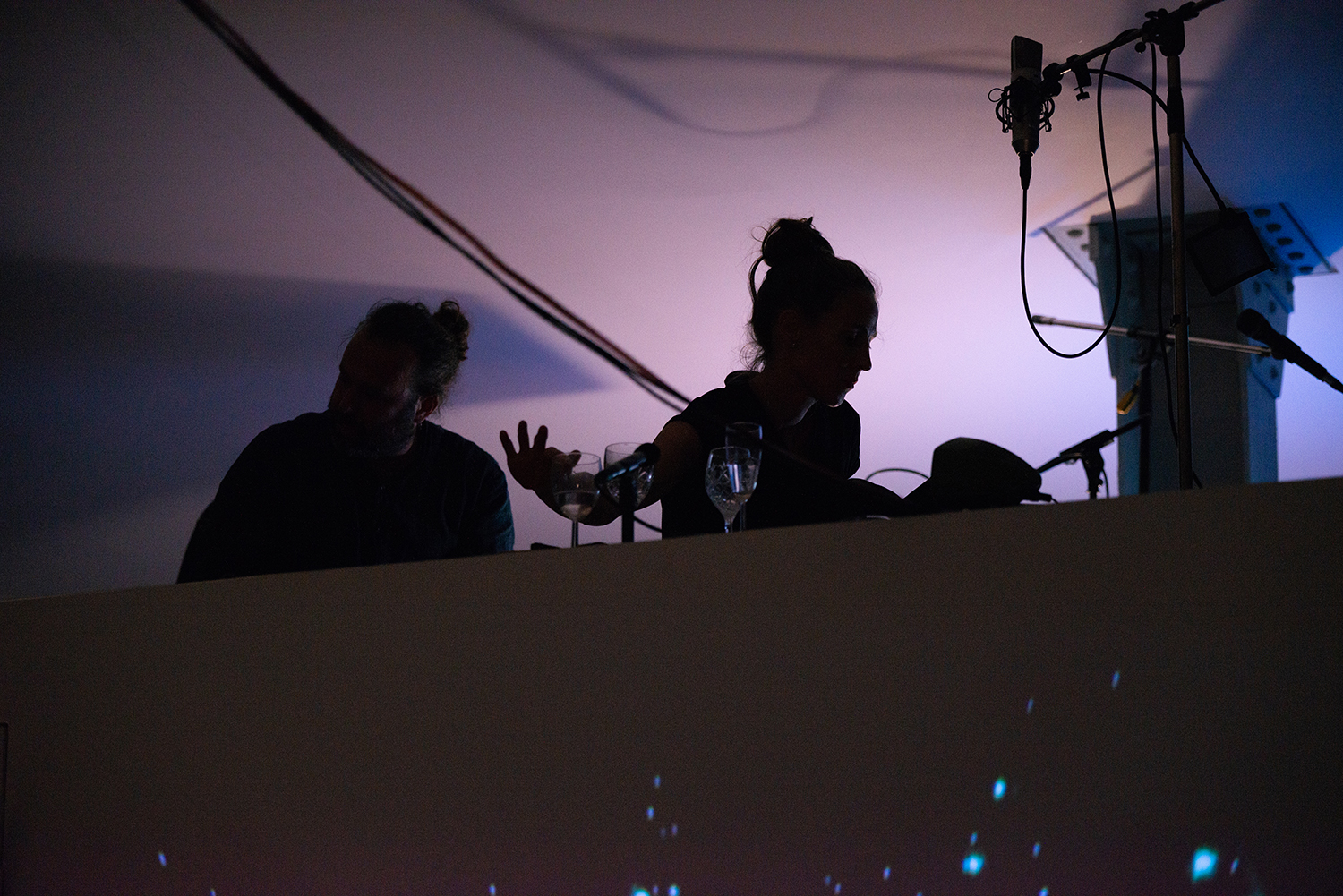
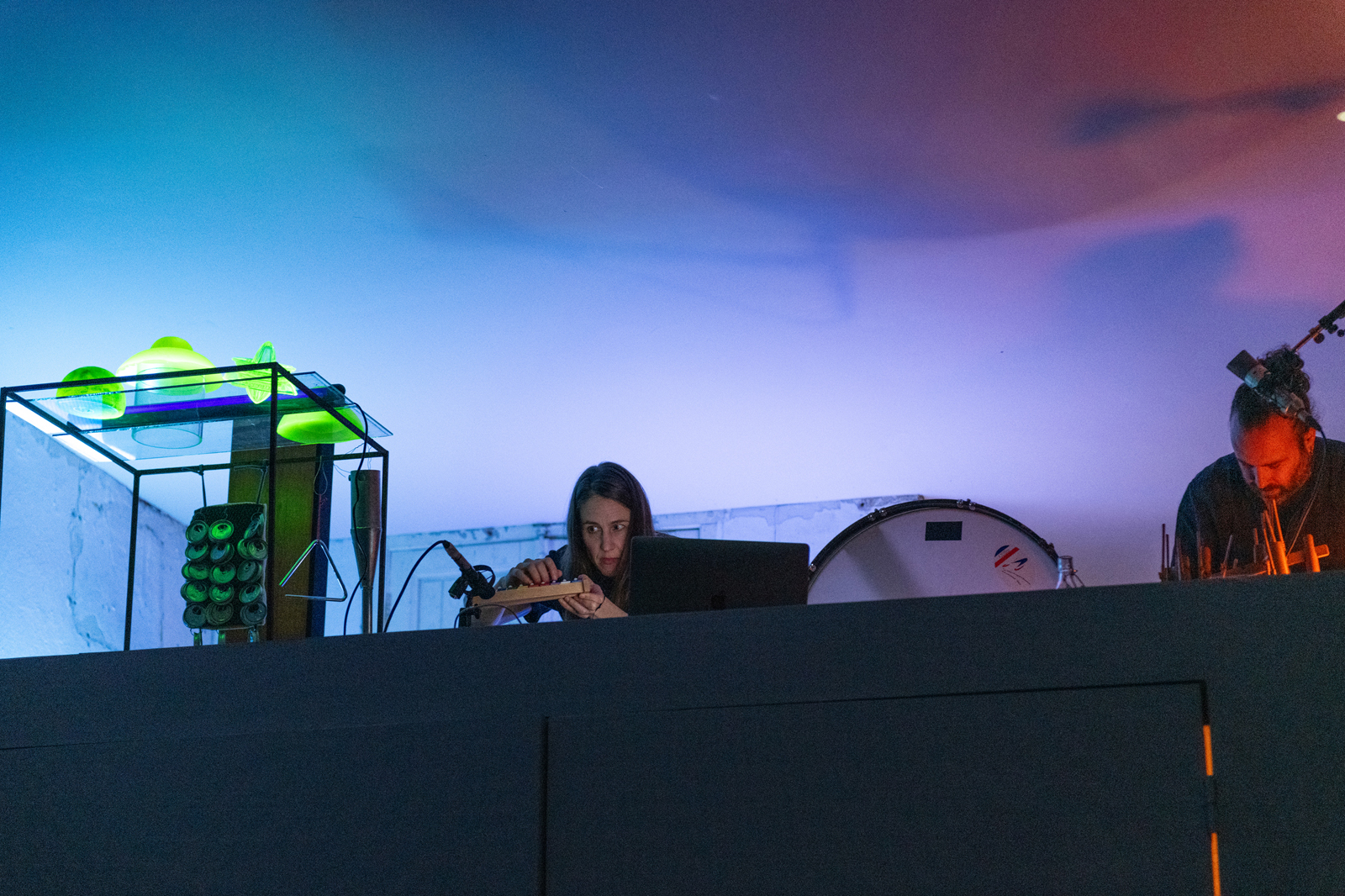
Rheia and Kronos are two of Gaia and Ouranos’ children. In Greek mythology, Kronos was the personification of (devouring) time. By contrast, Rheia means flowing stream or river and is associated with fruitfulness and ease. Timing, rhythm, and flow, when combined could become music. The performance Of Rheia and Kronos follows the merging of a horizontal and finite timeline (Kronos) with a flowing and shoreless river (Rheia). The performance creates an improvised sound journey beginning in the universe — elusive, infinite, and imaginative (Ouranos). From the universe it zooms in to Earth (Gaia), where sounds become recognizable (rustles, sounds of animals, fragments of human voices) and acoustic — meandering between the dissonant and harmonic — later to zoom back into the universe, a spirit-like ascending, where this sonic landscape culminates in a futuristic, digital, ephemeral and timeless soundscape. Of Rheia and Kronos is performed by the artists together with musicians Boele Weemhoff and Sylvian Kloens. During the exhibition, the soundtrack of the performance could be heard in the main exhibition space on the ground floor. 

FIG 10. Oumuamua (2022) 
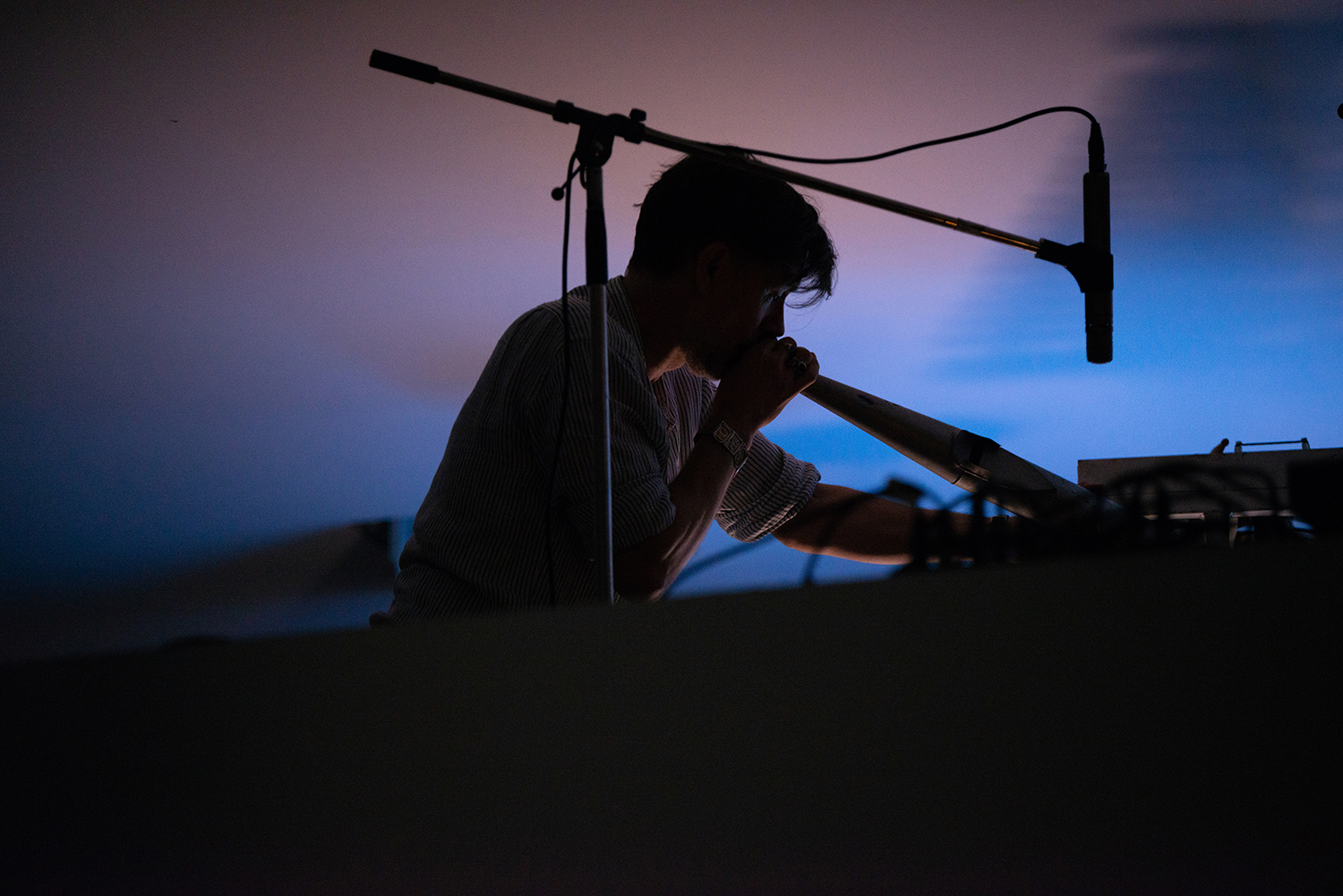
On this website you can also listen to the preliminary study for the performance Of Rheia and Kronos, Oumuamua. Oumuamua is a transhistorical sound play performed by and made together with Boele Weemhoff and Sylvian Kloens during the public research residency in 2022 Spiritus—Archiving the (Un)imaginable, also at Looiersgracht 60. It is the result of a research into sound in relation to space, time travel and consciousness. 

FIG 11. Images with this number show work in progress or inspiration material.


Of Gaia and Ouranos is curated by Frank van der Stok and Taco Hidde Bakker (Radical Reversibility) in close collaboration with the artists and Looiersgracht 60. 

Perpetual Light was made with the assistance of Lotte van Dijk (TextielLab, Tilburg).

The production of the works in this exhibition was generously co-funded by Amsterdams Fonds voor de Kunsten (AFK) and Mondriaan Fund. The installation Perpetual Light is partly sponsored by TextielLab, Tilburg.
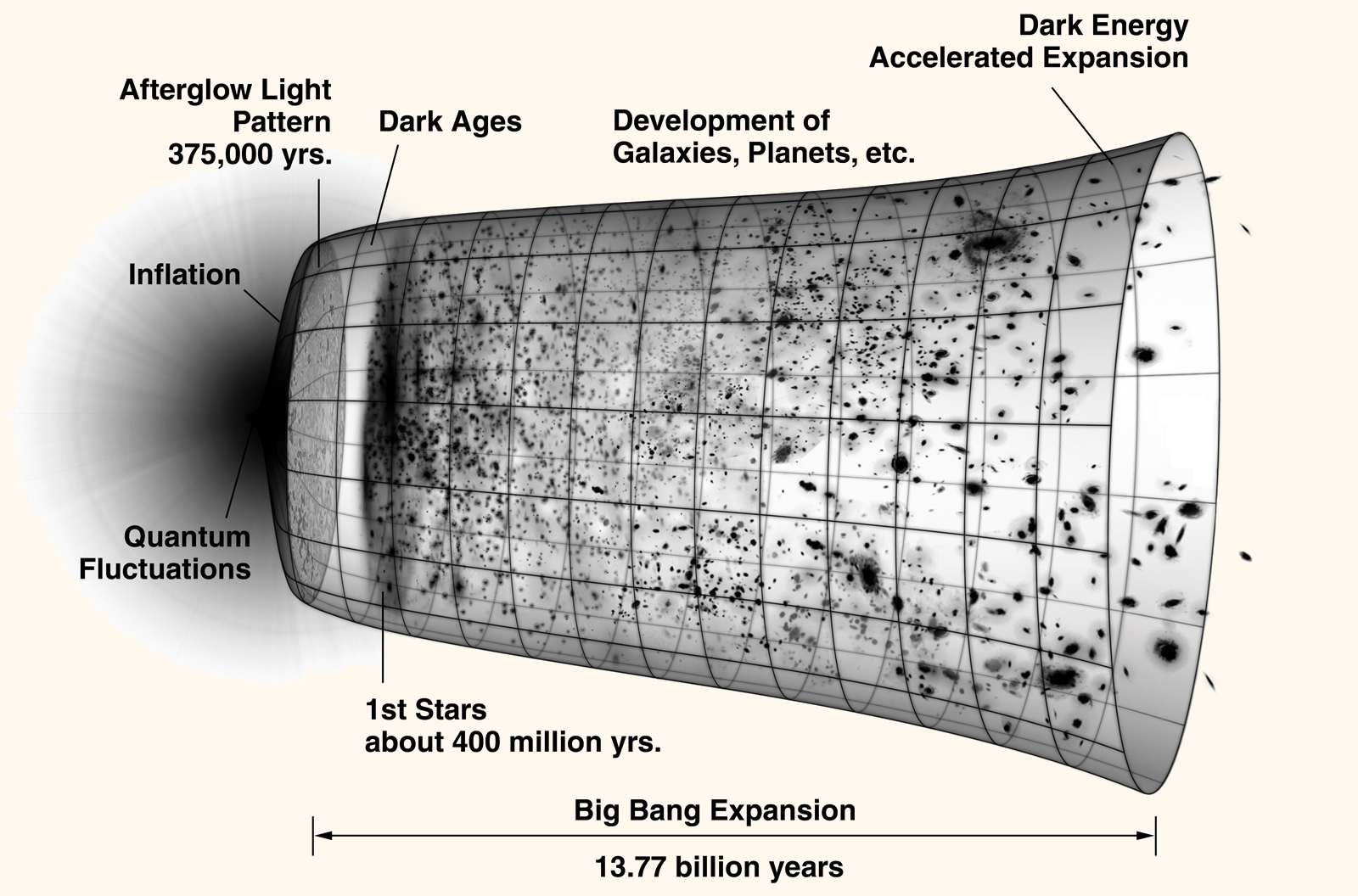
Timeline of the Universe
Fig. 11.5 Timeline of the Universe
File under: research
NASA/WMAP Science Team
ca. 2006
preperates
Fig. 5.2 And the universe is in us
File under: work in progress
Doina Kraal
Amsterdam
side view diafanorama
Fig. 2.4 Through Ouranos' eye
File under: documentation
Roger Cremers, Doina Kraal, LNDW Studio
Looiersgracht 60, Amsterdam
ancient ufo
Fig. 3.16 Perpetual Light
File under: image
Roger Cremers
Amsterdam
interior of installation
Fig. 5.9 And the universe is in us
File under: documentation
Roger Cremers, Doina Kraal, LNDW Studio
Looiersgracht 60, Amsterdam
planet
Fig. 4.3 we are in the universe
File under: documentation
Roger Cremers, Doina Kraal, Juliana Gomez
Looiersgracht 60, Amsterdam
exhibition overview
Fig. 3.14 exhibition overview
File under: documentation
Roger Cremers, Doina Kraal, LNDW Studio
Looiersgracht 60, Amsterdam
opening of tent
Fig. 3.6 perpetual light - Of Gaia and Ouranos
File under: documentation
Roger Cremers, Doina Kraal, LNDW Studio
Looiersgracht 60, Amsterdam
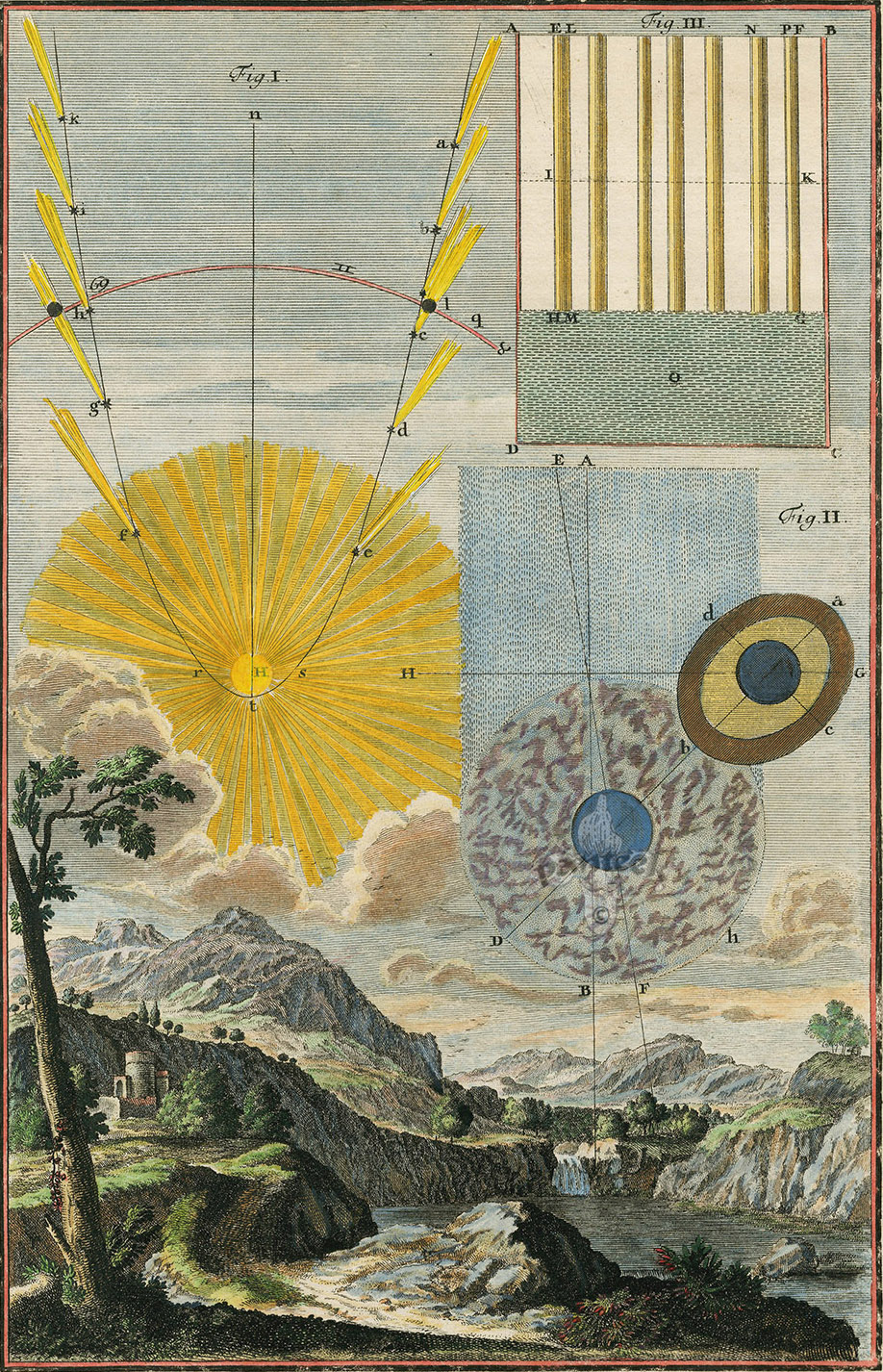
comets and swords
Fig. 11.16 view of comets
File under: inspiration
Alain Manesson Mallet
Paris, France, 1719
interior of installation
Fig. 4.2 we are in the universe
File under: documentation
Roger Cremers, Doina Kraal, LNDW Studio
Looiersgracht 60, Amsterdam
10.1 Oumuamua
performance
Roger Cremers, Doina Kraal, Boele Weemhoff, Sylvian Kloens
Looiersgracht 60, Amsterdam
Fig. 10.1 Oumuamua
File under: performance
Roger Cremers, Doina Kraal, Boele Weemhoff, Sylvian Kloens
Looiersgracht 60, Amsterdam
interior of installation
Fig. 5.7 And the universe is in us
File under: documentation
Roger Cremers, Doina Kraal, LNDW Studio
Looiersgracht 60, Amsterdam
Fig. 7.6 Of Ouranos and Kronos
File under: work in progress
Roger Cremers, Doina Kraal, LNDW Studio
Looiersgracht 60, Amsterdam
Fig. 3.5 Perpetual Light
File under: work in progress
Roger Cremers, Doina Kraal
TextielLab, Tilburg
unidentified flying object
Fig. 11.6 unidentified flying object
File under: inspiration
pilot spots unknown object
image first obtained by the New York Times
Heat Shield
Fig. 11.9 heat shield mars, nasa
File under: research
Nasa, Doina Kraal
space
interior of the tent
Fig. 3.9 Perpetual Light
File under: documentation
Roger Cremers, Doina Kraal, LNDW Studio
Looiersgracht 60, Amsterdam
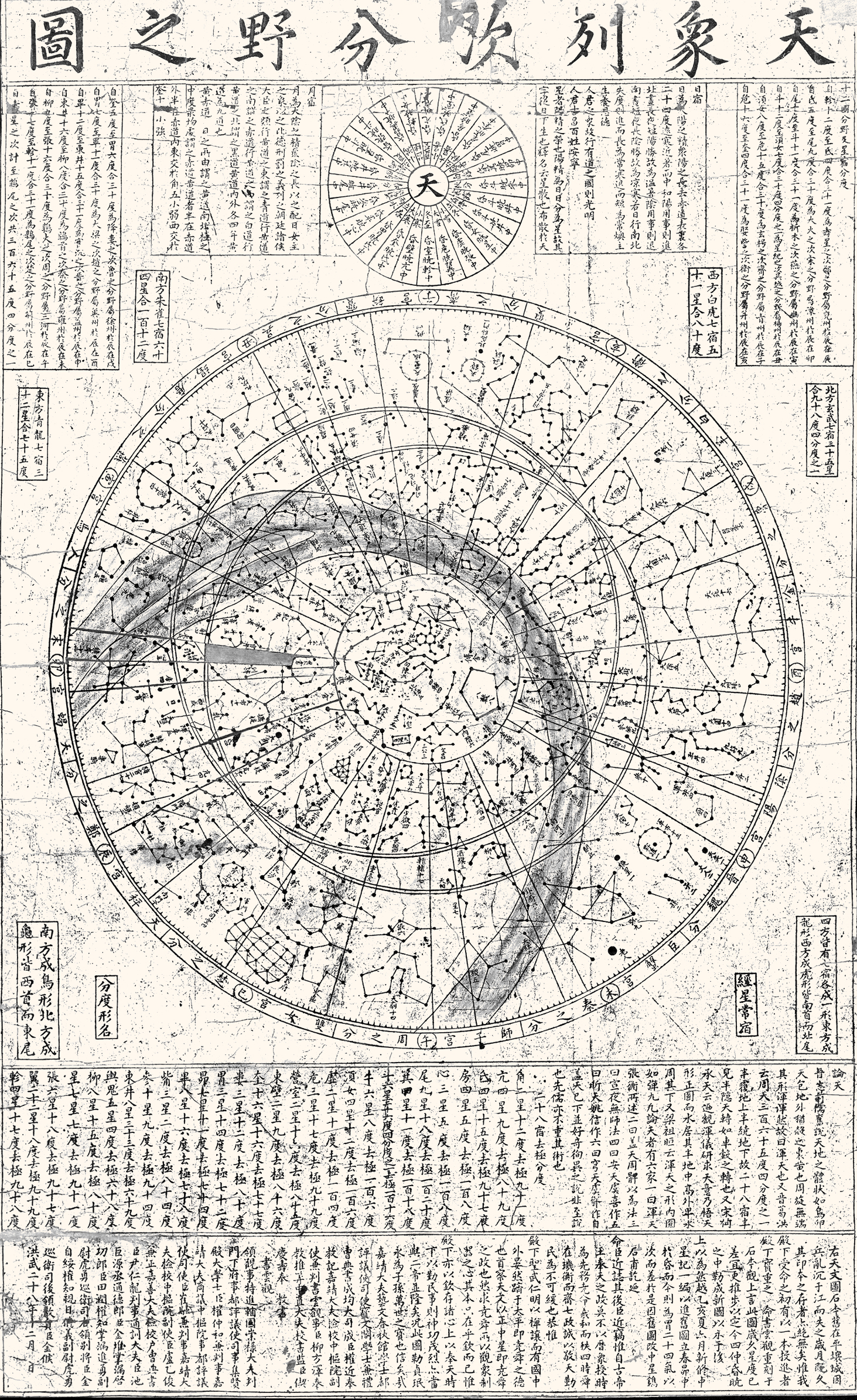
Korean star map
Fig. 11.4 Cheonsang Yeolcha Bunyajido
File under: inspiration
14th-century star map
Korea
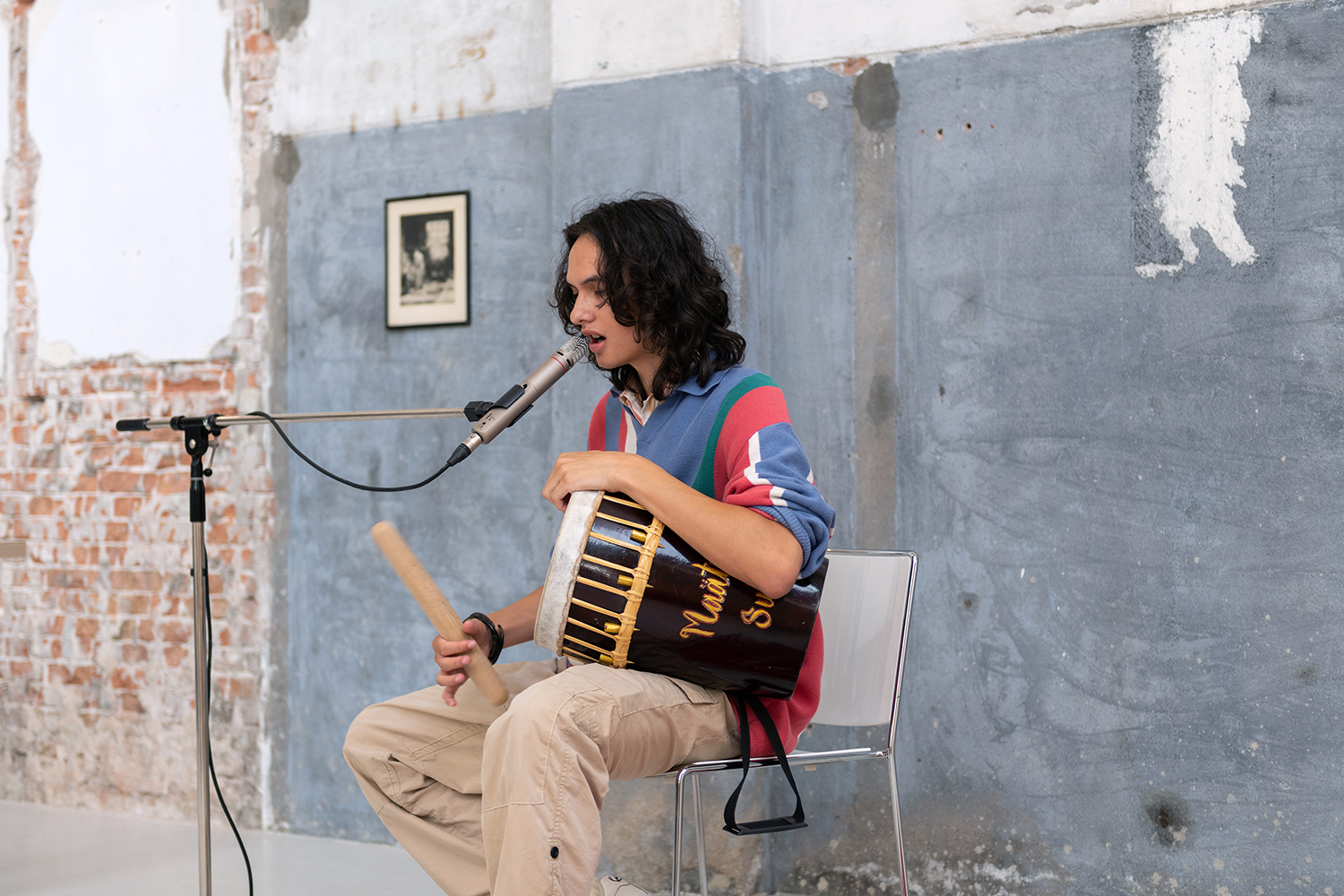
Finn Maatita playing drums
Fig. 11.9 Collaborative time travel
File under: performance
Finn Maatita, LNDW Studio
Looiersgracht 60, Amsterdam
mirrored peep show box
Fig. 6.1 Resonance Box
File under: documentation
Roger Cremers, Doina Kraal, LNDW Studio
Looiersgracht 60, Amsterdam
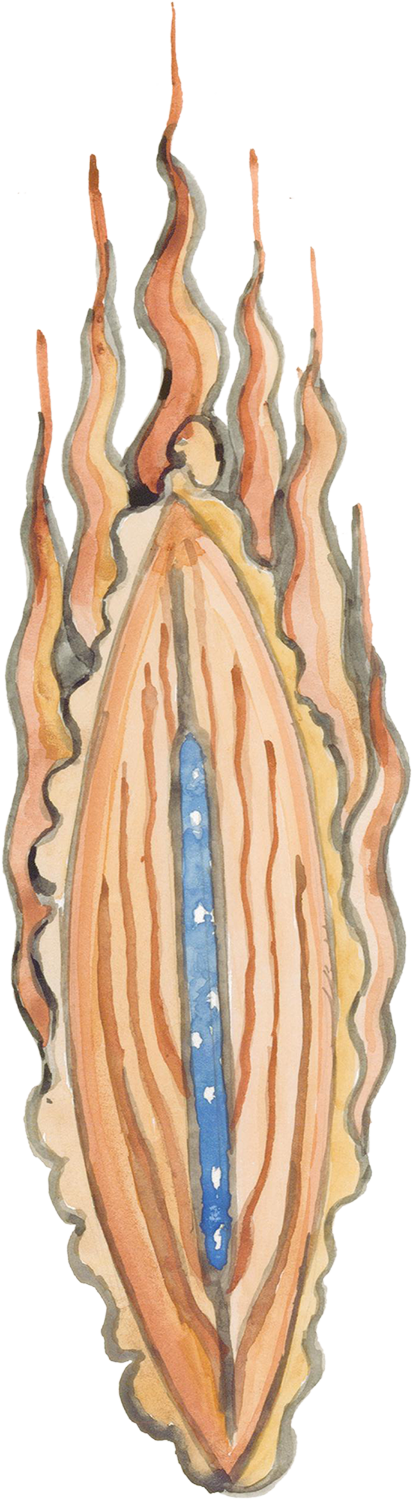
vagina ufo
Fig. 3.20 Of Gaia and Ouranos
File under: image
Roger Cremers
Amsterdam, The Netherlands
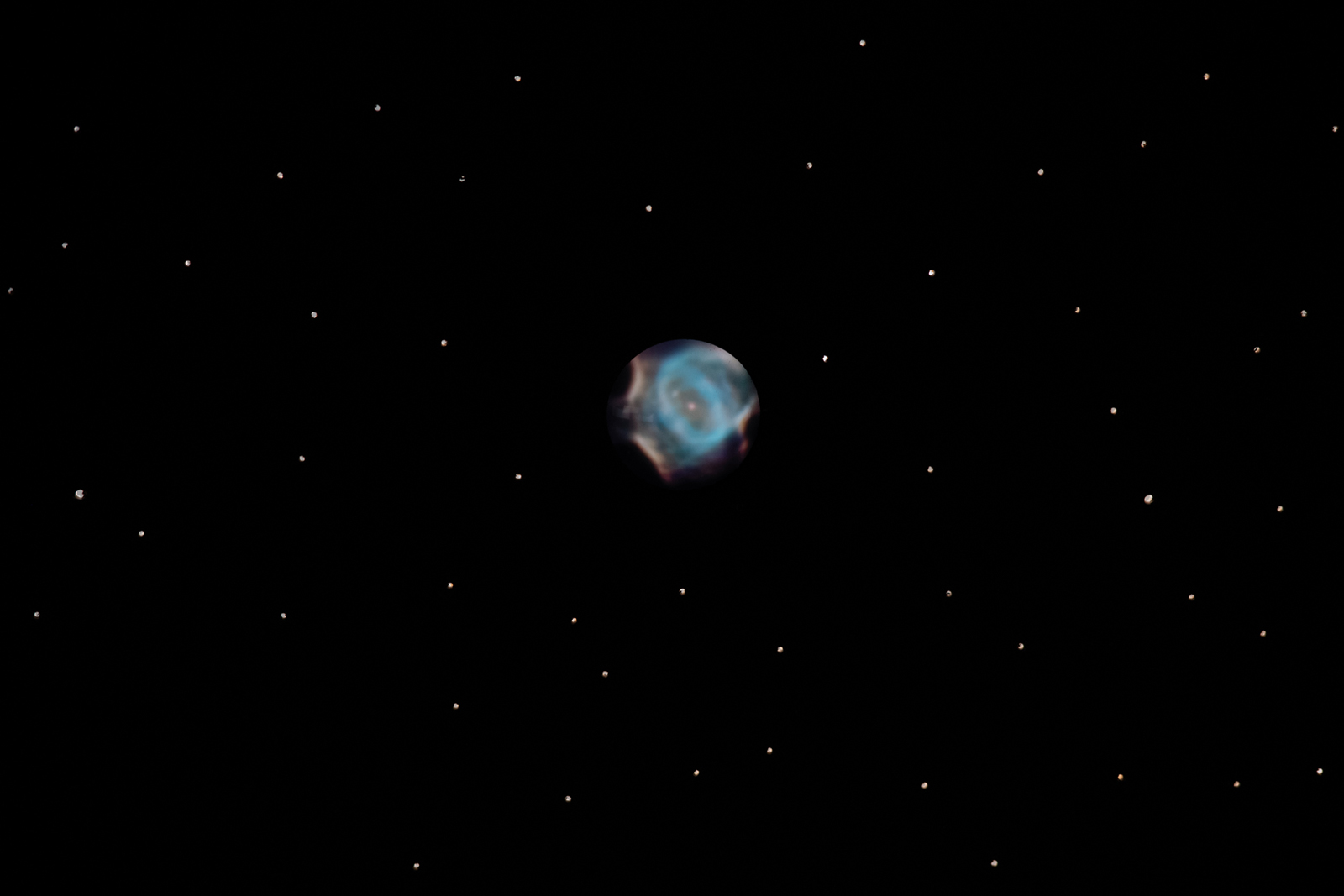
nebula
Fig. 4.8 We are in the universe
File under: documentation
Roger Cremers, Doina Kraal, Juliana Gomez
Looiersgracht 60, Amsterdam
creation of the universe
Fig. 11.13 Fenestra Coeli Apertae
File under: inspiration
Johann Jakob Scheuchzer
Zürich, 1721
star ufo
Fig. 3.19 Of Gaia and Ouranos
File under: image
Doina Kraal
Amsterdam, The Netherlands
performance
Fig. 9.2 Of Rheia and Kronos
File under: performance
Roger Cremers, Doina Kraal, LNDW Studio
Looiersgracht 60, Amsterdam
convex mirror with uranium glass
Fig. 7.1 Of Ouranos and Kronos
File under: documentation
Roger Cremers, Doina Kraal, LNDW Studio
Looiersgracht 60, Amsterdam
display table
Fig. 8.3 living archive
File under: documentation
Roger Cremers, Doina Kraal, Frank van der Stok
Looiersgracht 60, Amsterdam
Fig. 4.8 we are in the universe
File under: documentation
Roger Cremers, Doina Kraal, LNDW Studio
Looiersgracht 60, Amsterdam
exhibition overview
Fig. 3.7 Perpetual Light
File under: documentation
Roger Cremers, Doina Kraal, LNDW Studio
Looiersgracht 60, Amsterdam
black peep hole
Fig. 4.7 We are in the universe
File under: documentation
Roger Cremers, Doina Kraal, Juliana Gomez
Looiersgracht 60, Amsterdam
detail we are in the universe
Fig. 4.4 we are in the universe
File under: documentation
Roger Cremers, Doina Kraal, Juliana Gomez
Looiersgracht 60, Amsterdam
medusa ufo
Fig. 3.18 Of Gaia and Ouranos
File under: image
Roger Cremers
Amsterdam, The Netherlands
tapestry at TextileLab
Fig. 3.2 perpetual night
File under: work in progress
Roger Cremers, Doina Kraal
TextielLab, Tilburg
Fig. 5.3 And the universe is in us
File under: documentation
Roger Cremers, Doina Kraal, LNDW Studio
Looiersgracht 60, Amsterdam
Perpetual Night, roof tapestry
Fig. 3.5 Perpetual Night
File under: documentation
Roger Cremers, Doina Kraal, LNDW Studio
Looiersgracht 60, Amsterdam
medium shot diafanorama
Fig. 2.5 Through Ouranos' eye
File under: documentation
Roger Cremers, Doina Kraal, LNDW Studio
Looiersgracht 60, Amsterdam
12.1 There is always imagination, conversation
documentation
Roger Cremers, Doina Kraal, Wouter Hanegraaff & Joyce Pijnenburg
Looiersgracht 60, Amsterdam
Fig. 12.1 There is always imagination, conversation
File under: documentation
Roger Cremers, Doina Kraal, Wouter Hanegraaff & Joyce Pijnenburg
Looiersgracht 60, Amsterdam
deep field
Fig. 11.17
File under: inspiration
Doina Kraal
Amsterdam, The Netherlands
interior resonance box
Fig. 6.3 resonance box
File under: documentation
Doina Kraal
Looiersgracht 60, Amsterdam
entrance tent
Fig. 3.11 Perpetual Light
File under: documentation
Roger Cremers, Doina Kraal, LNDW Studio
Looiersgracht 60, Amsterdam
Doina Kraal
File under: text
Public event II

Spiritus – Archiving the (un)imaginable

Public Research Residency I
Looiersgracht 60, Amsterdam
Public event II - Collaborative time travel
27 August 2022

Doina Kraal & Roger Cremers

Introduction 

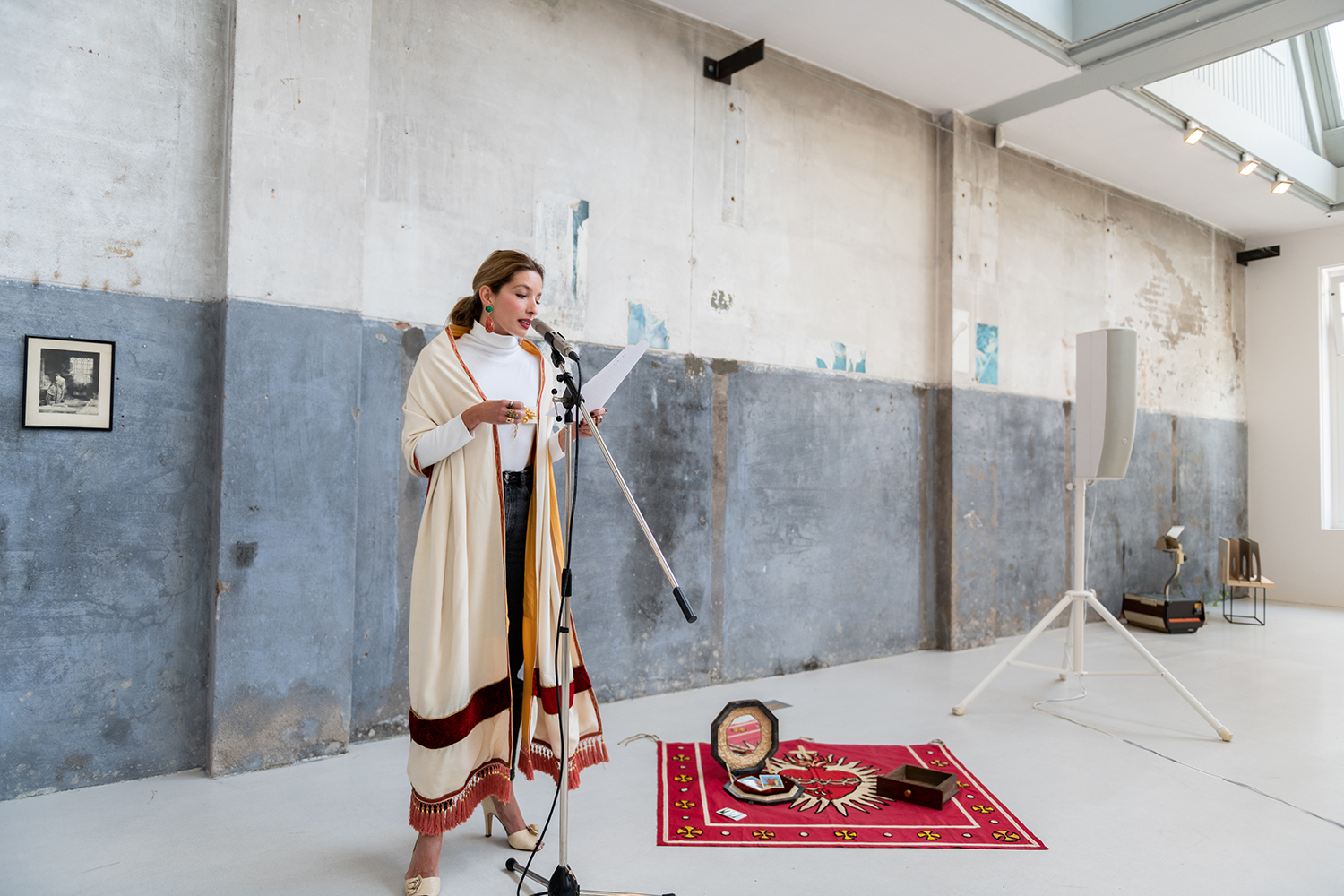
Welcome to the second event of Spiritus - Archiving the (un)Imaginable, a joint project by myself and Roger Cremers. For our first event, last Saturday we had invited Bram Roza, from ufomeldpunt.nl, who had compiled a film program on UFO’s, including a preview of his film on the UFO of Soesterberg (February 1979). 

For this second event we have invited several people to share a special story or history. Some people have brought an object which may have a special value to them, or the object holds a story. But we are equally interested in stories about, for example unexplainable or mystical encounters. 

Both me and Roger are fascinated by objects with a (sometimes long) history and are looking for ways to keep such objects alive, to revive, (re)use and cherish them. In this project, objects, ideas and (optical) media from different eras are combined in a, what we call, transhistorical Gesammtkunstwerk. We would like to take you back into time, but also invite you to imagine future scenarios and science fiction. 

Before I invite the first person to share their story, I thought it might be interesting to tell you a little bit more about this project and why we go from UFO’s to object related storytelling. How do the two connect? 

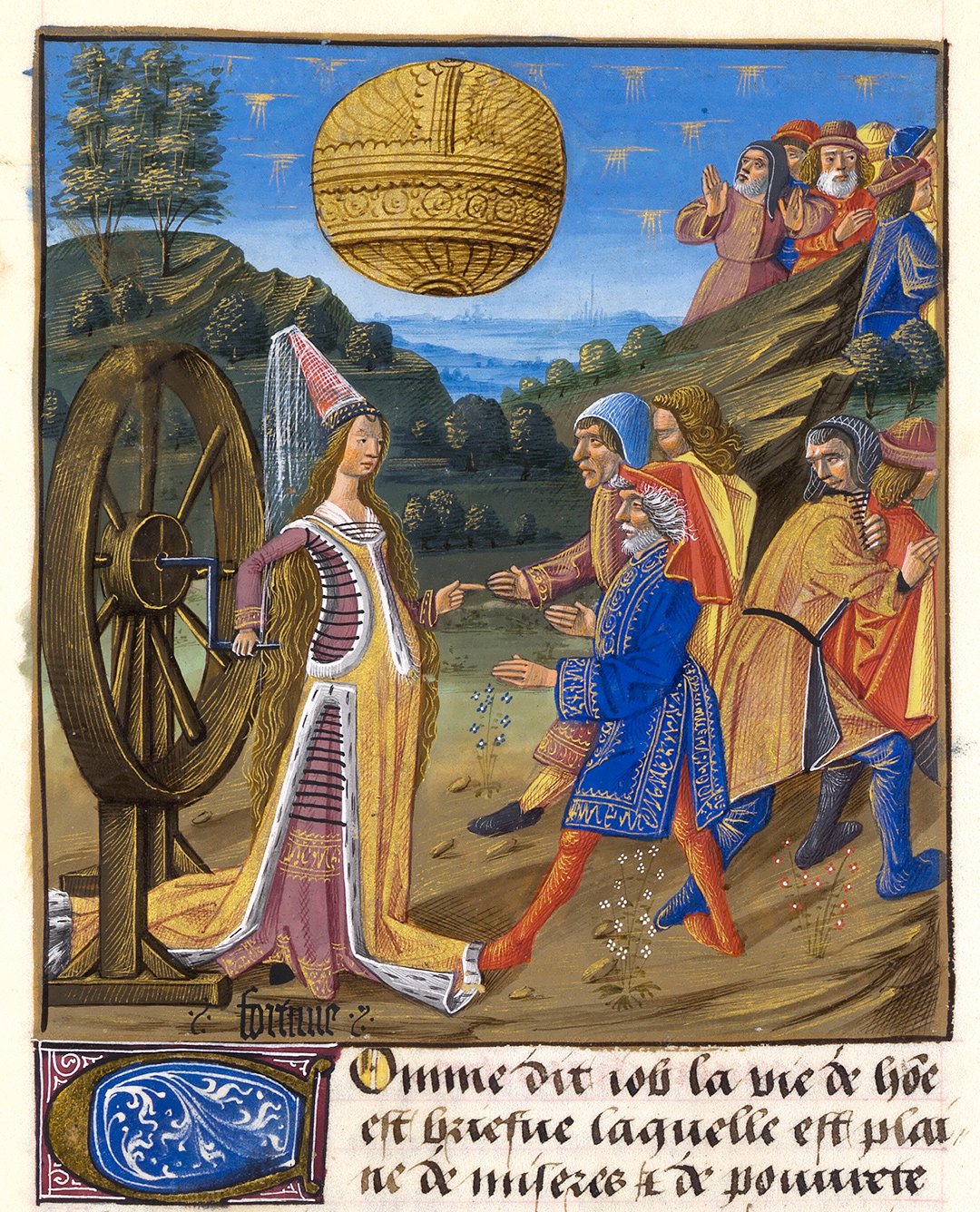
Besides the fact that listening to the reports of UFO encounters sparks my imagination, I find all kinds of aspects of the encounters very interesting; the aftermath, what happens to the people who had a (possibly close) encounter? What exactly did they see, hear or feel? And were there any artifacts involved? I would like elaborate a bit more on what the artifact means in relation to UFO’s. An artifact, in many cases, or I should say, in most stories, is debris of an unidentified aerial phenomenon, which supposedly or possibly crashed. This debris is the object that also holds the UFO story. The artifact is important, because it could possibly reveal that there is an objective truth to the story. But more than anything – and this is what I understood from reading this book: American Cosmic, UFO’s, religion, technology by dr. Diana Walsh Pasulka, professor of religious studies at the University of North Carolina Wilmington – more than anything the artifact can be the incentive to a religion, or a mythology, to a belief system or as I would say to a story.

I would like to tell you a little bit about this book.

Diana Pasulka began her research into aerial phenomena after she finished a book on the Catholic doctrine of Purgatory. Pasulka studied sources of European Catholic history - found in obscure archives - of anecdotes about souls from Purgatory. Her sources dated from 1300 to 1818. During this research she found a lot of other unexpected things, such as reports of orbs of light, flames that penetrated walls, luminous beings, spinning suns, and disc like aerial objects. She left them out of her book on Purgatory. But she wondered about them. When she told a friend about the reports it occurred to him how these reports sounded like they came straight out of a science fiction movie. This friend made her attend a conference on UFOs and the speakers who had had encounters described some of the things Pasulka had observed in her research in Catholic history; shining aerial discs, flames, and orbs and especially how these experiences transformed their lives. They interpreted these experiences as spiritual or religious events. And I quote: “They either fractured their traditional religious belief systems or, more commonly, caused them to reinterpret their traditions through a biblical – UFO framework in which they viewed biblical and historical religious events as UFO events.” p.8 And that is when Pasulka started to wonder: “Could the orbs of the past, once interpretated as souls from Purgatory, still be around? Are they currently being interpreted as UFOs?” p.8

This is essentially a book about contemporary religion, using the UFO as a case study. Pasulka uses a set of methods for studying religious phenomena. 

In the first part of the book, she and her research partner, James are taken into the dessert by Tyler to a place where a nonhuman aerial craft potentially landed. James and Tyler are not their real names. James is one of the world’s leading scientists and a professor at a major research University and Tyler works for the US space program as an aeronautical engineer (for the space shuttle program), but he is also a (multimillionaire) biomedical entrepreneur. Blindfolded, Diana and James are taken to a site in New Mexico (not Area 51) where together with Tyler, they look for artifacts of nonhuman origin, using specially configured metal detectors. 

I would like to share a short fragment from the book: “Throughout the day, James and I took opportunities to compare notes. Was Tyler setting us up? If so for what reason? Were we pawns in a covert plot to disseminate disinformation? The answers to these questions didn’t matter to me. They didn’t matter because I wasn’t there to determine the truth behind the artifacts, but to observe the formation of belief in the artifacts and track the various directions this belief took. In the history of religions, there are always artifacts: the Ark of the covenant, Noah’s Ark, the shroud of Turin. The artifacts are important to believers, and they are controversial for non-believers. They spawn religious communities and, ironically, fictional portrayals.” p.22

Upon reading this, I realized that the artifact, an object, can contain a whole world, can even start a religion, or function as the vessel of a story. We cherish objects because they hold these stories. They can take us back in time and they are the remnant of a sensory encounter with the world around us. I believe objects fulfill a specific role as they enable us to remember or recall (sensory) encounters, to relate to and to resonate with the past and reflect upon the future.

What we are doing here today, I think, is making a tangible representation of the universe and the stories it holds and the story that comes from those stories.

My life and practice, and Roger’s as well (if I may say so), is full of objects that hold stories, that have the ability to take you on a journey. In the basement lies the object of one of my stories, it is a beauty case which belonged to my great grandmother, who was an operetta singer. This object spawned an idea. It inspired Roger to make this beautiful hand carved out of wood which he dipped in the 100+ year old lipstick he found in the suitcase. And yesterday the hand momentarily was turned into the hand of a god. I am interested in how stories live on and how they transform. 

Besides the people who have prepared a story, we would like to invite anybody who feels inspired to share a story, a history, or an encounter – to do so. 

It can be as simple as a story about what you are wearing. My former teacher and artist Lam de Wolf taught me about the importance of what one wears and shared her love for textiles and clothing. I had a hard time deciding this morning, should I wear the skirt Lam made for me, or one of my great grandmother’s dresses? I chose the latter.

uap sketch
Fig. 11.11 uap sketch
File under: work in progress
Roger Cremers, Doina Kraal
Amsterdam
mirrored peepshow box
Fig. 6.4 resonance box
File under: work in progress
Roger Cremers, Doina Kraal, LNDW Studio
Looiersgracht 60, Amsterdam
Fig. 1.2 Through Gaia's Eye
File under: documentation
Roger Cremers, Doina Kraal, LNDW Studio
Looiersgracht 60, Amsterdam
ceiling installation
Fig. 5.8 And the universe is in us
File under: documentation
Roger Cremers, Doina Kraal, LNDW Studio
Looiersgracht 60, Amsterdam
peepshow box
Fig. 4.9 We are in the universe
File under: documentation
Roger Cremers, Doina Kraal, Juliana Gomez
Looiersgracht 60, Amsterdam
peep hole
Fig. 4.6 And the universe is in us
File under: documentation
Roger Cremers, Doina Kraal, LNDW Studio
Looiersgracht 60, Amsterdam
ancient ufo
Fig. 3.17 Of Gaia and Ouranos
File under: image
Roger Cremers
Amsterdam, The Netherlands
diafanorama in depot
Fig. 11.8 diafanorama
File under: research
Roger Cremers, Doina Kraal
Depot Rotterdam Museum
inside tent
Fig. 3.10 Perpetual Light
File under: documentation
Roger Cremers, Doina Kraal, LNDW Studio
Looiersgracht 60, Amsterdam
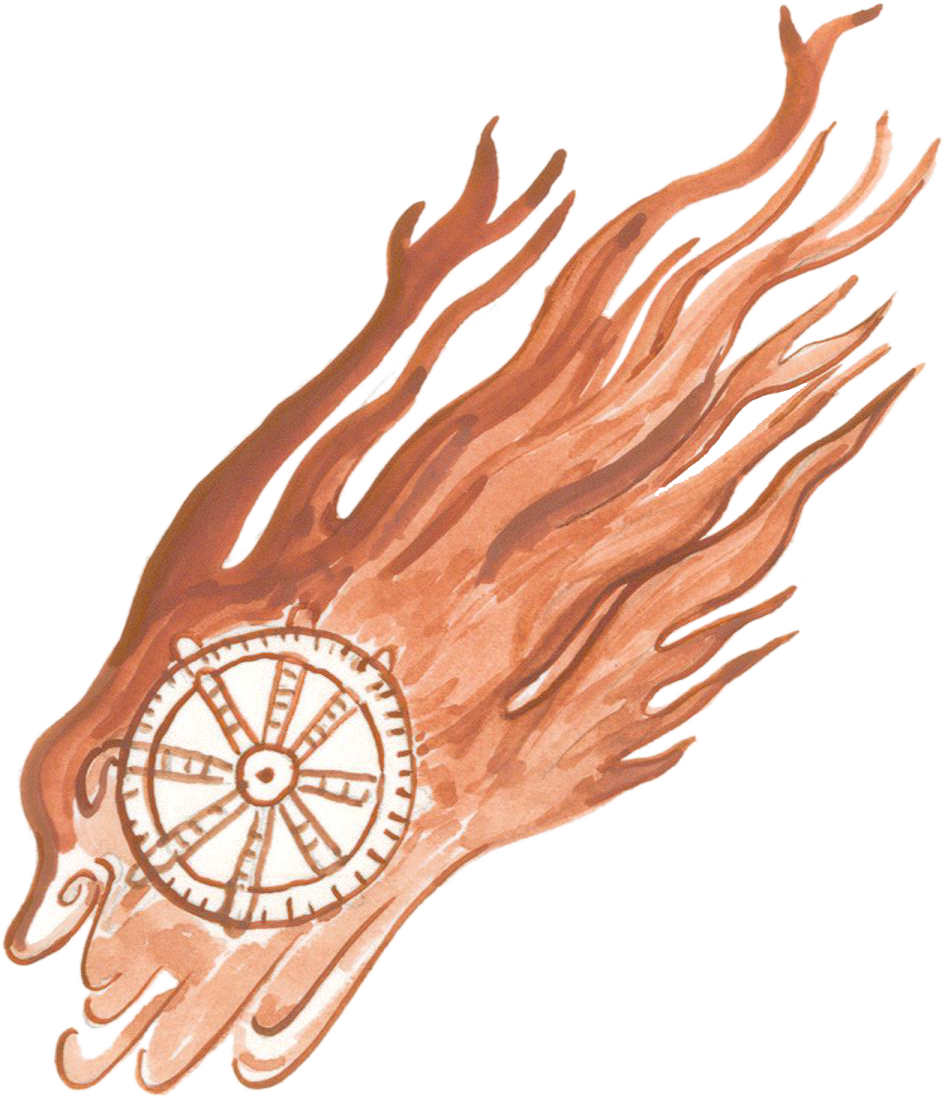
wheel ufo
Fig. 3.21 Of Gaia and Ouranos
File under: image
Doina Kraal
Amsterdam, The Netherlands
lit up uranium glass
Fig. 7.2 study for Of Ouranos and Kronos
File under: work in progress
Roger Cremers, Doina Kraal, LNDW Studio
Looiersgracht 60, Amsterdam
korean star map engraved in wood
Fig. 4.7 We are in the universe
File under: documentation
Roger Cremers, Doina Kraal, LNDW Studio
Looiersgracht 60, Amsterdam
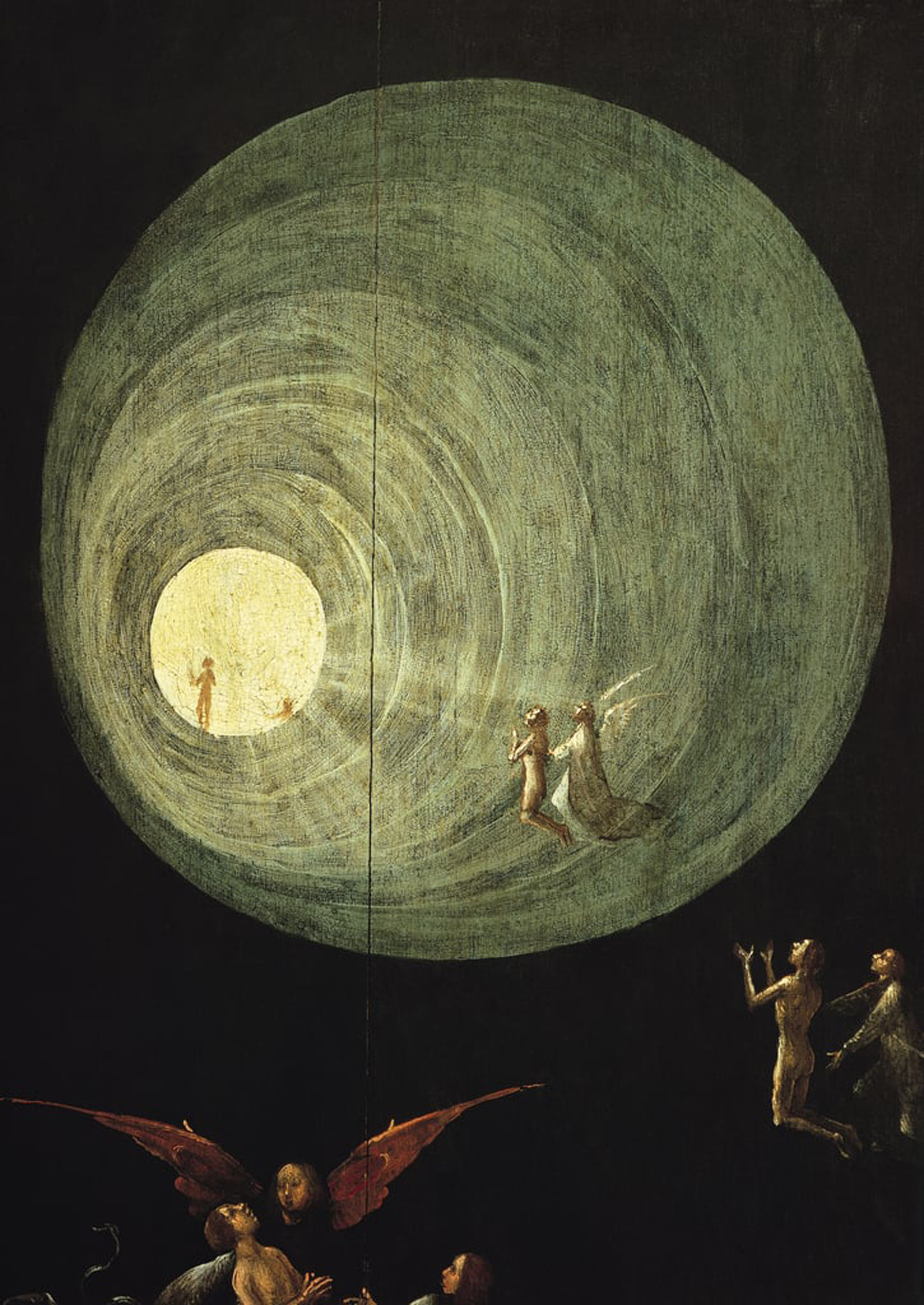
Hieronymous Bosch
Fig. 11.9 The ascent of the blessed detail
File under: inspiration
Hieronymus Bosch
1505 - 1515
design for tapestry
Fig. 3.1 design perpetual night
File under: work in progress
Roger Cremers, Doina Kraal
Hemonylaan 24, Amsterdam
medium shot diafanorama
Fig. 2.3 Through Ouranos' Eye
File under: documentation
Roger Cremers, Doina Kraal, LNDW Studio
Looiersgracht 60, Amsterdam
Mafe storytelling
Fig. 11.10 Collaborative time travel
File under: performance
Maria Fernanda Maldonado - La Patafulmina, LNDW Studio
Looiersgracht 60, Amsterdam
Perpetual Night, jacquard woven tent
Fig. 3.4 Perpetual Night
File under: documentation
Roger Cremers, Doina Kraal, LNDW Studio
Looiersgracht 60, Amsterdam
Fig. 3.3 perpetual night
File under: work in progress
Roger Cremers
Amsterdam
blowing on organ pipe
Fig. 10.3 Oumuamua
File under: performance
Roger Cremers, Doina Kraal, Boele Weemhoff, Sylvian Kloens
Looiersgracht 60, Amsterdam
corner of peep show box
Fig. 5.5 And the universe is in us
File under: documentation
Roger Cremers, Doina Kraal, LNDW Studio
Looiersgracht 60, Amsterdam
close up preparations
Fig. 5.6 And the universe is in us
File under: documentation
Roger Cremers, Doina Kraal, LNDW Studio
Looiersgracht 60, Amsterdam
trombone
Fig. 10.4 Oumuamua
File under: performance
Roger Cremers, Doina Kraal, Boele Weemhoff, Sylvian Kloens
Looiersgracht 60, Amsterdam
exhibition view peep show box
Fig. 5.4 And the universe is in us
File under: documentation
Roger Cremers, Doina Kraal, LNDW Studio
Looiersgracht 60, Amsterdam
planet
Fig. 4.8 We are in the universe
File under: documentation
Roger Cremers, Doina Kraal, Juliana Gomez
Looiersgracht 60, Amsterdam
uranium glass and hand
Fig. 7.4 study for Of Ouranos and Kronos
File under: documentation
Roger Cremers, Doina Kraal, LNDW Studio
Looiersgracht 60, Amsterdam
Living Archive, basement Looiersgracht 60
Fig. 8.1 Living Archive
File under: documentation
Roger Cremers, Doina Kraal, Frank van der Stok
Looiersgracht 60, Amsterdam
sketch on blue paper
Fig. 4.5 we are in the universe
File under: work in progress
Doina Kraal
Amsterdam
preparation
Fig. 5.12 And the universe is in us
File under: image
Roger Cremers, Doina Kraal
Amsterdam
documentation performance
Fig. 9.3 Of Rheia and Kronos
File under: performance
Roger Cremers, Doina Kraal, Boele Weemhoff, Sylvian Kloens
Looiersgracht 60, Amsterdam
uap sketch
Fig. 11.12 UAP sketch
File under: work in progress
Roger Cremers, Doina Kraal
Amsterdam
interior of installation
Fig. 5.10 And the universe is in us
File under: documentation
Roger Cremers, Doina Kraal, LNDW Studio
Looiersgracht 60, Amsterdam
close up Through Gaia's Eye
Fig. 1.1 Through Gaia's Eye
File under: documentation
Roger Cremers, Doina Kraal, LNDW Studio
Looiersgracht 60, Amsterdam
And the universe is us, interior
Fig. 5.1 And the universe is in us
File under: documentation
Roger Cremers, Doina Kraal, Studio LNDW
Looiersgracht 60, Amsterdam
interior of tent
Fig. 3.8 Perpetual Light
File under: documentation
Roger Cremers, Doina Kraal, LNDW Studio
Looiersgracht 60, Amsterdam
display table
Fig. 8.2 living archive
File under: documentation
Roger Cremers, Doina Kraal, Frank van der Stok
Looiersgracht 60, Amsterdam
9.2 Of Rheia and Kronos
performance
Roger Cremers, Doina Kraal, Boele Weemhoff, Sylvian Kloens
Looiersgracht 60, Amsterdam
Fig. 9.2 Of Rheia and Kronos
File under: performance
Roger Cremers, Doina Kraal, Boele Weemhoff, Sylvian Kloens
Looiersgracht 60, Amsterdam
reindeer
Fig. 3.15 Of Gaia and Ouranos
File under: image
Doina Kraal
Amsterdam, The Netherlands
Uranus cut out
Fig. 11.8 Uranus
File under: research
Nasa, Doina Kraal
Space
glass organ
Fig. 10.2 Oumuamua
File under: performance
Roger Cremers, Doina Kraal, Boele Weemhoff, Sylvian Kloens, LNDW studio
Looiersgracht 60, Amsterdam
Fig. 9.1 Of Rheia and Kronos
File under: performance
Roger Cremers, Doina Kraal, LNDW Studio
Looiersgracht 60, Amsterdam
Jacques Legrand
Fig. 11.7 Le Livre de bonnes moeurs
File under: research
Jacques Legrand
c. 1430
diafanorama detail
Fig. 1.3 Through Gaia's Eye
File under: documentation
Roger Cremers, Doina Kraal, LNDW Studio
Looiersgracht 60, Amsterdam
Fig. 6.2 Resonance Box
File under: documentation
Roger Cremers, Doina Kraal, LNDW Studio
Looiersgracht 60, Amsterdam
stereoslide
Fig. 11.1
File under: work in progress
Clough & Kimball
Mount Washington, 1870
waaiereendje
Fig. 3.22 Perpetual Light
File under: work in progress
Doina Kraal
Amsterdam, The Netherlands
ladscape sunset
Fig. 3.9 sketch for perpetual Light
File under: work in progress
Roger Cremers
Amsterdam
peeping person
Fig. 4.2 We are in the universe
File under: documentation
Roger Cremers, Doina Kraal, LNDW Studio
Looiersgracht 60, Amsterdam
preparation
Fig. 5.11 And the universe is in us
File under: image
Roger Cremers, Doina Kraal
Amsterdam
detail of peep show
Fig. 5.4 And the universe is in us
File under: documentation
Roger Cremers, Doina Kraal, LNDW Studio
Looiersgracht 60, Amsterdam
Fig. 5.13 And the universe is in us
File under: documentation
Roger Cremers, Doina Kraal, LNDW Studio
Looiersgracht 60, Amsterdam
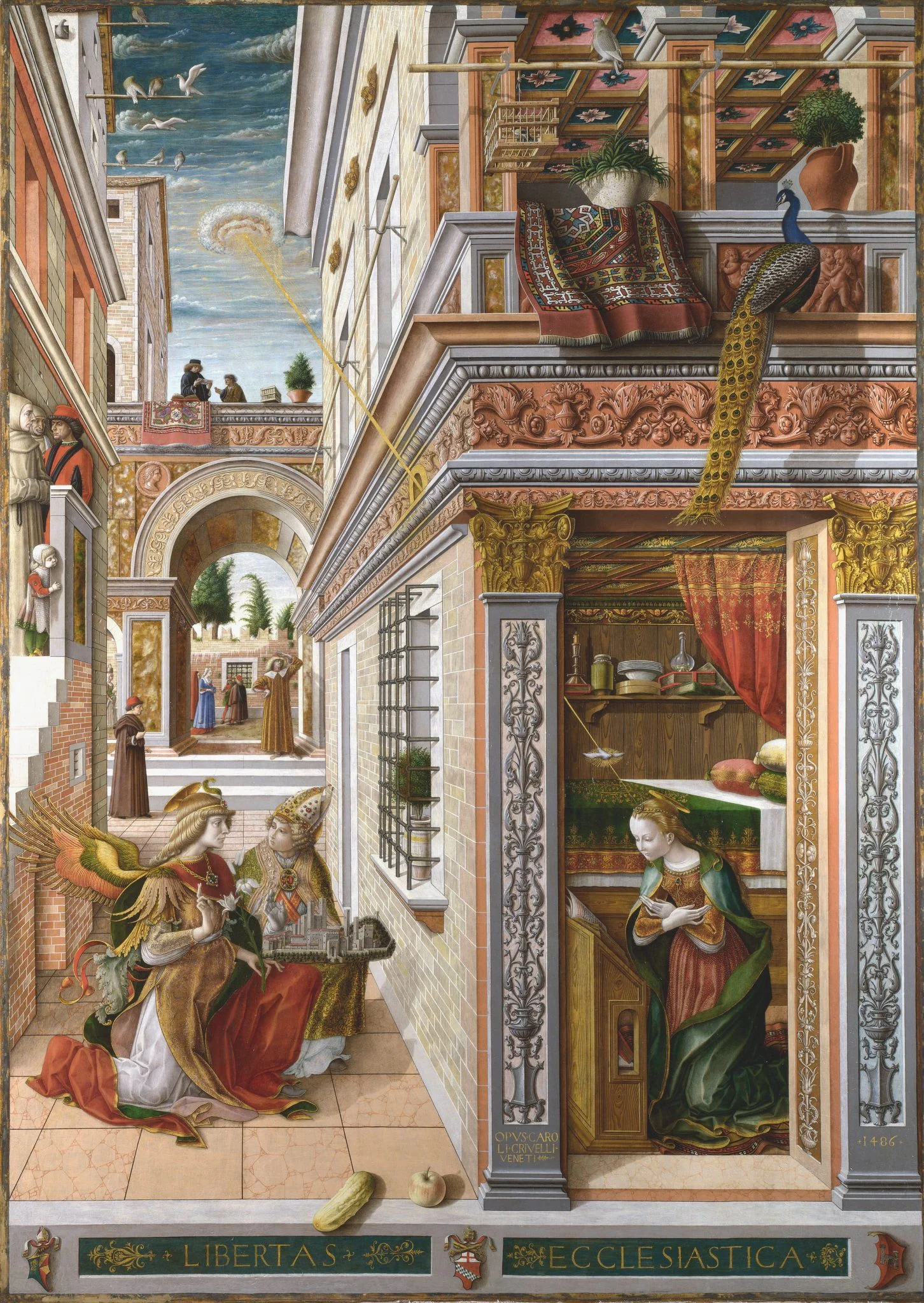
The Annunciation with Saint Emidius
Fig. 11.3 The Annunciation with Saint Emidius (1486)
File under: inspiration
Carlo Crivelli
Italy
Fig. 2.1 Through Ouranos' Eye
File under: documentation
Roger Cremers, Doina Kraal, LNDW studio
Looiersgracht 60, Amsterdam
Fig. 2.2 Through Ouranos’ Eye
File under: documentation
Roger Cremers, Doina Kraal, LNDW Studio
Looiersgracht 60, Amsterdam
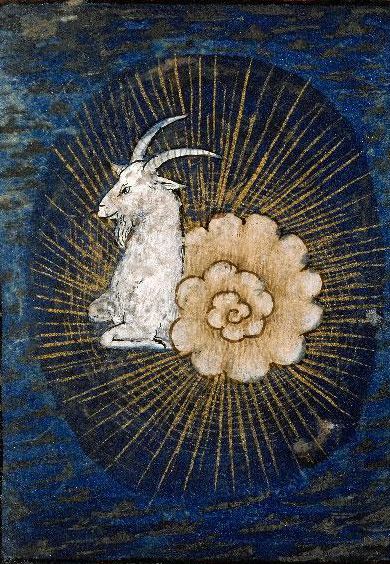
capricorn
Fig. 11.14 The Capricorn
File under: inspiration
Book of Hours, 15th century
Bibliothèque municipale de Lyon
Glaser Nuremburg Woodcut
Fig. 11.2
File under: work in progress
Hans Glaser, 1561
Celestial Phenomenon over Nuremburg
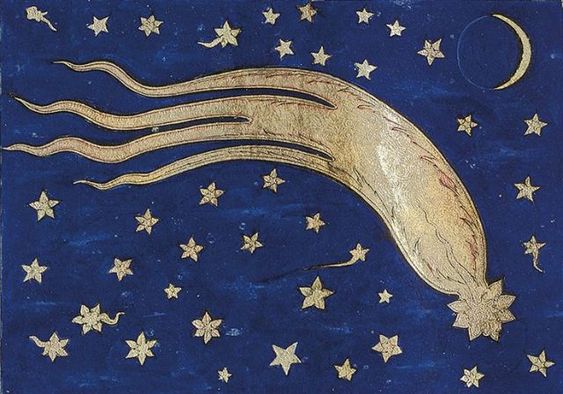
Comet
Fig. 11.15 The Great Comet of 1577
File under: inspiration
Courtesy Istanbul University per O. Gingerich
Istanbul, Turkey
front view uranium glass
Fig. 7.3 Of Ouranos and Kronos
File under: documentation
Roger Cremers, Doina Kraal, LNDW Studio
Looiersgracht 60, Amsterdam